











By SCOJA Fellows, HumAngle Foundation
A new policy brief has raised fresh concerns over the growing public health threat posed by extreme heat in Adamawa State, revealing widespread lack of awareness about heat-related illnesses and the compounding impact of power outages during peak temperature periods.
The brief, published in January 2026 by the Adamawa Strengthening Community Journalism and Advocacy (SCOJA) Fellows of the HumAngle Foundation, shows that 76 per cent of residents cannot identify the symptoms of heatstroke, while 73 per cent say heat-related illness has become common in their communities.
The findings are based on data collected in December 2025 across the Yola and Girei axis, a period when residents were already experiencing unusually high temperatures ahead of the peak heat season, which typically runs from February to May.
According to the report, 90 per cent of respondents linked increased health risks directly to power outages during peak heat hours, noting that the absence of electricity limits access to cooling, clean water, and effective healthcare services.
Vulnerable groups at rising risk
The policy brief describes extreme heat as an emerging public health emergency in the state, with children, the elderly, pregnant women, and outdoor workers facing the highest risks.
“Power shortages during the hottest hours of the day worsen dehydration, heat stress, and delayed care-seeking,” the report noted, adding that many communities do not receive timely heat warnings, particularly in languages they understand.
Health facilities are also affected, as unreliable electricity compromises the storage of medicines, operation of cooling systems, and overall service delivery during heat waves.
Why the findings matter
Medical experts warn that prolonged exposure to extreme heat can lead to dehydration, organ failure, and death if not managed promptly. The report argues that low public awareness, combined with delayed response and weak early warning systems, significantly increases preventable illness and fatalities in Adamawa.
The SCOJA Fellows stressed that without urgent intervention, rising temperatures linked to climate change could further strain already fragile health systems in the state.
Policy recommendations
To address the challenge, the report urges the Adamawa State Ministry of Health and the Primary Healthcare Development Agency to formally endorse and distribute a multilingual Heat Safety Factsheet developed by SCOJA Fellows in collaboration with health experts. The factsheet should be circulated in hospitals, primary healthcare centres, schools, markets, places of worship, and motor parks in English, Hausa, and Fulfulde.
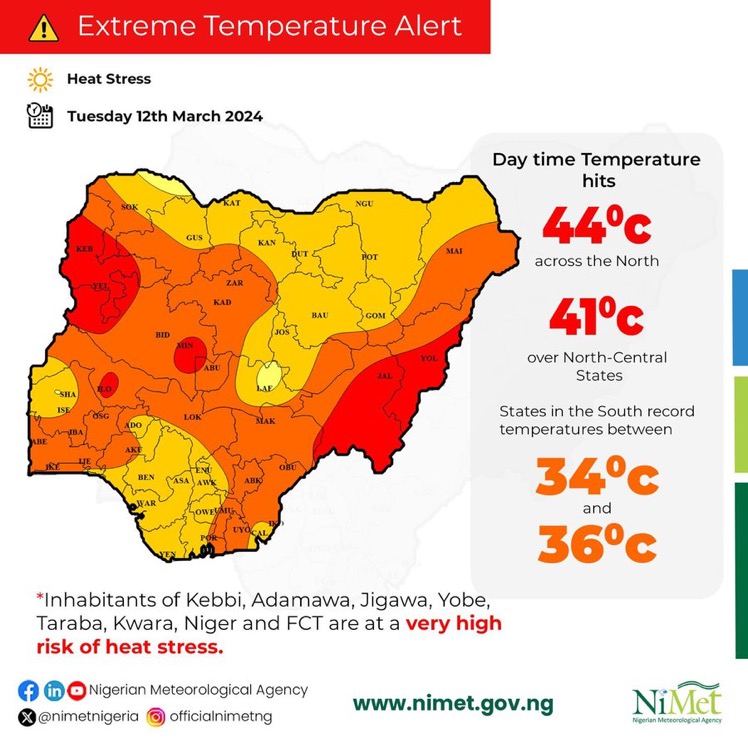
It also recommends that Adamawa-based newsrooms collaborate with the Nigerian Meteorological Agency (NiMet) and the National Orientation Agency (NOA) to broadcast heat alerts through radio, television, and community channels whenever temperatures are forecast to exceed 40 degrees Celsius.
Additionally, the report calls on the Adamawa State Government to work with the Yola Electricity Distribution Company (YEDC) to ensure priority electricity supply to hospitals, PHCs, and high-density communities between 12:00 pm and 4:00 pm during the February–May heat season.
A growing threat
The SCOJA Fellows concluded that extreme heat is no longer a seasonal inconvenience but a serious and growing public health threat in Adamawa State.
“Strengthening early warning systems, improving public awareness, and ensuring reliable power access can significantly reduce preventable illness and save lives,” the report stated.
The research, analysis, and writing were carried out by the Adamawa SCOJA Fellows Team, led by Yahuza Bawage, with support from the HumAngle Foundation.


