





Diaries | The North Journals |
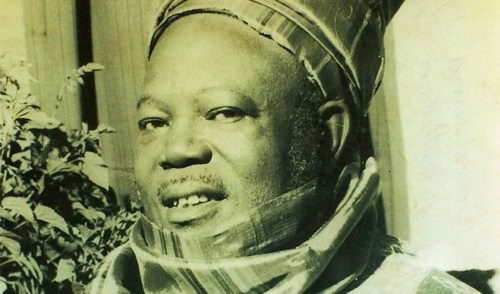
On a dry morning in Kaduna in the late 1950s, Sir Ahmadu Bello stood at the centre of a region that was already slipping into history. The Northern Region, vast, anxious, uneven—was awakening to the fact that independence was no longer a distant promise but an approaching reckoning. Power was shifting. Old bargains were expiring. New fears were forming. Bello understood this better than most. He also understood something else: that leadership, in moments like this, was less about ambition than about containment.
Long before he became the most powerful politician in Nigeria, Ahmadu Bello learned to live with weight. He was born in 1910 in Rabah, in present-day Sokoto State, into the lineage of Uthman dan Fodio, the founder of the Sokoto Caliphate. History arrived at his doorstep before he could choose otherwise. But lineage alone does not explain the man he became. Bello was shaped as much by anxiety as by inheritance by the sense that the North he knew was fragile, exposed, and perpetually misunderstood.
Becoming Ahmadu Bello
Bello’s early life was steeped in tradition but marked by transition. He was educated at Sokoto Provincial School and later trained as a teacher. His worldview formed at the intersection of Islamic scholarship, colonial administration, and the slow, uneasy arrival of Western political ideas. He was neither anti-modern nor blindly traditional. What he feared was imbalance.

The Northern Region, as Bello encountered it in his early adulthood, was politically late and structurally cautious. Western education had arrived slowly. Bureaucratic power was thin. Political organisation was uneven. Compared to the South, the North felt exposed numerically strong but institutionally vulnerable.
This vulnerability stayed with him. It shaped his caution. It explained his suspicion of haste.
When Bello entered politics through the Northern People’s Congress (NPC), he did not present himself as a firebrand or a revolutionary. He presented himself as a custodian. Leadership, to him, was an act of preservation before it could be an act of transformation.
Power Without the Centre
By the late 1950s, Bello had become the undisputed leader of the Northern Region. Independence negotiations were underway. Nigeria was assembling itself out of mistrust, ambition, and colonial urgency. Bello was expected, almost assumed, to become Prime Minister.
He refused.
“I would rather be the servant of the North than the master of Nigeria,” he said publicly, a line that would follow him into history. The statement was not rhetorical modesty. It was a political confession. Bello believed the North could not yet survive without his direct stewardship. To leave it for Lagos, he feared, would be to abandon a fragile house during a storm.
This decision defined him more than any policy ever could. From Kaduna, Bello governed the North with a firm but measured hand. He delegated national leadership to Abubakar Tafawa Balewa, trusting that the Prime Minister would manage the federation while he consolidated the region.
It was a gamble rooted in restraint.
The Architecture of Caution
As Premier of the Northern Region, Bello pursued development not as spectacle but as insulation. His government invested in education cautiously, expanded civil service training, and strengthened regional institutions. He believed the North needed time—time to catch up, time to stabilise, time to negotiate its place in a federation already tilting toward competition.
Critics accused him of entrenching regionalism. They were not wrong. Bello believed regional strength was the only defence against national marginalisation. Unity, to him, could not be rushed; it had to be managed.
In speeches across the North, he spoke often of discipline, patience, and collective responsibility. He avoided populist language. His politics were sober, almost austere. Where others promised futures, Bello spoke of limits.
The Unfinished Question of Minorities
Yet restraint has consequences.
Bello’s vision of Northern unity relied heavily on traditional authority and centralised control. Emirate systems were preserved and empowered. For many minority communities, this felt less like protection and more like erasure.
Agitations for self-determination, especially in the Middle Belt, grew louder during his tenure. Bello acknowledged them but rarely yielded. Fragmentation, he believed, would weaken the North at a time when unity was its only shield.
This choice remains one of the most contested aspects of his legacy. Stability was achieved, but at the cost of unresolved grievances. Bello governed with an eye on survival, not comfort. History would later expose the price of that calculation.
Faith and the Language of Identity
Ahmadu Bello was unapologetically Muslim and unapologetically Northern. In an era when Nigeria was still negotiating its identity, this clarity unsettled many. Bello did not advocate a theocratic state, but he believed moral authority mattered. Faith, to him, was not a private affair; it was a social compass.
Still, his rhetoric sometimes hardened lines. His emphasis on Northern solidarity, while strategic, fed Southern fears of domination. Bello saw himself as defending balance; others saw him as resisting integration.
Both perceptions shaped Nigeria’s early years.
A Nation on Edge
By the mid-1960s, Nigeria was tense. Electoral disputes, regional mistrust, and military impatience were converging. Bello watched these developments with concern. He warned against recklessness. He cautioned against abandoning constitutional processes. But the ground was already shifting beneath the federation.
On January 15, 1966, soldiers struck.
Sir Ahmadu Bello was killed in his residence in Kaduna during Nigeria’s first military coup. His death was swift, violent, and symbolic. With him fell not just a leader, but the delicate balance he had spent years maintaining.
The North reeled. The country fractured. Within months, Nigeria would descend into cycles of coups, massacres, and eventually civil war.
After the Silence
In death, Bello became many things at once: martyr, villain, guardian, obstacle. His name was invoked to justify actions he never took and blamed for tensions he struggled to contain. Statues rose. Streets were named. Debates hardened.
What remained constant was his central paradox: a man who wielded enormous power yet chose restraint; a leader who believed deeply in unity but governed through consolidation; a nationalist who feared the nation might outrun its weakest part.
Today, Nigeria still wrestles with the questions Bello left behind. Can a country hold together without first balancing its parts? Is restraint wisdom or delay? At what point does caution become denial?
The Man Beneath the Title
Those who knew Ahmadu Bello described him as disciplined, private, and deeply serious. He was not charismatic in the populist sense. He did not court crowds. His authority rested on presence and purpose. He believed leadership was duty, not performance.
Perhaps that is why his story resists simplification. Bello does not fit neatly into heroic or villainous frames. He belongs instead to the difficult category of leaders who act under constraint, who choose between flawed options, knowing history will judge them regardless.
A Quiet Reckoning
Sir Ahmadu Bello did not chase the centre of power. He guarded what he believed was most vulnerable. Whether that choice delayed Nigeria’s cohesion or preserved it long enough to survive remains unresolved.
What is clear is this: Bello understood something many leaders still struggle to accept, that leadership is not measured only by what you achieve, but by what you choose not to do.
In a country still searching for balance, his restraint remains both lesson and warning.
Diaries is The North Journals’ weekly meditation on leadership, memory, and the human cost of power.