





By Aminu Adamu
Borno, Adamawa, and Yobe (BAY) states recorded a sharp escalation of violence in 2025, as rival insurgent groups clashed and civilians continued to bear the brunt of attacks, according to data from the Armed Conflict Location & Event Data Project (ACLED) and the Assessment Capacities Project (ACAPS).
The surge in violence has exposed a widening contrast between relative calm in major urban centres and worsening insecurity in rural and border communities, where residents say attacks have become more frequent and deadly.
Rising Death Toll
In the first half of 2025, over 2,266 people were killed by Non-State Armed Groups (NSAGs) nationwide, already surpassing the total fatalities recorded for the entire year of 2024, which stood at 2,194. Borno State remained the epicentre of the conflict, recording 109 incidents in the first quarter alone, resulting in 849 deaths.
| State | Incidents | Fatalities |
| Borno | 109 | 849 |
| Adamawa | 11 | 3 |
| Yobe | Moderate | Fluctuating |
The protracted conflict has forced about 2.2 million people to live as internally displaced persons (IDPs) across the Northeast. Borno alone hosts approximately 1.7 million IDPs.
Urban Calm, Rural Fear
In Maiduguri, the Borno State capital, some residents say daily life has gradually returned to a semblance of normalcy compared to the peak years of the insurgency.
“You were always scared that maybe there was going to be an explosion,” said Thomas Marama, a pastor in Maiduguri. He noted that although his faith remains strong, the decline in constant fear has changed how residents relate to public spaces. “With the height of the Boko Haram conflict behind us, I no longer feel the need to plead to God each time I go to a crowded market.”
Similarly, Umar Mohammad, a 32-year-old vendor, said night-time social gatherings once unthinkable, have slowly returned in the city. “We were praying that peace would come back. Gathering at night is the exact kind of thing that was impossible before,” he said.
However, this sense of calm sharply contrasts with conditions in rural border communities such as Wulgo and Kirawa. Residents in these areas have reported repeated attacks, looting, and destruction of homes following the reduction of military presence or unheeded requests for protection.
Insurgent Infighting Intensifies
The year 2025 was defined by violent competition between Boko Haram’s Jama’atu Ahlis Sunna Lidda’awati wal-Jihad (JAS) faction and the Islamic State West Africa Province (ISWAP). In November, one of the deadliest clashes in years occurred at Dogon Chiku on the shores of Lake Chad, leaving around 200 fighters dead. Boko Haram reportedly seized ISWAP boats and munitions during the confrontation.
Insurgents also escalated their tactics, deploying small drones for reconnaissance and strikes, and using more sophisticated improvised explosive devices (IEDs). High-profile urban attacks resurfaced, including a suicide bombing at a mosque in Maiduguri on December 24–25 that killed at least five people and injured more than 30 others.
A Dragonfly Intelligence report released in September 2025 warned that “near-daily jihadist attacks are likely in northeastern Nigeria throughout the remainder of 2025,” noting that assaults had become “more complex and brazen,” including attacks on military bases.
Localised Attacks Across Borno
Several Local Government Areas (LGAs) recorded particularly severe incidents during the year:
| LGA | Incident Date | Type of Event | Impact |
| Bama | Sept 5, 2025 | Village Attack (Darajamal) | 50+ civilians killed; 28 houses burned |
| Kala Balge | April 28, 2025 | Bomb Explosion (Klagaru Camp) | 27 fatalities; 27 affected |
| Chibok | May 14, 2025 | Community Attack (Gaglam) | 37 displaced, mostly children |
| Gwoza | April 26, 2025 | Community Attack (Balangele) | 27 fatalities across multiple days |
| Monguno | May 2025 | Fire/Displacement | 961 displaced due to camp fires |
Following the Darajamal massacre, Mohamed Fall, the UN Humanitarian Coordinator in Nigeria, condemned the killings, saying, “Civilians should never be a target. This recent killing of civilians is yet another grim reminder of the toll of rising violent attacks and insecurity in Borno State this year.”
Humanitarian Crisis Deepens
The violence has devastated livelihoods and agricultural activities. An estimated 5.1 million people in the BAY states faced severe food insecurity during the 2025 lean season. Protection concerns also remain acute, with more than 23,600 active tracing requests for missing persons recorded by June, including 565 unaccompanied children.
Humanitarian agencies continue to face funding constraints. By mid-2025, only $1.7 million about 11 percent of the $15.7 million required for emergency operations, including UNFPA-led interventions, had been secured.
Military Strategy Under Scrutiny
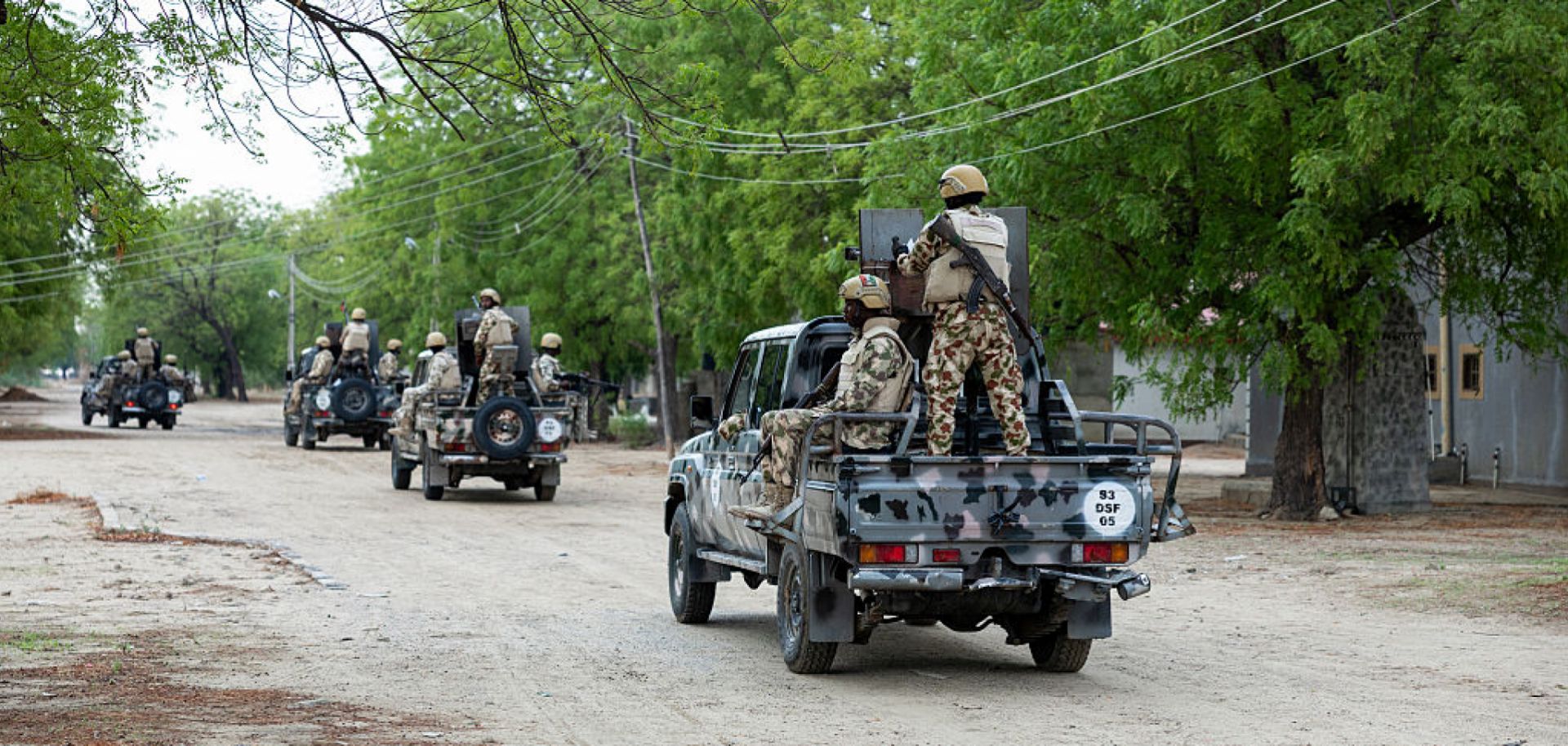
The Nigerian military continued Operation HADIN KAI, relying on a “super-camp” strategy aimed at securing major towns. While this approach has improved security in urban centres, analysts say it has left rural communities exposed.
Malik Samuel, a conflict researcher with Good Governance Africa, described the situation as a “catastrophic failure” of rural defence. “It’s where you have all the institutions of the state. It’s deliberate securing the capital,” he said, noting that the countryside has been left vulnerable.
Human rights advocate Emmanuel Ogebe was more blunt. “If terrorists can kill more people in one state alone than the total number of terrorists the entire Nigerian military has killed, then we are not winning the war. These numbers are not just statistics they are human lives,” he said.
Borno State Governor Babagana Zulum echoed these concerns earlier in the year, warning that border towns were being abandoned. “I’ve duly notified the Nigerian military on the dangers of leaving these towns without security,” he said in October 2025. However, in November, the governor struck a more optimistic tone, stating that “while we grieve any single setback, we can also see that the worst is indeed behind us.”
Looking Ahead
Despite pockets of stability in urban centres, the resurgence of violence in rural Northeast Nigeria underscores the fragility of current gains. With insurgent infighting intensifying, civilians increasingly targeted, and humanitarian operations critically underfunded, the region faces a precarious 2026 unless security and humanitarian responses are urgently rebalanced to protect both cities and forgotten border communities.