




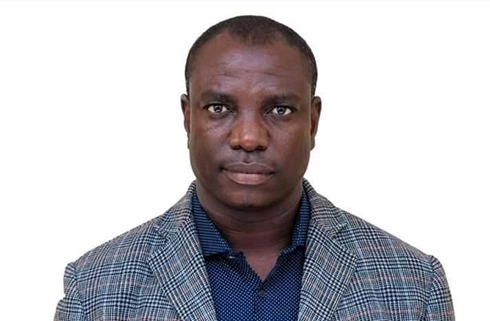
In the pantheon of Nigerian public intellectuals and policy strategists, few figures have the breadth of experience and moral authority of Professor Chris M.A. Kwaja, Ph.D., fspsp. A distinguished academic, peacebuilder, and policy architect, Kwaja’s journey from the scholarly world to the heart of Plateau State’s political arena is not merely a personal evolution , it is a clarion call for purposeful leadership at a time when Nigeria’s democratic project teeters between aspiration and anxiety.
Barely days after formally joining the All Progressives Congress (APC), Professor Kwaja explained to The North Journals that his decision to leave academia “for now” and join the ruling political party was guided by a simple, strategic truth: leaders must be where decisions are made if they hope to effect change. His words, that it is “best to join the winning team so that one will not be left behind”, resonate beyond mere political pragmatism; they reflect a mindset grounded in responsibility, relevance, and readiness to serve.
Kwaja’s move, celebrated in his Gurum Ward of Bassa Local Government Area, was welcomed not just as a political development but as an affirmation of his deep commitment to peace, unity, and development in Plateau State and beyond.
From Scholar to Strategist: A Life Committed to Peace
To understand why Professor Kwaja is uniquely positioned to represent his senatorial constituency, one must appreciate the trajectory of his career, one marked by substance, impact, and intellectual rigor.
Educated to the highest levels of political science and international relations, Kwaja rose through the academy, earning a doctorate in International Relations and Strategic Studies and eventually becoming a Professor at the Centre for Peace and Security Studies, Modibbo Adama University, Yola. His academic work spans governance, conflict management, security sector reform, and the politics of identity in Africa.
Yet, Kwaja’s scholarly influence is not confined to journal footnotes or ivory-tower seminars. His expertise has been recognized globally, among them as a Visiting Research Fellow with the Centre for Democracy and Development in Abuja, a Global Fellow at Brown University’s Watson Institute in the United States, and as African Representative of the United Nations Working Group on Mercenaries.
Along the way, his work garnered meaningful policy impact. Commissioned by the United Nations Development Programme, he designed strategic frameworks addressing violent extremism in Northern Nigeria. He also played a key role in crafting pillars of the National Livestock Transformation Plan (NLTP), a multilevel policy blueprint adopted by Nigeria’s National Economic Council.
This rare blend of academic credibility and policy relevance is precisely what distinguishes Kwaja from the ordinary political aspirant.
At the Heart of Nigeria’s Security Debates
The Plateau State security landscape remains fraught with complexity. Rampant banditry, intercommunal violence, and the spread of lethal militia activity have exacted enormous human and economic costs. Independent reporting has highlighted mass displacement, village takeovers, and ongoing insecurity in several parts of the state.
As Special Envoy on Peace and Security to the Governor of Plateau State, Kwaja has been at the frontlines of this challenge, not just as a commentator but as a strategist and intermediary. He has not shied away from tough, necessary conversations about the performance of security agencies. For example, in response to deadly attacks in Riyom Local Government Area, he called for formal investigations into military conduct and demanded accountability and strategic recalibration.
In remarks that reveal his nuanced understanding of conflict dynamics, Kwaja has also encouraged collaboration between government and civil institutions, from financial bodies to community groups, to bolster peace and socioeconomic resilience.
It is this whole-of-society approach to security, one that balances hard and soft power, policy formulation and community engagement, that gives his leadership profile its depth and credibility.
The Nerve of Governance: Bridging Research and Public Policy
Critics might question whether an academic can transition to the rough-and-tumble of elective politics. But in Kwaja’s case, his scholarship is politics in action.
Long before entering the mainstream of partisan politics, his research and advisory work shaped national policy dialogues. He has engaged with multilateral partners, from the World Bank and European Union to USAID and German Cooperation, giving him an insider’s understanding of how development frameworks integrate with governance challenges.
This experience translates directly to the responsibilities of a senator, where lawmaking must be grounded in evidence, empirical insights, and an unwavering commitment to public good.
A Vision Beyond Partisan Lines
Professor Kwaja’s defection to APC must be understood in context. More than a mere shift, it is an expression of strategic alignment with national and state leadership he believes can deliver on peace and stability. In explaining his decision to join the ruling party, he cited efforts by both President Bola Ahmed Tinubu and Governor Caleb Mutfwang to promote unity, inclusion, and economic realignment as central to his choice.
Yet, far from endorsing blind partisanship, Kwaja has insisted that Nigeria remains multiparty and that accountability, not political dominance, is what sustains democracy.
This balance, deeply rooted in principle yet strategically practical, reflects the kind of leadership Nigerians desperately need in the Senate.
Why Plateau’s Senatorship Needs Chris Kwaja
The position of senator demands more than rhetorical zeal; it requires discipline, intellectual capacity, and policy sophistication. Plateau State, rich in cultural diversity but challenged by insecurity and developmental disparities, needs a representative who can:
- Translate expertise into legislation that addresses structural inequities.
- Forge partnerships between government, civil society, and international stakeholders.
- Champion evidence-based policy that strengthens security, social cohesion, and economic development.
- Uphold accountability, both within and outside partisan contexts.
Professor Chris Kwaja embodies all these qualities. But perhaps more importantly, he represents a new generation of Nigerian leadership, one that bridges the gap between the academy and civic life, between research and governance, and between policy ideas and public impact.
By choosing to contest the senatorial seat, he is not merely seeking office; he is offering a service anchored in knowledge, integrity, and national purpose.
The Time Is Now for a Purposeful Leadership
In a polity often marred by transactional politics and short-term calculations, Chris Kwaja’s candidacy stands out for its seriousness and coherence. His defection to the APC, his willingness to leave academic comfort for public service, and his lifetime commitment to peace and security all signal a leader ready to shoulder responsibility.
For Plateau State, electing Kwaja as senator is not just about representation, it is about infusing the corridors of governance with thoughtfulness, expertise, and a deep sense of duty.
As the 2027 elections approach, the choice before the people is clear: Plateau deserves a senator who has spent a lifetime understanding the structural roots of conflict, who has worked tirelessly for peace, and who is prepared to legislate for a future that truly reflects the aspirations of its citizens.
For those reasons and more, Professor Chris Kwaja remains not just a worthy candidate but the best choice for his constituency.
