




By Aminu Adamu
There is a village in Zamfara State where the people no longer sleep. They take turns keeping watch through the night, each one holding whatever crude weapon they can find, because by the time the police arrive, it is always too late. The bandits who raid their community come well-armed. They arrive on motorcycles, carrying AK-pattern assault rifles and sometimes rocket-propelled grenade launchers. They are not improvising. They are supplied.
This is not an isolated story from the fringes of Nigeria. It is the daily reality for millions of Nigerians stretched across the northwest, northeast, and Middle Belt, communities under siege from armed groups whose firepower now rivals that of the state. And the weapons they use did not materialize from thin air. They came from somewhere. They traveled a route. And that route runs through one of the most consequential arms pipelines in the world, stretching from the collapsed arsenals of Libya, through the fractured states of the Sahel, and into Nigeria’s wide-open northern borders.
Understanding how this pipeline works, who benefits from it, and why Nigeria has been unable to stop it is not just an academic exercise. It is the central security question of our time.
The Numbers Tell a Brutal Story
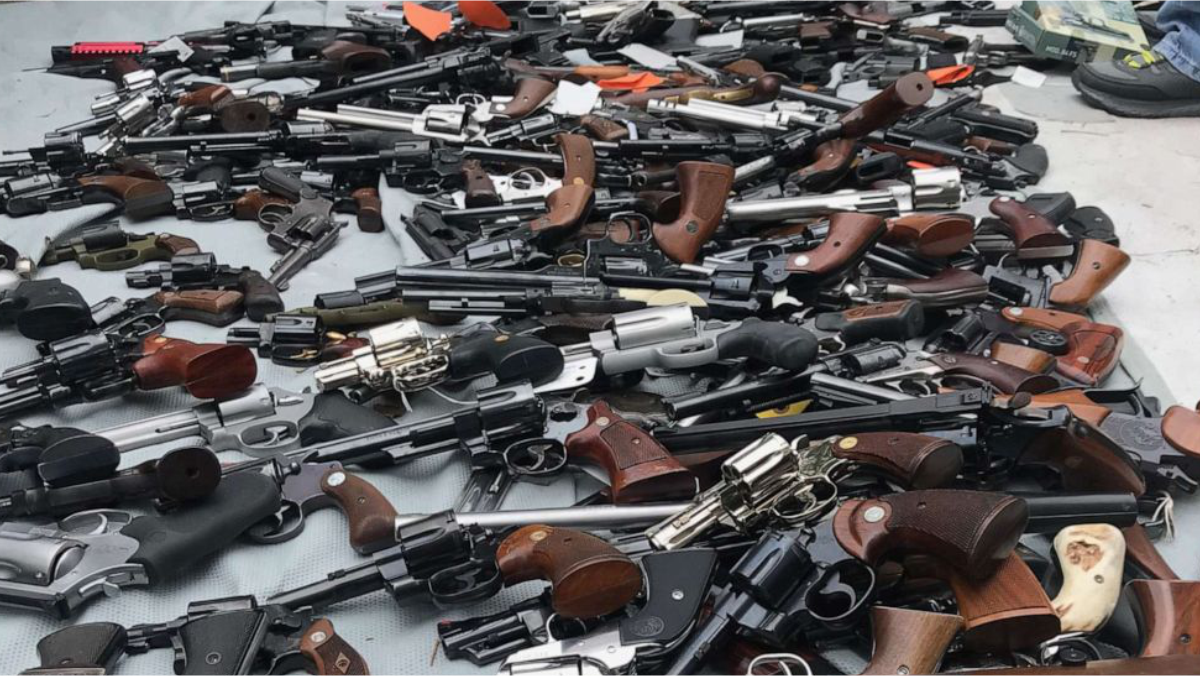
Start with the scale of the problem. In 2020, the Small Arms Survey estimated that Nigeria had 6.2 million small arms in civilian hands, compared to roughly 580,000 held by its security forces. That ratio, more than ten civilian guns for every security force firearm, is not a sign of a well-armed citizenry exercising rights. It is the fingerprint of a state that has lost control of its own territory.
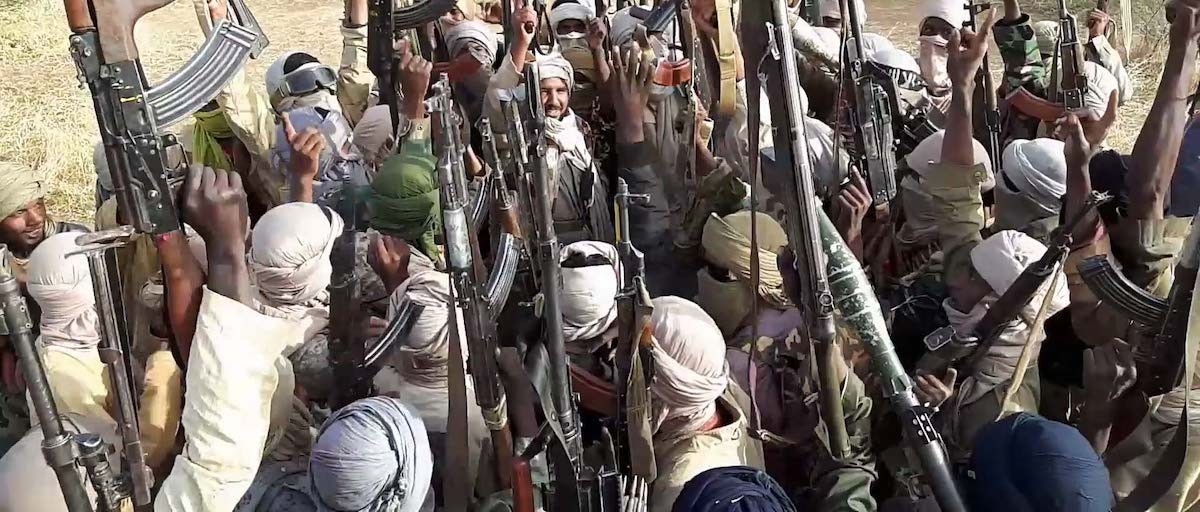
The violence those weapons feed is staggering. According to Nigeria’s National Human Rights Commission, at least 2,266 people were killed by bandits and insurgents in the first half of 2025 alone, a figure that already surpassed the total number of similar deaths recorded throughout all of 2024. Between 2020 and 2024, Nigeria recorded 20,472 fatalities and injuries from 5,291 separate violent incidents, according to Nextier, a security-focused nongovernmental organization. In 2024 alone, the organization documented 1,306 bandit attacks across the country.
The 2025 Global Terrorism Index ranked Nigeria sixth globally for terrorism impact, with a score of 7.658, up from eighth place the previous year. The ECOWAS Commission President Omar Touray, speaking at the 2025 African Chiefs of Defence Staff Summit in Abuja, made the regional picture explicit: West Africa, particularly the Sahel, now accounts for 51 percent of worldwide terrorism deaths in 2024. Half the world’s terrorism deaths. In one region.
None of this is separable from the weapon flows sustaining it.
Libya Lit the Fuse
To understand where these weapons come from, you have to go back to 2011, to the fall of Muammar Gaddafi’s regime in Libya. Before the revolution, Libya maintained one of the most heavily stocked national armories in Africa. The United Nations estimated that at the time of Gaddafi’s fall, Libya held as much as 200,000 tons of weapons. These arsenals, built up over decades of petrodollar-funded military procurement, were abruptly left unguarded as the state collapsed. They became an open warehouse for anyone willing to walk in.
The weapons did not stay in Libya. Fighters who had been armed and trained under Gaddafi dispersed across the Sahel. Tuareg mercenaries returned to Mali and set off a rebellion that brought down a government. Jihadist networks in Niger, Mali, Burkina Faso, and Chad absorbed stockpiles of weapons. Niger’s Agadez region, a crossroads in the southern Sahara, became a key transit zone. A French military operation in 2014 intercepted a six-vehicle convoy in northern Niger transporting three tons of small arms and other military equipment moving between Libya and the north of the country. That was one convoy, on one day. The overall volume passing through over the years has been exponentially larger.
By 2012, the UN Security Council had already warned that looted Libyan firearms could end up in the hands of Boko Haram. Field investigations between 2017 and 2018 confirmed that weapons in Nigeria could plausibly be traced to Libyan national stockpiles. Nigerian Major General Edward Buba said it plainly in 2024: “When we talk about the proliferation of arms, first, you have to look at what happened in Libya years ago and in the Sahel. Now, this gave the opportunity for arms to get into the wrong hands and then filtered into our country, which worsened the issue of insurgency and terrorism.”
In 2012 or 2013, communities in northern Nigeria could reportedly buy a weapon and live ammunition for the equivalent of $10. Firearms that would have cost hundreds of dollars before 2011 were selling for the price of a bag of rice.
The Broken States of the Sahel
Libya was the initial flood. The Sahel became the floodplain.
The five countries of the Sahel belt closest to Nigeria’s northern borders, Niger, Mali, Burkina Faso, Chad, and Mauritania, are among the most fragile states in the world. Since 2020, Niger, Mali, and Burkina Faso have all experienced military coups. All three have expelled French and other Western forces and are now drawing closer to Russia. Niger, which borders Nigeria directly, expelled the French military mission in 2023 and terminated security cooperation with the United States. These political ruptures have not reduced insecurity. They have made it worse.
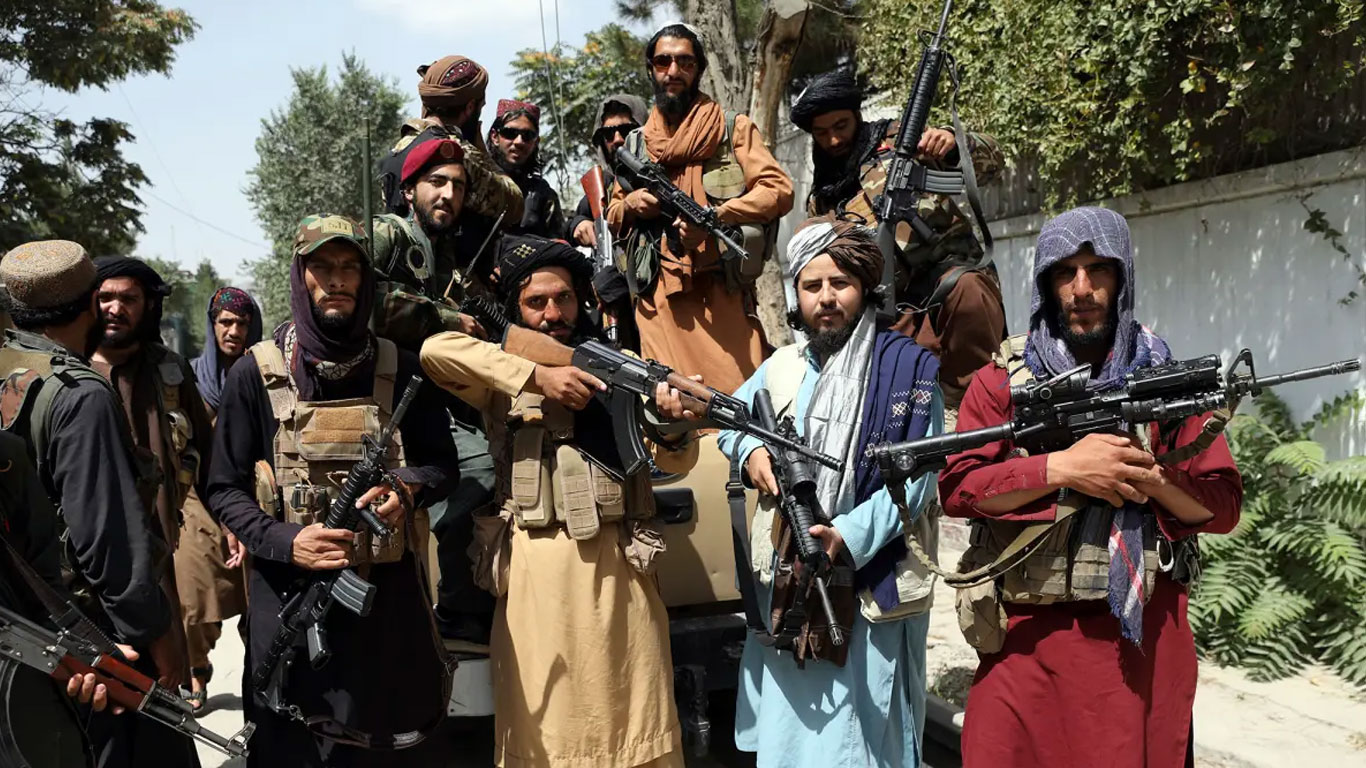
The retreat of Western security partners and the weakening of state institutions has created what analysts call “ungoverned spaces,” vast stretches of territory where governments collect no taxes, deliver no services, and exercise no security presence. In these zones, jihadist groups including Jama’at Nasr al-Islam wal Muslimin (JNIM) and the Islamic State Sahel Province (ISSP) have built parallel governance structures. They tax traders, settle disputes, and increasingly control the arms markets that feed conflict throughout the region.
Mali’s northern regions, once sealed with French military backing, are now essentially open to weapons movement. Burkina Faso is facing a full-blown jihadist insurgency that has displaced millions and killed thousands. The combination of state collapse and jihadist expansion has turned the entire southern Sahel into a weapons distribution network with Nigeria as one of its primary destinations.
The Lakurawa network offers a recent illustration of how these connections work in practice. A Fulani-rooted armed group designated a terrorist organization by the Nigerian government in 2025, Lakurawa has links to the Islamic State Sahel Province and has carried out attacks across Sokoto and Kebbi States, killing 59 civilians between January and June 2025 alone. Reports indicate growing ties between Lakurawa and Boko Haram, with militants from both sides reinforcing each other’s operations. The weapons crossing from the Sahel into Nigeria are not just funding criminal banditry. They are building an insurgency.
The Geography of Failure
Nigeria’s northern borders are not just porous. They are, in a practical sense, uncontrollable given current resources and infrastructure.
The country shares a 4,500-kilometer land border with Niger, Chad, Cameroon, and Benin. Along that vast frontier, there are 84 official crossing points and, according to former Interior Minister Abba Moro, over 1,499 irregular, illegal entry routes. A separate study found as many as 10,000 unarmed routes through which cross-border criminals move freely. In Adamawa State alone, there are approximately 25 illegal routes into Nigeria from neighboring countries.
The terrain is an additional challenge. Vast stretches of the northern borders cut through deserts, forests, and mountains that are difficult and expensive to monitor. The Sambisa Forest and the Mandara Mountains in the northeast, the forests of Zamfara and Sokoto in the northwest, these are landscapes in which armed groups operate with near-total freedom. Security forces lack the air power, the ground mobility, and the communication infrastructure to patrol them effectively.
There is also the problem of corruption. Arms smuggling in border communities is not happening despite security agents. In many cases, it is happening because of them. Multiple investigators and retired officials have described how customs and immigration officers at border posts in Katsina, Zamfara, and Sokoto states facilitate weapons shipments in exchange for cash. Smugglers use empty fuel tankers, bags of grain, and livestock movements to conceal weapons. In the northeast, security researchers have documented arms being hidden inside ordinary cargo under vehicle engines and in commercial goods. When the system is this corrupted, closing legal border crossings achieves little. The 2019 border closure ordered by the Buhari administration did not stop weapons smuggling. When the borders were quietly reopened in 2022, officials acknowledged that the closure had not achieved its security goals. The illegal routes adapted, multiplied, and persisted.
Demand as Fuel
It would be too simple to blame this crisis entirely on supply. Nigeria also has a demand problem, and that demand is driven by a genuine collapse of state protection for ordinary citizens.
There are an estimated 30,000 bandits operating across Nigeria’s northwest, organized into groups ranging from small gangs to formations of more than a thousand fighters. Dozens of communities have been driven off their land. Bandits have sacked at least 638 villages in Zamfara State alone, and another 725 villages in the state are under the effective control of armed groups. Since the insurgency, at least 247,000 people have been displaced, and 120 villages razed in continuous bandit activity.
When communities believe the government cannot protect them and daily experience confirms that belief, they buy guns. When farmers are repeatedly attacked by herders who themselves are armed, farmers acquire weapons for defense. When a kidnapping ring takes dozens of schoolchildren and the military takes days to respond, the message is clear: you are on your own. That message drives demand.
The Nextier report on Nigeria’s security landscape identified five external factors shaping the crisis in 2025, including the war in Sudan, the expansion of terrorist groups across Sahel states, and Russia’s growing influence in Africa. All of these factors increase weapons availability in the region. None of them are within Nigeria’s direct control.
What Has the Government Done?
Nigeria has made institutional efforts to address small arms proliferation, but they have been inadequate relative to the scale of the problem.
The National Centre for the Control of Small Arms and Light Weapons (NATCOM-SALW) exists as a regulatory and coordination body. In late 2024, the center destroyed 2,400 weapons confiscated from criminals across the country, a significant operation that the director-general said was a signal of zero tolerance for illegal trafficking. The Multinational Joint Task Force, comprising troops from Nigeria, Niger, Chad, Cameroon, and Benin, was designed to conduct coordinated operations against Boko Haram and other cross-border groups, but its effectiveness has been severely curtailed by the political ruptures in Niger and Mali and the withdrawal of international support.
ECOWAS has attempted a regional response. The bloc announced a Declaration of Moratorium on the importation, exportation, and manufacture of light weapons in West Africa in 2008, but compliance has been inconsistent and enforcement mechanisms are weak. At the 2025 African Chiefs of Defence Staff Summit, ECOWAS unveiled plans for a $2.5 billion annual counter-terrorism brigade with 260,000 troops. On paper, it is the most ambitious regional security initiative in the organization’s history. Whether it will be funded and operationalized is an entirely different question, given ECOWAS’s track record with ambitious commitments and limited follow-through.
At home, the Nigerian military has been deployed across roughly two-thirds of the country’s states. Air and ground operations have intensified in the northwest and northeast. American airstrikes targeted alleged Islamic State-linked positions in Sokoto State in December 2025. Yet attacks have continued to escalate. In the first half of 2025, deaths from insurgency and banditry already outpaced all of 2024. The security forces are fighting hard. They are not fighting a war they can win with kinetic action alone.
What has not happened is an honest national political reckoning with the structural roots of the problem: the failed border governance, the corruption enabling weapons trafficking, and the governance vacuum in northern communities that has made arms demand so high.
The Path Forward
There is no magic solution. But there are concrete things Nigeria can do, and most of them require political will more than military resources.
The first is a real anti-corruption effort within border security agencies. No technology upgrade and no troop deployment will seal a border that is being opened from the inside. The names of the officials enabling arms shipments through Katsina, Zamfara, and Sokoto border communities are not entirely unknown to security agencies. Prosecutions and accountability would change incentive structures more dramatically than any amount of extra personnel.
The second is stronger regional intelligence sharing. Nigeria’s relationships with Niger and Mali have deteriorated sharply since the 2023 coups. Rebuilding working relationships with those governments, however hostile the political atmospheres, is necessary because weapons do not respect diplomatic estrangements.
The third is serious governance investment in northern border communities. Communities that feel protected by the state do not arm themselves independently. Communities that can make a living from the formal economy are less likely to participate in or tolerate smuggling networks. The political geography of northern Nigeria’s most affected zones is a story of decades of neglect, not just of military under-investment but of schools, clinics, roads, and employment. Reducing demand for weapons requires reducing the conditions that generate it.
The fourth is a properly resourced and legally empowered NATCOM-SALW. The ECOWAS Commission’s Dr. Sani Adamu has specifically cited Nigeria for failing to formalize its national small arms commission through an act of parliament. This matters because without a legal mandate, the agency cannot conduct meaningful oversight over civilian arms holdings, enforce registration, or coordinate across security agencies effectively.
Conclusion: The Cost of the Open Gate
In 2024, Nigeria paid an estimated 2.23 trillion naira in ransom payments to armed groups. In the same year, it allocated 3.85 trillion naira to security and defence. These are not just statistics. They represent an economy being systematically drained by a security failure that has been allowed to persist for too long.
The weapons flowing in from the Sahel are the tools of this crisis, but the gate is open because of choices Nigeria’s governments have made and have failed to make over decades: choosing not to invest in border infrastructure, not to prosecute corrupt security officials, not to build governance in ungoverned spaces, and not to push for the kind of regional coordination that could actually reduce weapons flows.
The people of Zamfara staying awake through the night did not create this crisis. It was handed to them. And until their government closes the gate that has been left open for so long, they will keep watching, waiting, and hoping that this night is not the one when the motorcycles come for them.
***Aminu Adamu Ahmed is the Editor of West Africa Journalists for Environment, Science, Health, and Agriculture (WAJESHA) and The North Journals. A seasoned journalist, researcher, and conflict analyst, his work focuses on the critical intersection of security, governance, and the politics of the Sahel. Currently a 2025/2026 HumAngle Fellow, Aminu specializes in investigative reporting and policy analysis, bridging the gap between environmental pressures and regional instability across West African frontiers.. Statistics in this piece are drawn from the Small Arms Survey, Nigeria’s National Human Rights Commission, the 2025 Global Terrorism Index, Nextier’s Violent Conflicts Database, Amnesty International Nigeria, the Soufan Center, and the UN Office on Drugs and Crime.***
