




By Sani Saidu Muhammad
Lead levels 180 times the safe limit. Cadmium silently destroying kidneys. A river turned into an open sewer, under cover of night, while regulators look away. And the community-built sensor network fighting back.
|
⚠ CRITICAL FINDING Laboratory analysis from the 2025 Sentinel Network audit confirms that Lead concentrations in the Jakara River stand at 0.90 mg/L — approximately 180 times the maximum level permitted by the FAO and WHO for irrigation water. This water is being pumped, every single day, onto farmland feeding Kano’s urban population. |
The clock tower at the Kofar Mazugal gate has not yet struck three in the morning, but the air along the Jakara River is already heavy with something that does not belong there. A sharp, metallic tang. A sweetness that clings to the back of the throat — the signature of cyanide compounds and solvent-laden textile dyes from the factories upstream.
This is not an accident. This is a schedule.
Every night, when the inspectors go home and the city sleeps, the Bompai Industrial Estate conducts what environmental investigators have taken to calling the “midnight discharge” — a calculated, systematic unburdening of toxic industrial waste directly into the tributaries that feed the Jakara River, one of Kano’s most critical water arteries. It has been happening for years. Perhaps decades. And for most of that time, it has gone almost entirely undocumented, unpunished, and unnoticed by anyone with the power to stop it.
This investigation, based on laboratory data collected by the Centre for Information Technology and Development (CITAD) through its community-led Sentinel Network, testimonies from farmers and residents along the Jakara corridor, and a disclosure from within the country’s own regulatory agency, reveals the full anatomy of this environmental crime — and the extraordinary grassroots effort now working to expose it.
A Crime Scene in Perpetual Motion
Malam Musa Abdullahi does not need a laboratory. He stands at the edge of his small plot of land — a rectangle that has sustained four generations of his family along the northern bank of the Jakara — and he simply knows. The river has changed. He smells it before he sees it.
Before dawn, Musa prepares his diesel pump to draw irrigation water, as his father did, as his grandfather did. What the pump pulls from the river today, however, is not what those men pumped. It is a cocktail of untreated industrial effluent. The Jakara, which serves as the arterial lifeline for communities across northern and central Kano, has been repurposed — quietly, deliberately, under cover of darkness — as a toll-free private sewer for the tanneries and textile mills of Bompai.
The consequences reach across 5,000 hectares of active agricultural land lining this river corridor. The farmers here are caught in a lethal paradox: to stop irrigating is to watch their crops die in the Sahelian heat, their incomes evaporate, their families go hungry. To continue is to participate, unknowingly, in a slow-motion poisoning of Kano’s food supply.
| EYEWITNESS · KADAWA COMMUNITY
“I remember bumper rice harvests. Now, the river water is brown, and our maize tastes of chemicals. My children have stomach swelling and pain constantly. We go to the clinic, they say it is the water, but where else do we go? The big companies upstream act like we do not exist. They dump their filth while we sleep, and by morning, my plants look like they have been burned by a fire that has no smoke.” — Mrs. Aliu, grandmother of five, Kadawa community, Kano |
Her grandson, a young boy, stands nearby with a visibly distended stomach and skin that appears unnaturally pale. She points at him as she speaks. She does not need to say anything more.
The Chemical Evidence: What the Water Actually Contains
The 2025 laboratory audit conducted by the Sentinel Network provides, for the first time, a forensic record of exactly what is flowing through the Jakara — and what is finding its way into the vegetables sold at Kano’s markets.
The numbers are devastating.
| 180× The level by which Lead concentrations in the river exceed FAO/WHO safe limits for irrigation water |
5× The extent by which Chromium in river silt exceeds Nigeria’s own domestic safety standards |
FORENSIC WATER & SOIL AUDIT — JAKARA RIVER CORRIDOR, 2025
| Contaminant | Measured Level | Safe Limit | Verdict |
| Lead (Pb) — water | 0.90 mg/L | 0.005 mg/L (FAO/WHO) | ~180× over limit |
| Cadmium (Cd) — soil | 0.13 mg/kg | 0.03 mg/kg (WHO) | 4× over limit |
| Chromium (Cr) — river silt | Exceeds standard | Nigerian domestic limit | 5× over limit |
| Bioconcentration factor — spinach | >1.0 (accumulating) | <1.0 (safe) | Metals entering food chain |
| pH levels — spike events | Up to 12.0 | 6.0–8.5 | Strongly alkaline / caustic |
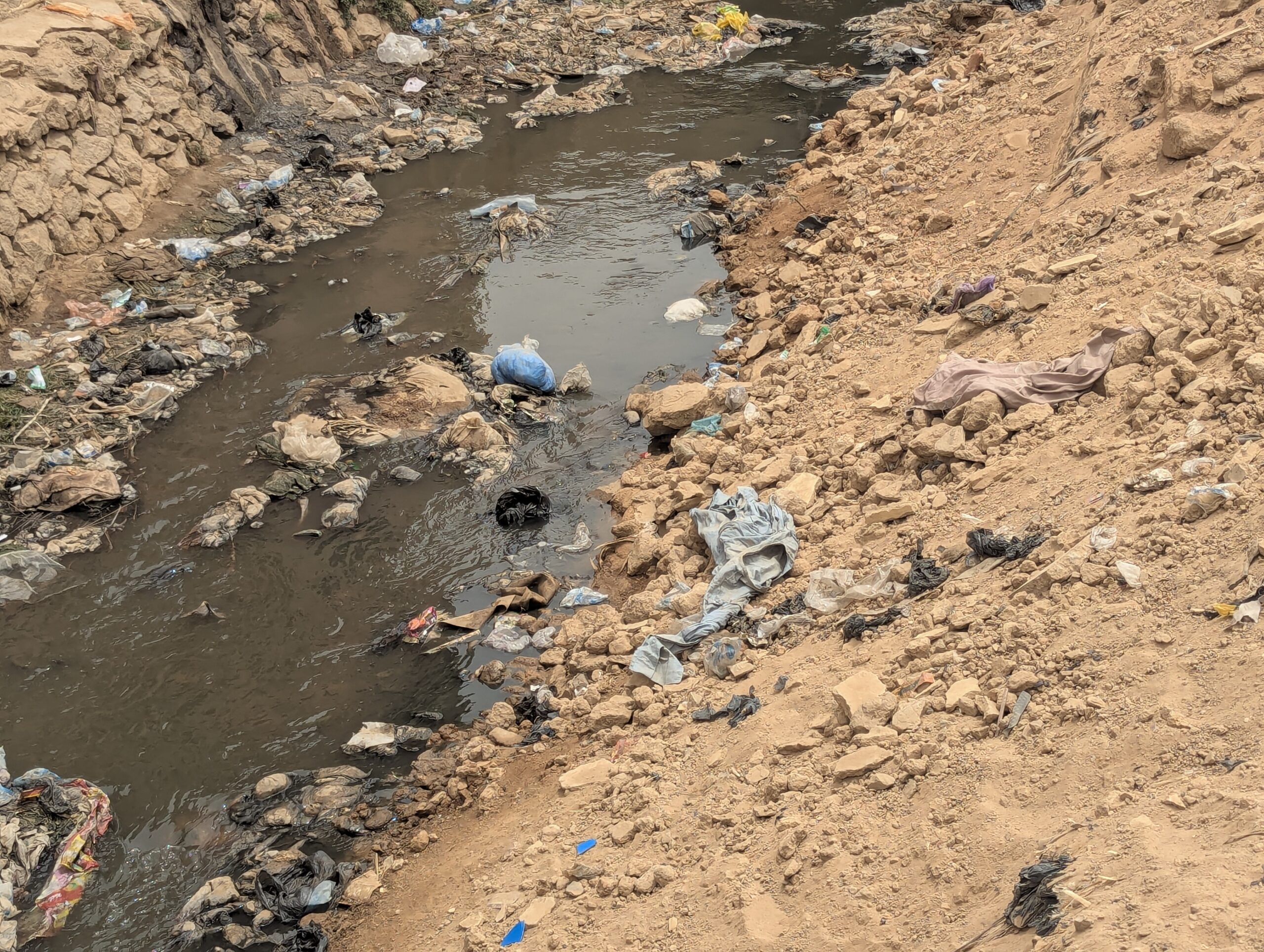
The technique used to establish these figures — Atomic Absorption Spectroscopy (AAS) — strips away the river’s murky appearance to reveal its elemental chemistry. It is the kind of evidence that courts accept. The kind that cannot be dismissed as community hysteria.
What the numbers mean in human terms is this: Lead is a thief of cognitive potential. It crosses the blood-brain barrier. It deposits in the bones of growing children. It does not wash out. Cadmium is a renal toxin of extraordinary persistence — it targets the kidneys with a patience that outlasts any single meal, any single season, any single generation of farming. And the process of bio-accumulation ensures that these metals do not stay in the water. They migrate into the soil. From the soil, into the roots. From the roots, into the leaves of the spinach and cabbage and tomatoes that are harvested, bundled, transported to market, and eaten.
| EXPERT TESTIMONY · BAYERO UNIVERSITY KANO
“Spinach is a hyperaccumulator. It has a higher transpiration rate, which means it sucks up Lead and Cadmium from the soil with terrifying efficiency. When these metals enter the plant, they don’t stay in the roots — they move to the leaves, the parts humans eat. We have measured Chromium in the river silt at five times the Nigerian safety limit. This is not just ‘pollution’. It is a toxic debt that the industry is taking out against the future of Kano. You cannot simply wash Lead out of your blood.” — Dr. Maryam Abdullahi, Agronomist, Bayero University Kano |
The Geography of Impunity: Inside Bompai
The Bompai Industrial Estate was established in Kano’s early decades as a driver of economic modernisation. Today, it is something else: an island of unaccountability surrounded by communities it is slowly poisoning.
The mechanism of contamination is not complicated. Without functional Effluent Treatment Plants (ETPs), the heavy metals involved in the tanning and dyeing processes — Chromium used to preserve leather, Lead and Cadmium compounds integral to synthetic dye formulations — are discharged directly into waterways that eventually meet the Jakara. Companies whose names appear on tax rolls and trade licences — among them Unique Leather Finishing and God’s Little Tannery — operate, according to our investigations, in a regulatory environment where the cost of dumping is essentially zero.
The calculus is brutal and simple: treating effluent costs money. Discharging it at 2 AM costs nothing. As long as the discharge is invisible and unpunished, the rational choice — for a company answerable only to its balance sheet is obvious.
| “We know exactly which pipes are discharging the blue water at 2:00 AM. We have the standards. We have the laws. But there are invisible walls around those factory gates. When we try to enforce a fine or demand an audit, the calls come from high up.”
— A senior official at NESREA, speaking anonymously for fear of losing their job |
The source, a veteran officer at the National Environmental Standards and Regulatory Enforcement Agency (NESREA), agreed to speak only on condition of anonymity. Their account describes a regulatory body that has become, in effect, a documentation service for a catastrophe it is actively prevented from stopping.
“The managers tell us the river ‘washes it away’,” the official said. “They treat the Jakara like a free, infinite asset. My job is essentially to document a catastrophe that I am not allowed to stop.”
When Premium Times sought comment from the management of Unique Leather Finishing, no response was received by the time of publication. God’s Little Tannery did not respond to written questions submitted via registered post.
The Sentinel: A Community Fights Back with Data
The silence that has protected the polluters of Bompai for years is being systematically broken — not by a government decree, not by a court order, but by a mesh of solar panels, silicon sensors, and community resolve.
Led by CITAD under its Community-Centred Connectivity Initiative (CCCI), the Sentinel Network is a decentralised environmental monitoring infrastructure built on principles of digital sovereignty: the idea that communities have the right not only to know what is in their water, but to own the data that proves it. The network’s nodes are solar-powered, enabled with LoRa long-range wireless technology, and distributed across monitoring points along the Jakara and its tributaries. Each node relays data in real time, creating a resilient system that cannot be neutralised by the shutdown of any single sensor.
When the system detects a toxic spike — pH levels surging to 12 or electrical conductivity exceeding 3,800 microsiemens per centimetre — it triggers an SMS alert immediately to the phones of 200 registered farmers along the Jakara through the Reportrix platform.
| SENTINEL NETWORK · DIGITAL RIGHTS OFFICER
“Meaningful connectivity means survival. The polluters rely on our isolation. They thrive because the data is secret. By building our own mesh network, we are stripping the mask from them. We own the sensors, we own the data, and we own the alerts. When the sensors detect a toxic spike, we don’t wait for a government report. We trigger the community.” — Ali Sabo, Digital Rights Officer, CITAD |
The shift, already visible in the data, is remarkable.
BEHAVIOURAL & INFORMATIONAL CHANGE — BEFORE AND AFTER THE SENTINEL NETWORK
| Indicator | Before Sentinel Network | After Sentinel Network |
| Farmer awareness of heavy metal risk | 5% | 85% |
| Response time to discharge events | Weeks (post-lab analysis) | Minutes (real-time SMS) |
| Ownership of monitoring data | Private / factory-held | Community-owned |
| Irrigation behaviour during discharge | Continuous — no knowledge of events | Pumps shut off on toxicity alerts |
For the first time in the history of the Jakara corridor, the factories of Bompai are being watched around the clock by a monitor they did not sanction, cannot bribe, and cannot buy. The informational gap that once allowed 95 per cent of farmers to work in complete ignorance of what was in their water has been bridged.
The dawn at the Jakara no longer belongs only to the factories. It now belongs, also, to the hum of solar-powered sensors, the ping of data packets crossing the Sahelian air, and the quiet vibration of a phone in the pocket of a farmer who now knows, in time to do something about it, that the poison is coming.
The audit of impunity has begun. It will not stop.
| What Must Happen Now: The Path to Accountability → Scale the Sentinel Mesh: Expand the monitoring network immediately to the Challawa River and all other major industrial corridors to create a regional environmental firewall that no single factory can evade. → Link Data to Legal Action: Integrate Reportrix discharge records with pro-bono legal organisations to mount a formal class-action Environmental Audit against chronic polluters. The data exists. The case can be built. → Mandatory Farmer Enrolment: The Kano State Ministry of Agriculture must partner with CITAD to enrol every urban farmer along industrial waterways in the toxicity SMS alert system as a public health requirement, not a pilot project. → End the Invisible Walls at NESREA: Senior officials must be empowered — and where necessary compelled — to enforce existing law without political interference. The standards exist. The evidence exists. The enforcement does not. → Compulsory ETPs or Closure: Any industrial facility within Bompai and similar zones without a functioning, independently audited Effluent Treatment Plant should face immediate suspension of its operating licence pending compliance. |
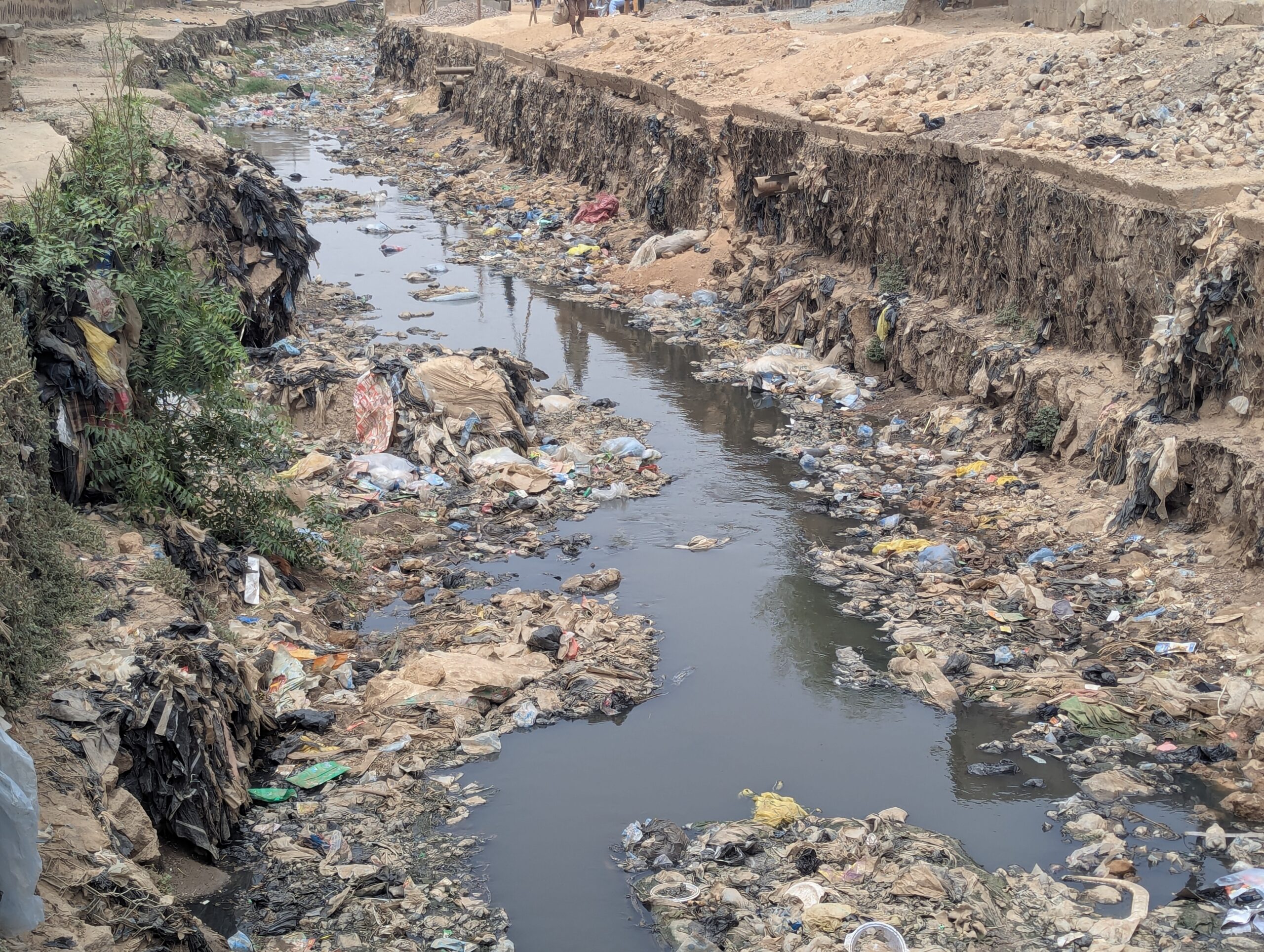
This report was produced with the support of the APC LocNet Initiative under the Call for Narratives on Community-Centred Connectivity Initiatives and Environmental Justice.
