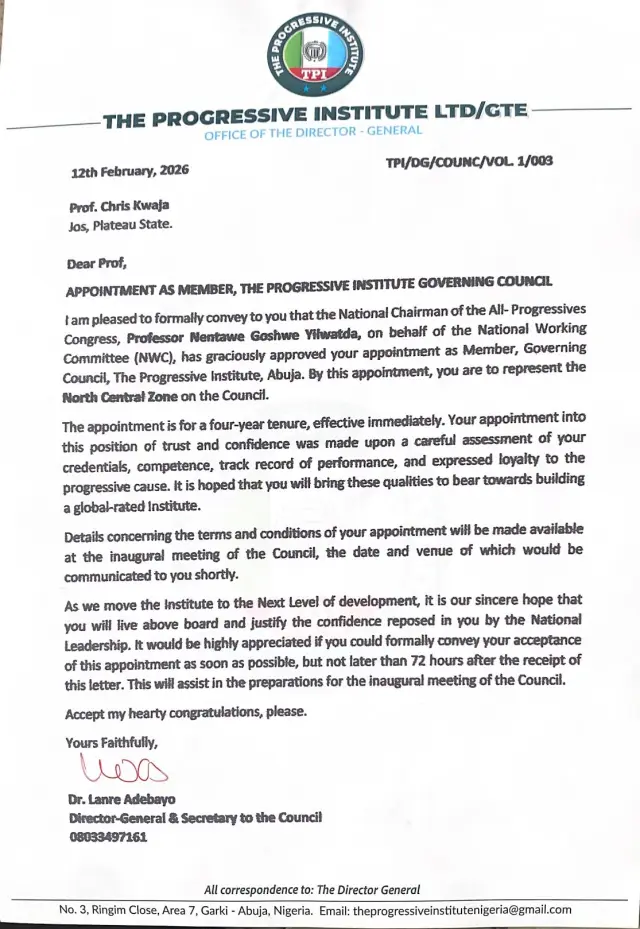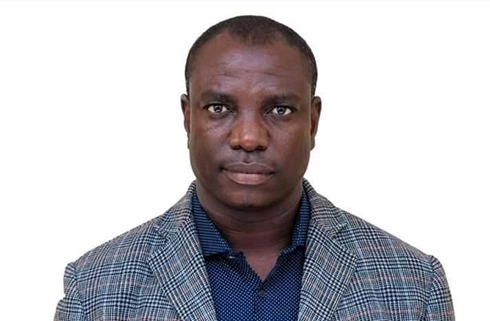
Professor Chris Kwaja, a prominent peace and security scholar based in Jos, has been appointed to the Governing Council of The Progressive Institute Ltd/GTE, following approval by the National Chairman of the All Progressives Congress, Professor Nentawe Goshwe Yilwatda.
The appointment, conveyed in a formal letter dated 12 February 2026 and signed by the Institute’s Director-General, Dr. Lanre Adebayo, names Chris Kwaja as a Member of the Governing Council, representing the North Central Zone.
According to the letter, the decision was endorsed on behalf of the party’s National Working Committee (NWC). The Institute described the appointment as a recognition of Professor Kwaja’s “credentials, competence, track record of performance, and expressed loyalty to the progressive cause.”
The four-year tenure takes effect immediately.
The Progressive Institute, headquartered in Abuja, serves as a policy and intellectual hub aligned with the governing party’s ideological and development objectives. By bringing Kwaja onto its Governing Council, the Institute signals an intention to deepen its engagement with academic and policy expertise from the North Central region.
Professor Kwaja, who hails from Jos in Plateau State, is widely known for his work in peacebuilding, conflict resolution, and governance. His appointment is expected to strengthen the Institute’s policy direction, particularly in areas relating to national cohesion and institutional reform.
In the letter, the Institute expressed confidence that Kwaja would “live above board and justify the confidence reposed” in him by the party’s leadership. Details regarding the terms and conditions of his appointment are to be presented at the Council’s inaugural meeting, the date of which will be communicated in due course.
He has been requested to formally convey his acceptance within 72 hours of receiving the appointment letter to facilitate preparations for the Council’s inauguration.
The development marks another significant intersection between academia and party-affiliated policy institutions, underscoring the growing role of intellectual actors in shaping governance discourse within the ruling party’s ecosystem.