










By Atoyebi Nike
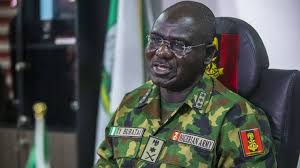
Former Chief of Army Staff Lt. Gen. Tukur Buratai (retd.) has dismissed social media claims suggesting that Nigeria is edging toward becoming a failed state, describing such views as misguided and disconnected from the nation’s long-standing resilience.
In a statement shared on his Facebook page on Wednesday, titled “Nigeria: An Unbreakable Nation Rising Through Challenges,” Buratai argued that assessments like the 2011 CSAT projections fail to acknowledge recent leadership reforms and the resolve of Nigerians to push through adversity.
According to him, Nigeria has consistently weathered political upheavals, economic downturns and security crises that could have crippled many countries.
“Over the years, Nigerian leaders have pulled the country back from the edge. Today, a new generation of patriotic leaders in government, business, civil society, and technology is emerging. They are more connected, more accountable to an engaged citizenry, and deeply devoted to national unity. The idea that such leadership would permit national collapse is unimaginable.
“From independence to this moment, our civilian and military leaders have steered this nation through storms that would have overwhelmed others. Nigeria cannot and will not fail,” he wrote.
Buratai also lauded past leaders such as Nnamdi Azikiwe, Ahmadu Bello, Yakubu Gowon, Murtala Mohammed and Olusegun Obasanjo for guiding the country through defining historical moments. He added that today’s leadership more transparent and answerable to the public continues in that tradition.
While acknowledging current economic pressures, the former Army chief warned against judging Nigeria solely by today’s hardships, calling such perspectives “shortsighted.” He stressed that the country remains Africa’s largest economy and continues to expand its influence in telecommunications, fintech, entertainment, and human capital growth.
Addressing concerns about insecurity, Buratai described the situation as a “renewal phase,” saying Boko Haram’s capabilities have been sharply reduced compared to their peak years of violence.
He pointed to major national projects such as the railway upgrades, expanding road networks, improved airports and the Dangote refinery as signs of a nation committed to building a stronger future.
Buratai further criticized Western institutions for what he characterized as “doomsday predictions” about Nigeria’s trajectory. He urged global partners instead to prioritize investment, technology transfer and more equitable trade relations.
He encouraged Nigerian leaders to intensify economic diversification, adopt decentralized approaches to security and promote stronger civic patriotism across the country.


