









Dead in the Lake Chad Dark:
Nigeria’s Biggest Counterterrorism Win — And Why the War Isn’t Over Yet
The killing of Abu-Bilal al-Minuki, ISIS’s global second-in-command, in a joint US-Nigerian strike is historic. But for a conflict that has claimed over 35,000 lives since 2009, one bullet doesn’t end a war.
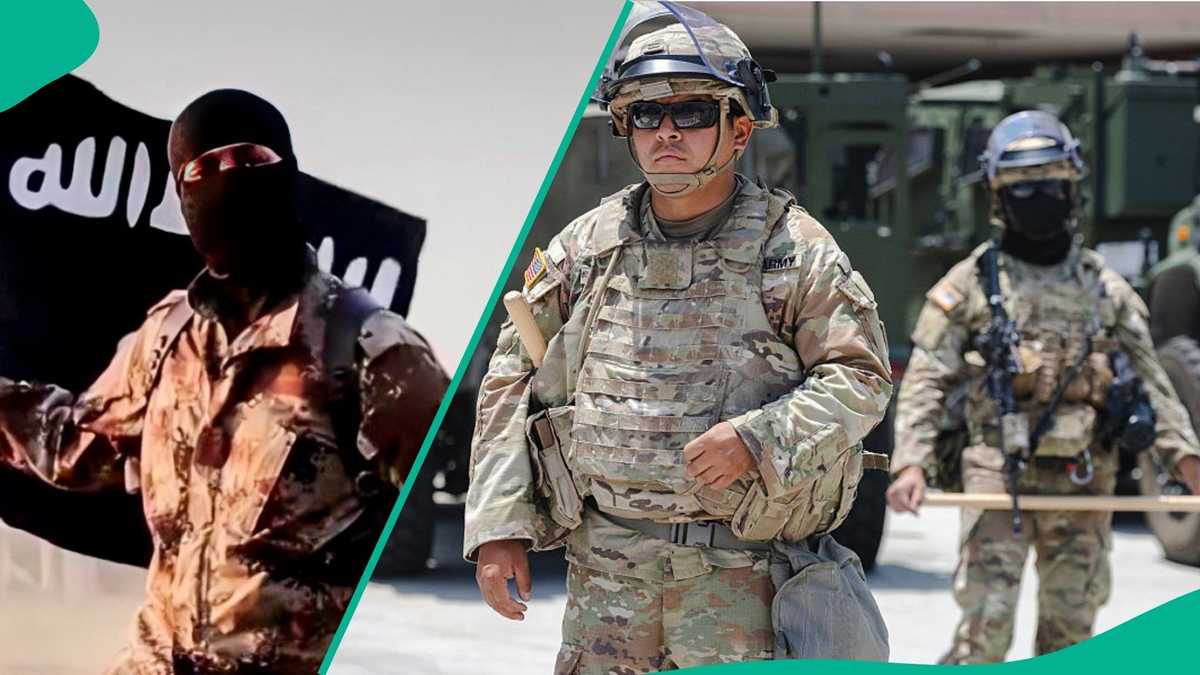
On the night of Friday, May 15, 2026, somewhere in the dense, politically volatile terrain of the Lake Chad Basin, a man named Abu-Bilal al-Minuki was killed. With him died several of his lieutenants. The operation was swift, coordinated, and — by all accounts — meticulously planned. President Donald Trump called it “flawlessly executed.” Nigerian President Bola Ahmed Tinubu thanked his American counterpart for the partnership. And for a brief, remarkable moment, two governments that have not always seen eye-to-eye on terrorism, religion, and regional politics stood together to announce one of the most significant targeted killings in the history of African counterterrorism.
But who exactly was Abu-Bilal al-Minuki? What does his death mean for Nigeria’s 17-year war against jihadist insurgency? And does it significantly weaken ISIS’s African franchise — or is this the kind of headline victory that looks better in press releases than it feels on the ground in Borno State?
These are the questions a conflict analyst must ask. Let’s start with the facts.
The Man Who Was Hiding in Africa
Abu-Bilal al-Minuki — also known as Abu Bakr ibn Muhammad ibn Ali al-Mainuki, or simply Abu Mainok — was not a shadowy mystery figure to Western intelligence. He was born in 1982 in Borno State, northeastern Nigeria, the same state that has been the epicentre of the Boko Haram insurgency since 2009. He knew the terrain. He understood the people. He had grown up in the very communities he would later help terrorise.
According to the US Office of Foreign Assets Control (OFAC) and the Counter Extremism Project, al-Minuki rose through the ranks of the Islamic State West Africa Province (ISWAP) — the ISIS-affiliated faction that broke from Boko Haram in 2016 — to become the Lake Chad division commander under ISIS’s General Directorate of Provinces (GDP), the body that oversees all of ISIS’s international branches. He was also linked to the al-Furqan Office, believed to be one of ISIS’s major financial and operational coordination networks across Africa.
Born: 1982, Borno State, Nigeria — Source: CNN
Affiliation: ISIS’s General Directorate of Provinces; ISWAP Lake Chad commander — Source: Republic World
US Designation: Specially Designated Global Terrorist (SDGT), June 2023 — Source: Sunday Guardian
Role: Coordinated ISIS logistics, terror financing, and operational guidance across the Sahel and Lake Chad region — Source: Free Press Journal
Known alias: Abu Mainok — Source: CNN
In June 2023, the US State Department officially designated al-Minuki as a Specially Designated Global Terrorist — a designation that blocks any US-held assets and prohibits American citizens or financial institutions from transacting with him. That designation was, in hindsight, both a warning and a death sentence. It meant the US was watching. It also meant the clock had started ticking.
Trump described al-Minuki as “the most active terrorist in the world.” That is a claim analysts should treat with appropriate scepticism — it is a phrase calibrated for domestic political consumption. But stripped of the hyperbole, what is not in dispute is this: al-Minuki was the connective tissue between ISWAP’s field operations in the Lake Chad Basin and ISIS’s global command structure. He was the pipeline through which money moved, orders flowed, and strategy was coordinated. He was not just a fighter. He was the architecture.
Operation Hawkeye Strike: The Context Behind the Kill
This operation did not emerge from nothing. It was the product of a US counterterrorism campaign that accelerated sharply after December 13, 2025, when an ISIS ambush in Palmyra, Syria, killed two US service members and an American interpreter. That attack triggered what Washington called Operation Hawkeye Strike — a broader, more aggressive campaign to “sustain relentless military pressure” on ISIS’s global remnants.
In late December 2025, US and Nigerian forces struck ISIS militants in Sokoto, in northwestern Nigeria — a region that had previously not been associated with ISWAP activity but where ISIS-linked groups have been expanding. Then came this operation. Then came the announcement.
Trump confirmed that the strike took place at al-Minuki’s compound in the Lake Chad Basin. Nigeria’s State House confirmed the operation in a formal statement, describing it as “a daring joint operation that dealt a heavy blow to the ranks of the Islamic State.” The statement noted that “early assessments confirm the elimination of the wanted IS senior leader, Abu-Bilal Al-Manuki, also known as Abu-Mainok, along with several of his lieutenants.”
He thought he could hide in Africa, but little did he know we had sources who kept us informed on what he was doing.
— President Donald Trump, Truth Social, May 15, 2026
What this tells us from an intelligence standpoint is significant. The operation required not just military capability but sustained human intelligence (HUMINT) on the ground — sources embedded or recruited within or near al-Minuki’s circle in the Lake Chad Basin. The strike’s precision, which killed the target and his lieutenants in what appears to have been a compound raid, suggests a level of operational depth that signals serious US-Nigeria intelligence integration. This was deliberate. This was a surgical extraction of a leadership node.
Nigeria’s Long War: 17 Years of Blood and Borno
To appreciate the significance of this moment, you need to understand the weight of the conflict behind it.
Boko Haram — whose official name is Jama’at Ahl al-Sunna li al-Da’wa wa al-Jihad (JAS) — emerged from the northeastern Nigerian city of Maiduguri in the early 2000s under the charismatic ideologue Mohammed Yusuf. After a violent 2009 crackdown in which Yusuf was killed in custody, the group re-emerged under Abubakar Shekau as a full insurgency. What followed was one of the deadliest conflicts in African history.
By 2014, Boko Haram had seized territory roughly the size of Belgium. In March 2015, Shekau pledged allegiance to ISIS, and the group became formally known as ISWAP. A 2016 internal split — when ISIS’s global command tried to remove Shekau for targeting Muslim civilians — produced two separate hostile factions: ISWAP under Abu Musab al-Barnawi, and Shekau’s breakaway faction, which retained the Boko Haram designation.
Between 2016 and 2021, the two factions fought each other as viciously as they fought the Nigerian state. In May 2021, ISWAP overran Shekau’s stronghold in the Sambisa Forest. Facing capture, Shekau detonated a suicide vest, killing himself. Many analysts assumed ISWAP’s dominance would consolidate the insurgency and make it more dangerous. They were right. But they also underestimated the resilience of Boko Haram’s remnants, which have since rebounded under a new leader known as Bakura Doro.
According to the Islamic State’s own weekly publication, al-Naba, ISWAP ranked first among all of ISIS’s global “provinces” for the period July 2024 to July 2025 — first in number of attacks claimed (445) and first in casualties inflicted (1,552). In the same period, the Islamic State Sahel Province claimed only 40 attacks. This is not a peripheral franchise. ISWAP is ISIS’s most productive killing machine in the world right now.
What the Killing of al-Minuki Actually Changes
Let’s be honest — and precision matters here. The killing of al-Minuki is unambiguously significant. But it is not the end of the insurgency. History offers us a clear warning about the limitations of leadership decapitation as a counterterrorism strategy.
Nigeria has been here before. When Shekau died in 2021, there were celebrations and claims of strategic victory. Instead, ISWAP surged. When various ISWAP commanders were killed in Nigerian airstrikes in previous years, the organisation reconstituted. Decapitation works best against hierarchical, centralised organisations. ISWAP, shaped partly by al-Minuki’s own influence, has evolved into a more bureaucratic, consultative structure — its leadership council, the Shura, wields significant collective power. This means no single death, not even a global number two, collapses the enterprise.
Trump’s claim that al-Minuki’s removal means “ISIS’s global operation is greatly diminished” should be read as political rhetoric, not analytical conclusion. ISWAP’s command structure is designed to survive leadership losses. The Shura council distributes authority, and ISWAP has demonstrated strong institutional resilience after previous commander deaths.
More than 1,000 Nigerian soldiers resigned from the army between 2020 and 2024. The Multinational Joint Task Force (MNJTF), which Nigeria established in 1994, is weakened by Niger’s withdrawal following the 2023 coup in Niamey. Structural problems do not disappear with one successful strike.
What the strike does change — and this is significant — is the financial and logistics architecture. Al-Minuki was not a battlefield commander. He was an organisational one. His role in coordinating ISIS’s international terror financing and providing strategic operational guidance to the Lake Chad division means his removal disrupts the pipeline between ISWAP and ISIS’s global command. It degrades — at least temporarily — the ability of ISWAP to draw on wider ISIS resources, expertise, and strategic direction.
Intelligence-wise, the operation also reveals something important: the US and Nigeria now share a level of trust and intelligence integration that makes high-value target operations in Nigeria’s difficult terrain possible. That institutional relationship is arguably as important as the kill itself. It is an asset that can be used again.
What It Means for Nigeria
For Nigeria, the symbolism of this operation cuts across several dimensions.
First, it represents a foreign policy and security win for President Tinubu at a time when his government is under intense domestic pressure. Tinubu’s statement — “Nigeria appreciates this partnership with the United States in advancing our shared security objectives” — signals an alignment with Washington on counterterrorism that has been complicated by Trump’s earlier accusations that Nigeria was failing to protect Christians from Islamist militants in the northwest.
Second, it demonstrates that the Nigerian military, often criticised for sluggish responses and operational failures — including the catastrophic Metele attack of November 2018 in which over 100 Nigerian soldiers were killed in a single ISWAP assault — is capable of executing complex, precision operations alongside a major superpower. That matters for military morale, institutional credibility, and public trust.
Third, and most importantly for the long-term conflict picture, this operation establishes a precedent: that the Lake Chad Basin is not a sanctuary. Al-Minuki’s fatal miscalculation was believing that Africa’s ungoverned spaces would protect him from US reach. The message being sent — to every ISWAP commander sitting in a compound somewhere between Borno and the Sahel — is that the surveillance architecture is global, and there is no hiding place deep enough.
Nigeria’s counterterrorism war cannot be won by targeted killings alone. It requires political solutions, reconstruction, and the return of trust between the state and the people of Borno.
— Conflict Analysis Desk
The Timeline of a 17-Year War
Mohammed Yusuf founds Boko Haram in Maiduguri. The group operates as a radical Islamist sect opposing Western influence. In 2009, after a violent uprising, Yusuf is killed in custody. Abubakar Shekau takes command.
Boko Haram seizes territory the size of Belgium in northeastern Nigeria. The April 2014 abduction of 276 Chibok schoolgirls triggers global outcry (#BringBackOurGirls). The conflict becomes truly regional.
Shekau pledges allegiance to ISIS. The group becomes ISWAP. A joint multinational military offensive by Nigeria, Chad, Cameroon and Niger pushes Boko Haram from major towns. Buhari declares them “technically defeated” — too soon.
ISWAP splits. Al-Barnawi’s ISIS-aligned faction and Shekau’s rogue faction become bitter rivals. Al-Minuki, a key ISWAP commander in the Lake Chad region, rises in influence.
ISWAP kills over 100 Nigerian soldiers in the Metele base attack — the single deadliest day for the Nigerian military in the conflict. The scale of the defeat stuns the country.
ISWAP overruns Boko Haram in Sambisa Forest. Shekau detonates a suicide vest to avoid capture. Analysts declare ISWAP the dominant jihadist force. Boko Haram, however, rebounds under Bakura Doro.
The US State Department designates al-Minuki a Specially Designated Global Terrorist. The clock starts ticking.
ISWAP ranks #1 globally among all ISIS branches in attacks (445) and casualties (1,552). Borno State governor warns that Nigeria is “losing ground.” Over 400 Lake Chad Basin attacks are documented.
What Comes Next — And What Must
History has taught us that ISIS is extraordinarily good at one thing: regenerating. The group lost its caliphate in Syria and Iraq in 2017. Analysts declared it finished. Instead, it pivoted to Africa, Central Asia, and Southeast Asia, where it found ungoverned spaces, ethnic grievances, poverty, and weak state institutions — perfect conditions for insurgency. ISWAP is that pivot. It is ISIS’s most successful geographic expansion. And it did not build itself around any single man, not even Abu-Bilal al-Minuki.
What Nigeria needs — beyond the tactical wins — is a political and developmental strategy for the northeast. The Lake Chad Basin’s jihadist problem is, at its root, a governance problem. ISWAP has built an alternative government in rural Borno. By some accounts, its taxation system is considered by local traders to be more reliable than the Nigerian state’s. It generates an estimated $191 million per year — ten times the annual budget of Borno State government. As long as that structural reality remains, there will always be another al-Minuki waiting to fill the gap.
What is urgently needed: the reinvigoration of the Multinational Joint Task Force (MNJTF), weakened by Niger’s withdrawal following the 2023 coup; acceleration of reintegration programmes for ex-combatants, which have largely failed across the region; serious investment in reconstruction, education, and livelihoods in Borno, Yobe, and Adamawa States; and a dual-track approach to both ISWAP and the resurgent Boko Haram faction.
The killing of al-Minuki is a significant data point in Nigeria’s long counterterrorism ledger. It disrupts a command node, degrades a logistics pipeline, and — critically — demonstrates that US-Nigeria security partnership can deliver precision results in the most complex of theatres. That is real, and it matters.
But this is a war measured not in years, but in generations. In a conflict where over 2.7 million people remain displaced, where 8.3 million need food assistance, where Borno State’s governor admitted in April 2025 that his state was “losing ground” — the killing of one man, however strategically positioned, is a battle won in a war that remains deeply, dangerously unresolved.
The Lake Chad Basin is still burning. The question is whether Nigeria and its partners have the patience, the resources, and the political will to do what bullets alone cannot: bring lasting peace to a region that has known almost nothing else but war.
Aminu Adamu is a conflict analyst and master’s student in Peace and Conflict Studies, with a research focus on jihadist insurgencies in West Africa, counterterrorism policy, and post-conflict peacebuilding in the Lake Chad Basin. His work examines the intersection of security, governance, and humanitarian crisis in sub-Saharan Africa. He writes independently and his views do not represent any institution.


