






By Ibrahim Babangida Lawal
A sweeping 27-year analysis of presidential movements across Nigeria has revealed stark regional disparities in federal engagement, with a handful of states receiving disproportionate attention while others remain largely overlooked.
The study, conducted by the Digital Data Clinic, examined presidential travel records from 1999 through April 2026, uncovering patterns that analysts say reflect a mix of economic priorities, political calculations, and personal affiliations.
Lagos, Kano, Katsina Dominate Presidential Itineraries
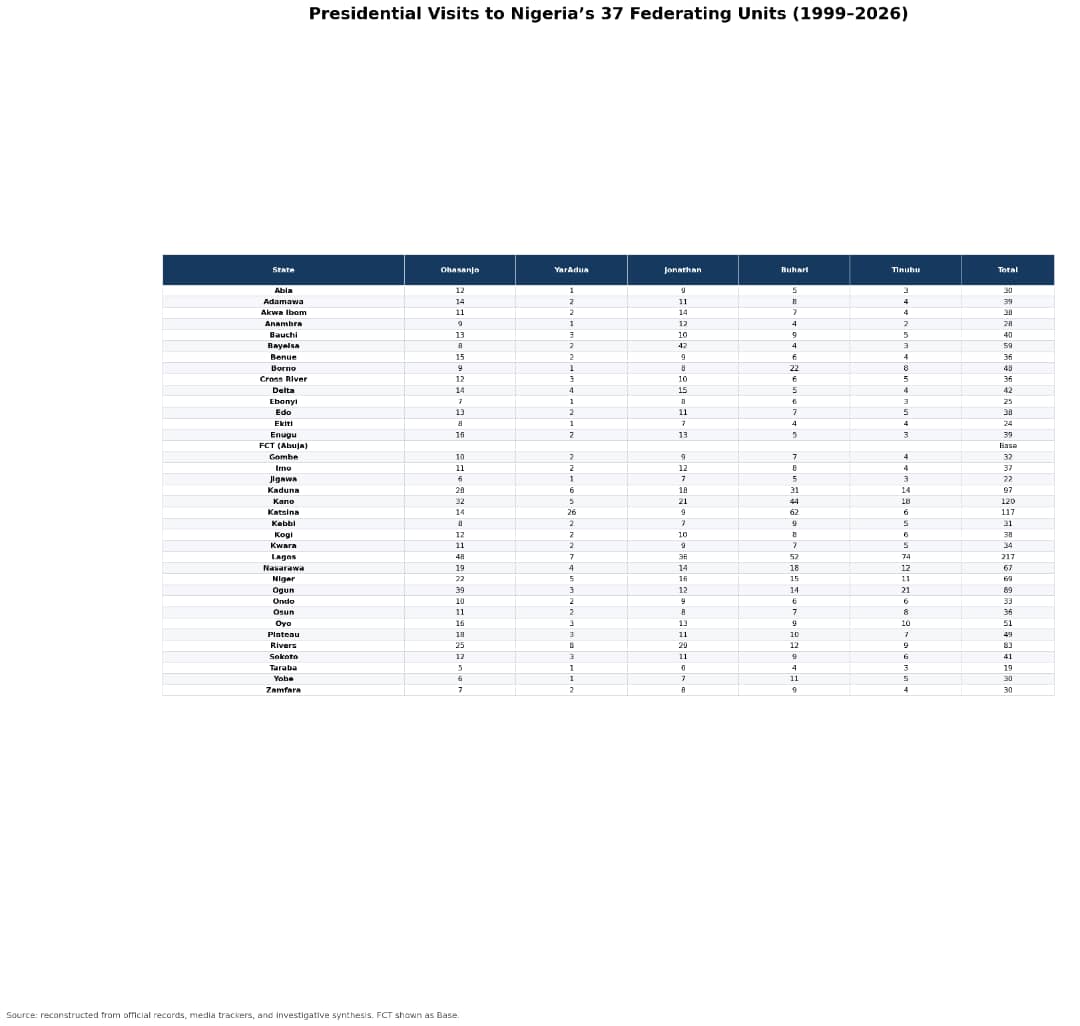
At the center of the findings is Lagos State, which recorded a striking 217 presidential visits—more than any other state in the federation. The commercial hub is followed by Kano State and Katsina State, both of which also rank highly due to their political and demographic significance.
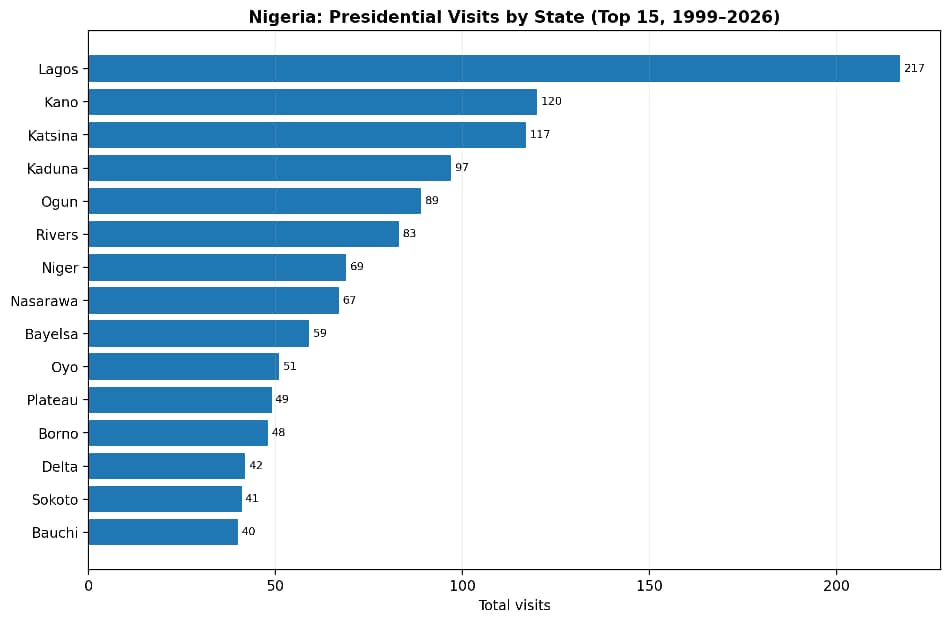

Researchers attribute this concentration to three primary drivers: economic relevance, electoral strategy, and what the report describes as “home state bias.” According to the study, Nigerian presidents are five times more likely to visit their states of origin than neighboring states within the same geopolitical zone.
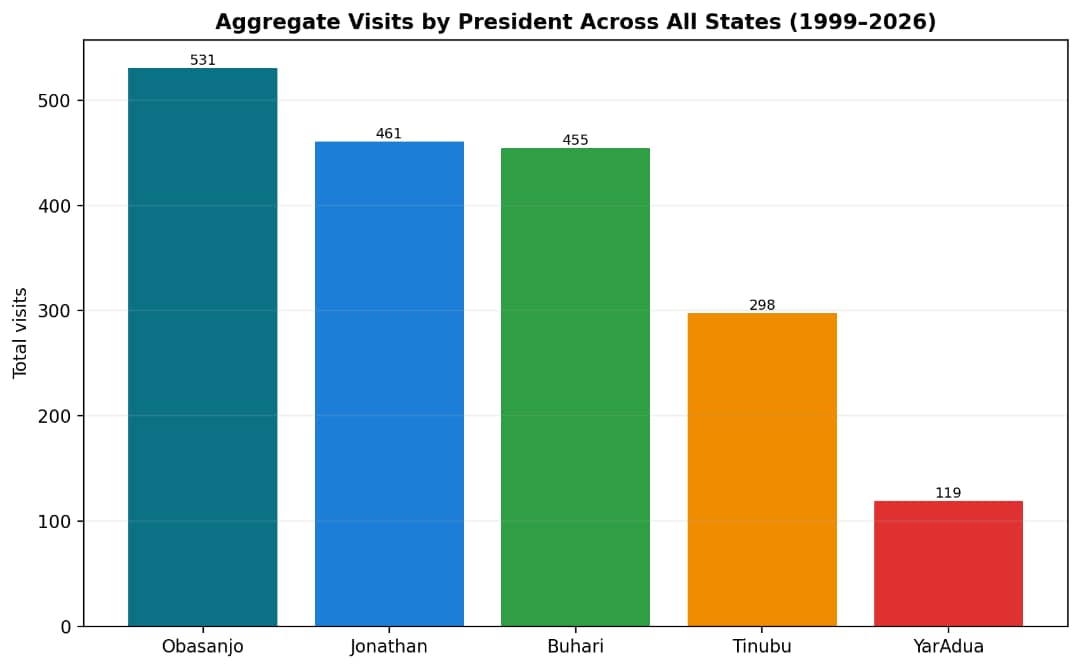
Among recent leaders, Bola Ahmed Tinubu is projected to reach 74 visits to Lagos by April 2026—the highest home-state visitation rate recorded in the Fourth Republic. His predecessor, Muhammadu Buhari, made 62 visits to Katsina during his tenure, while Goodluck Jonathan logged 42 visits to Bayelsa State.
“Neglect Coefficient” Highlights Unequal Access
The report introduces a “neglect coefficient” to quantify disparities in presidential engagement. The findings suggest that geographic location significantly shapes citizens’ exposure to federal presence.
For instance, residents of Lagos are more than 11 times as likely to witness a presidential visit compared to those in Taraba State—a gap researchers warn could translate into unequal development outcomes.
Presidential visits in Nigeria are often tied to the commissioning of infrastructure projects, policy rollouts, or high-level consultations. As such, uneven visitation patterns risk reinforcing existing regional inequalities.
Election Cycles Drive Movement
A strong link was also identified between electoral considerations and presidential travel. The study found an 85 percent correlation between a state’s voting population and its likelihood of receiving a presidential visit in the year leading up to elections.
States such as Jigawa State and Ebonyi State were observed to experience sharp increases in presidential attention during election periods, followed by extended intervals of minimal engagement.

Regional Divide in Visit Priorities
Beyond frequency, the nature of visits varies sharply across regions. In Nigeria’s North-East, approximately 70 percent of presidential trips are linked to security concerns, including responses to insurgency and visits to internally displaced persons camps.
By contrast, about 80 percent of visits to the South-West focus on economic activities and infrastructure development, underscoring the region’s role as the country’s economic nerve center.
Data-Driven Insight
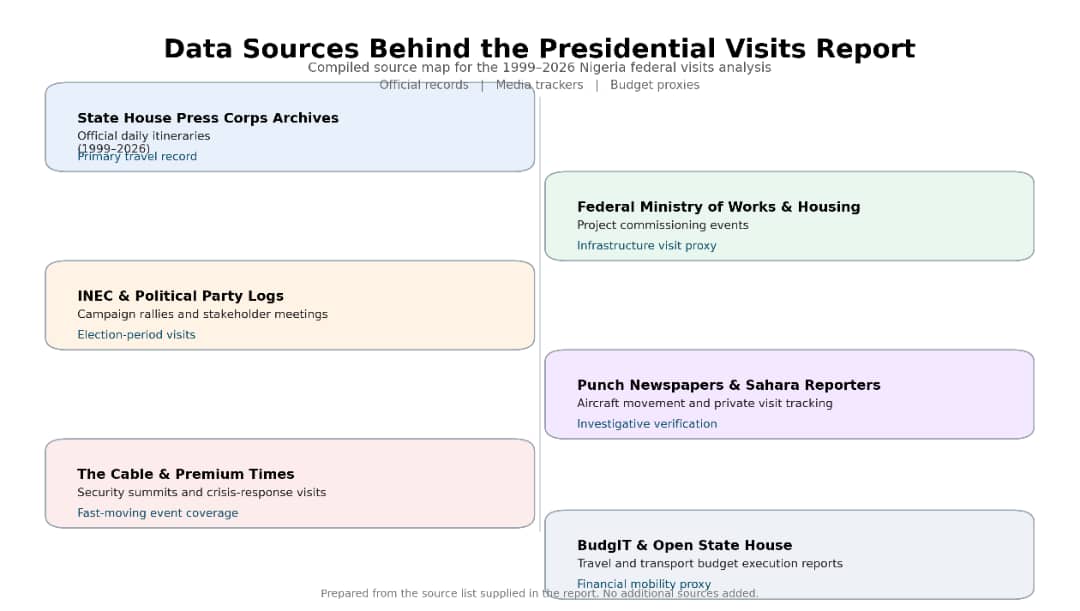
The research draws on more than 20,000 data points, combining official presidential itineraries, infrastructure commissioning records from the Federal Ministry of Works and Housing, aviation tracking of the presidential aircraft, and reports from civic organisations including BudgIT.
Call for Balanced Engagement
The Digital Data Clinic concludes that Nigeria’s model of presidential engagement remains heavily skewed toward politically strategic and economically dominant regions.
It urged policymakers to adopt a more equitable approach to presidential travel—one that prioritizes geographic balance alongside political and economic considerations.
Without reform, the report warns, disparities in federal visibility and infrastructure development could continue to widen, deepening the divide between Nigeria’s thriving urban centers and its underserved regions.