

Close Menu
The North JournalsThe North Journals

    Subscribe to Updates

    Get the latest creative news from FooBar about art, design and business.

    What's Hot

    Adamawa Police Honours CP Dankombo Morris at Award and Commendation Ceremony

    February 18, 2026

    Valentine’s Day: Adamawa Residents Celebrate Love, Family and Reflection

    February 18, 2026

    APC Chairman Approves Kwaja’s Appointment to Progressive Institute Governing Council

    February 17, 2026
    Facebook X (Twitter) Instagram YouTube
    • ABOUT US
    • WORK WITH US
    • CONTACT US
    Saturday, February 21
    Facebook X (Twitter) Instagram
    Subscribe
    The North JournalsThe North Journals
    • Home
    • Newsbeat
      • Agriculture
      • Art/Life
      • Business
      • Economy
      • Education
      • Entertainment
      • Health
      • Judiciary
      • News
      • Technology
      • Travel
      • Foreign
    • Editorial
    • Opinion
      • Diaries
    • Travelogue
    • Journals
      • Engineering
      • History
      • Law
      • Medicine
      • Politics
      • Research
      • Science
      • Climate Change
      • Psychology
      • Sociology
    • Documentaries
    • Guest Post
    The North JournalsThe North Journals
    Home » Kofar Mata Dye Pits: A Living Heritage of Colour, Craft, and Culture
    Literature

    Kofar Mata Dye Pits: A Living Heritage of Colour, Craft, and Culture

    The North JournalsBy The North JournalsDecember 29, 2025No Comments4 Mins Read
    Facebook Twitter Pinterest LinkedIn Tumblr Email
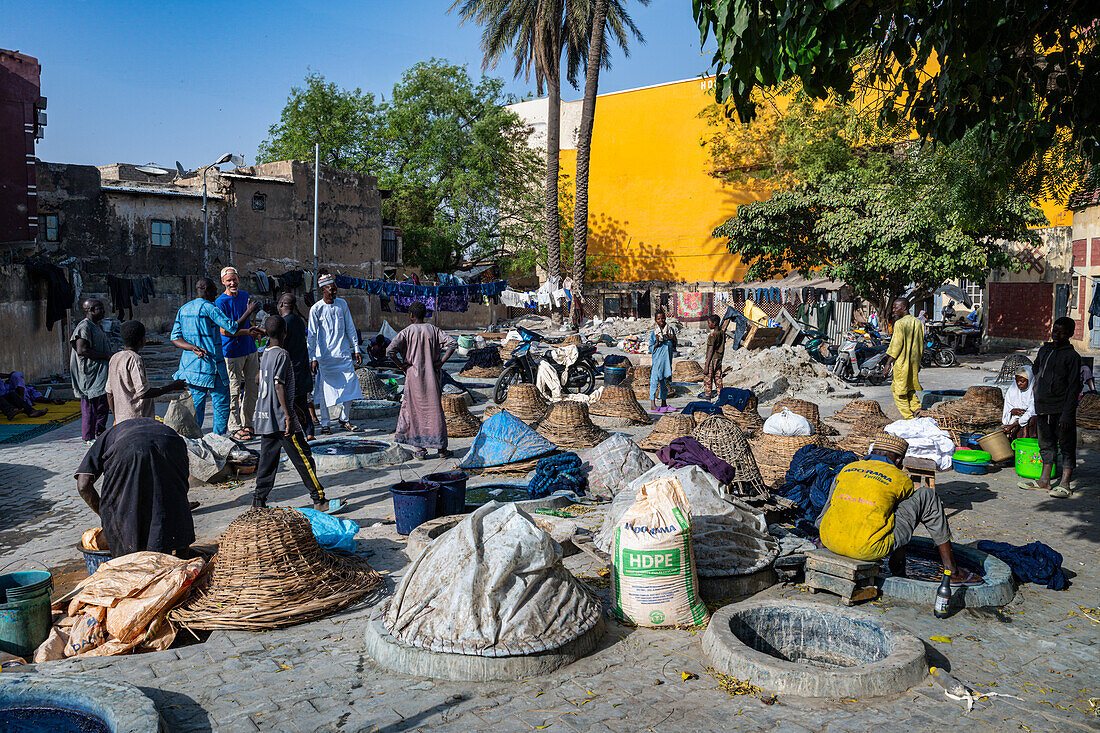
    Kofar Mata Färbegruben, Kano, Nigeria
    Share
    Facebook Twitter LinkedIn Pinterest Email

    By Sulaiman Hamisu Sani
    Bookish Alchemy Creative and Journalistic Writing Fellow, Cohort II, 2025

    At dusk, the Kofar Mata Dye Pits reveal themselves slowly. The scent of earth and indigo hangs in the air. Footsteps soften. The noise of Kano recedes. Here, time does not rush forward; it settles. Every stone, worn smooth by centuries of labour, seems to remember the hands that once shaped it.

    It was in this quiet space, stained in shades of blue, that we met Haruna Baffa, the secretary of the dye pits. He speaks not just as an administrator, but as a custodian of memory, guiding visitors through the story of one of Nigeria’s oldest surviving traditional industries.

    Five centuries of indigo
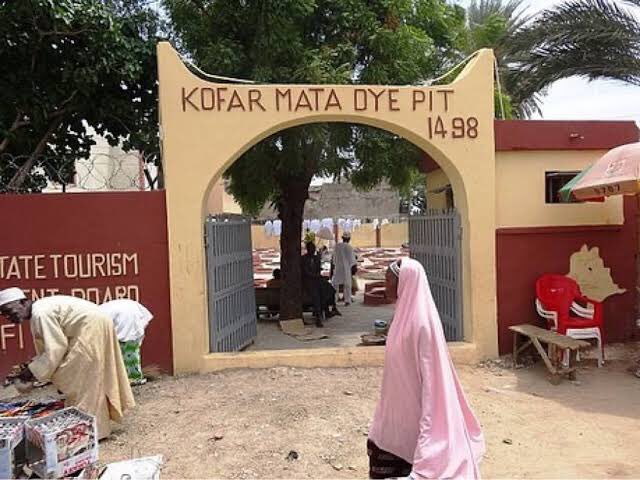
    Founded in 1498 by Muhammad Dabosa, the Kofar Mata Dye Pits, locally known as Marina, have preserved Kano’s indigo-dyeing tradition for more than five hundred years. At their height, the site contained 144 hand-dug pits. Today, 50 remain active, still producing the deep blues that once travelled along historic trade routes within Nigeria and beyond.

    Each pit is narrow and deep, measuring three, four, or six metres depending on its age and function. Work here follows a long-established order. Men carry out the dyeing process, known as rini, descending into the pits, while women prepare the fabrics above ground, carefully tying and folding cloth in a process called kulli. The division of labour is as old as the pits themselves.

    How the dye is made
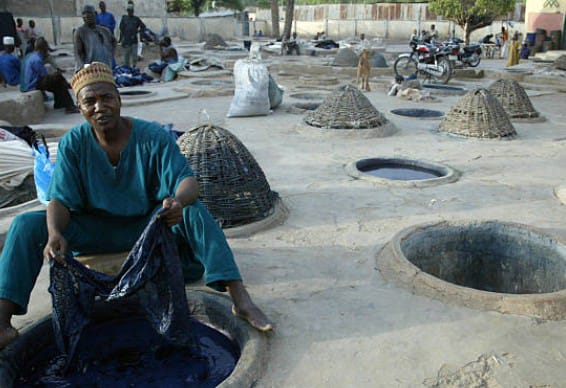
    Dyeing at Kofar Mata is deliberate and unhurried. Water is first poured into the pit, followed by toka (ash), which is left to soak for three days. Up to 200 kilograms of indigo plant, itacen baba, are then added and allowed to rest for another three days. After this comes katsi (potassium chloride), beginning a fermentation that lasts three more days.

    See also  Fulani Community Appeals to President Tinubu for Leader’s Release

    The pit is then covered and left to mature. Over four weeks, the mixture deepens in colour, turning brown in a stage known as makuba. Using a long wooden stirring stick called muciyar tukin baba, artisans mix the dye until it reaches the right balance. After an additional week, it is ready for use.

    From a single pit, four shades can be produced, depending on how long the fabric is submerged: a pale white-blue after one hour, navy blue after two hours, dark blue after four hours, and a near-black blue after six hours.

    Once prepared, the dye can remain usable for up to a year. Nothing is wasted. The residue, tabo, is burned to produce fresh katsi, while the dye itself is traditionally believed to have medicinal value, including uses in treating acne and sickle cell disease. Sustainability here is not a trend; it is a tradition.

    Tradition in a modern world
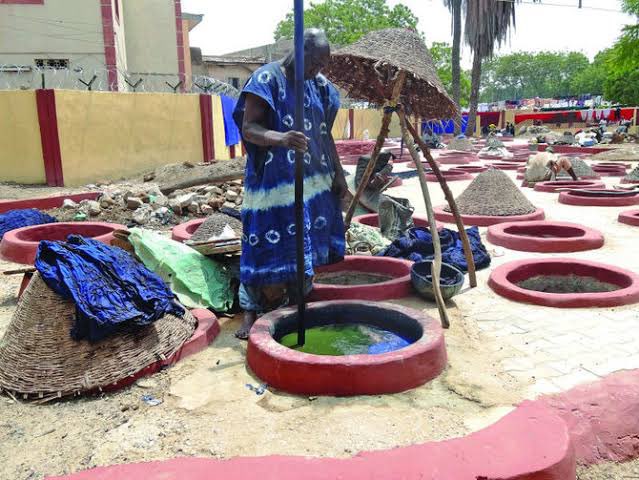
    Today, the Kofar Mata Dye Pits support more than 200 workers and their families. While the pits were once used mainly for hand-woven fabrics, they now adapt to modern textiles, blending innovation with centuries-old techniques without losing their essence.

    For Haruna Baffa, preservation goes beyond daily work. He urges young writers and journalists to document traditional crafts like Kofar Mata, arguing that storytelling is essential to cultural survival. With proper government support, he says, heritage sites can drive tourism, preserve identity, and create jobs.

    A visit to Kofar Mata is more than a field trip. It is an encounter with Kano’s cultural heart, a reminder that traditions endure not only through practice, but through the stories that keep them alive. As long as the pits continue to produce their deep, enduring blues, and as long as their story is told, Kofar Mata will remain alive.

    See also  Climate Change: Spotlight on Overlooked Human Actions

    cultural preservation heritage tourism indigo dye Kano heritage Kano history Kofar Mata Dye Pits Nigerian arts and culture Nigerian Culture traditional crafts traditional dyeing
    Share. Facebook Twitter Pinterest LinkedIn Tumblr Email
    The North Journals

    Related Posts

    Adamawa Police Honours CP Dankombo Morris at Award and Commendation Ceremony

    February 18, 2026

    Valentine’s Day: Adamawa Residents Celebrate Love, Family and Reflection

    February 18, 2026

    APC Chairman Approves Kwaja’s Appointment to Progressive Institute Governing Council

    February 17, 2026

    Comments are closed.

    Our Picks
    Stay In Touch
    • Facebook
    • Twitter
    • Pinterest
    • Instagram
    • YouTube
    • Vimeo
    Don't Miss

    Adamawa Police Honours CP Dankombo Morris at Award and Commendation Ceremony

    News February 18, 2026

    The Adamawa State Police Command on Friday held its maiden Award and Commendation Day, celebrating…

    Valentine’s Day: Adamawa Residents Celebrate Love, Family and Reflection

    February 18, 2026

    APC Chairman Approves Kwaja’s Appointment to Progressive Institute Governing Council

    February 17, 2026

    Adamawa Police Arrest Son For Allegedly Masterminding Father’s Abduction In N2m Ransom Plot

    February 14, 2026

    Subscribe to Updates

    Get the latest creative news from SmartMag about art & design.

    About Us
    About Us

    The North Journals is a hybrid publication that combines the power of investigative journalism with the depth of research-driven analysis. Rooted in Nigeria and inspired by Pan-African realities, we tell stories that matter — stories of people, communities, and issues often left out of mainstream narratives.
    Address: Abuja, Nigeria
    Email Us: info@thenorthjournals.com

    Our Picks
    New Comments
    • Theophilus Thomas on A School-Based Book Club Model Is Rebuilding Reading Habits Among Students in Zaria
    • Sani Tijjani Ibrahim on Book Review: Abandoned
    • Home
    • Travel
    • Politics
    • Business
    • Buy Now
    © 2026 The North Journals. Designed by AkinMore.

    Type above and press Enter to search. Press Esc to cancel.

    Ad Blocker Enabled!
    Ad Blocker Enabled!
    Our website is made possible by displaying online advertisements to our visitors. Please support us by disabling your Ad Blocker.