




By Aminu Adamu Ahmed
Peace and Conflict Studies, Modibbo Adama University, Yola
A peace studies lecture in Yola connects classroom theory with the lived reality of conflict in Lamurde, Adamawa State.
When Professor M. I. Gambo addressed students at the Centre for Peace and Security Studies, Modibbo Adama University, Yola, his message was both unsettling and clarifying. Conflict, he said, is unavoidable wherever human beings coexist. What determines the survival of a society is not the absence of conflict, but its capacity to understand, manage and resolve it.
For many students in the lecture hall, the discussion was academic. For communities like Lamurde in Adamawa State, it is an everyday reality.
Lamurde, a riverine agrarian community located in the southern part of the state, has in recent years experienced recurring tensions linked to land use, traditional authority and local political competition. While these disputes rarely command national attention, their consequences are deeply disruptive, affecting livelihoods, education, and social cohesion. It is this kind of conflict, rooted in daily life rather than ideology, that Professor Gambo’s lecture sought to illuminate.
Quoting Professor Lee, a renowned conflict scholar, Gambo reminded his audience that “a society without conflict is a dead society.” The statement, he explained, does not glorify violence. Rather, it acknowledges a fundamental truth about human interaction: wherever interests, identities and resources intersect, disagreement is inevitable. The danger lies in denying this reality or responding to it with inappropriate mechanisms.
Across Africa, traditional societies recognised conflict as a shared human condition. They did not seek to eliminate it, but to contain it. Long before the emergence of modern legal systems, communities developed indigenous approaches to conflict resolution grounded in dialogue, collective responsibility and social harmony. These approaches, Gambo argued, remain relevant in understanding contemporary conflicts such as those affecting Lamurde.
Conflict Close to Home
In Lamurde, disputes over farmland boundaries and access to river resources have become increasingly contentious. Population growth and environmental pressures have intensified competition over land, while changes in local governance have altered traditional power balances. What were once manageable disagreements between families or occupational groups now risk escalating into broader communal confrontations.
Older residents recall a time when such disputes were addressed through mediation by elders who possessed both moral authority and intimate knowledge of communal history. Resolution processes were public, participatory and aimed at restoring relationships rather than assigning blame. Agreements were reinforced by social expectations, not force.
Today, many of these mechanisms have weakened. Formal legal processes and security interventions have taken centre stage, often addressing symptoms rather than underlying grievances. While these institutions play an essential role in maintaining order, their dominance has sometimes displaced local conflict-management practices that once enjoyed broad legitimacy.
Professor Gambo described this shift as a failure of perceptiveness. He distinguished perceptiveness from perspective, defining it as the way societies interpret and emotionally process conflict. Traditional African societies, he noted, perceived conflict as a social rupture requiring healing. Contemporary responses, by contrast, often frame conflict as a zero-sum contest of rights and power.
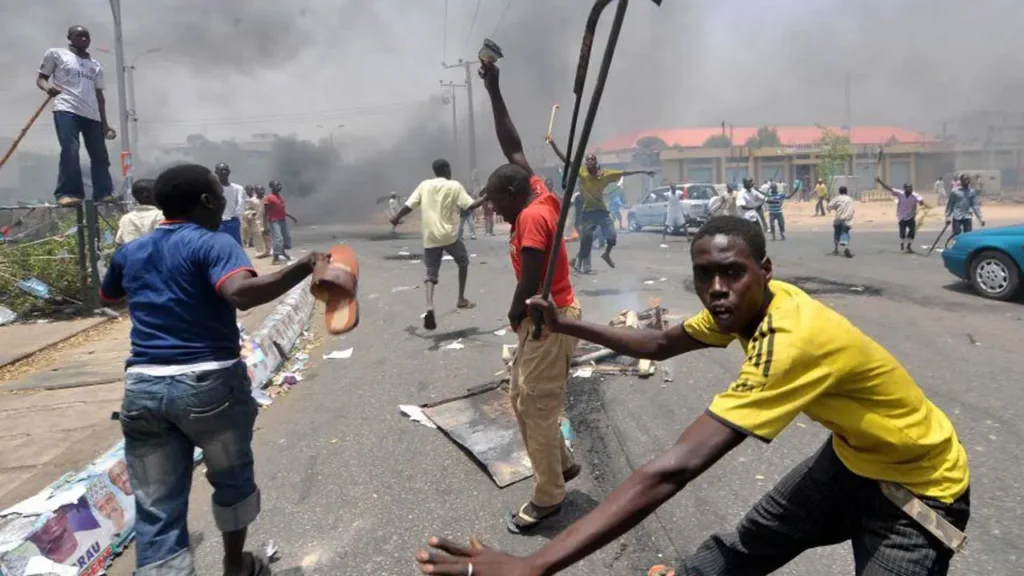
In Lamurde, this change in perception has had tangible effects. Disputes that might previously have been resolved through negotiation now harden into entrenched positions. Youths, feeling excluded from decision-making structures, express frustration through protests or confrontation. Trust erodes, and rumours thrive where dialogue once prevailed.
Understanding the Nature of Conflict
Another central theme of the lecture was the importance of context. Conflict, Professor Gambo argued, does not manifest uniformly across societies. Its causes, dynamics and consequences are shaped by local realities. Effective resolution strategies must therefore be context-sensitive.
The conflict in Lamurde is not driven by abstract ideological differences. It is rooted in material concerns and social relationships: land ownership, livelihood security, traditional leadership and political representation. Attempts to address such issues through distant bureaucratic processes often fail to capture their complexity.
Community leaders in the area note that legal judgments or security interventions may bring temporary calm, but rarely produce lasting peace. Compliance achieved through coercion does not translate into reconciliation. Resentment lingers, awaiting the next trigger.
African traditional approaches, as outlined by Professor Gambo, were effective precisely because they were embedded in local knowledge systems. Mediators understood not only the dispute at hand, but its broader implications for communal life. Solutions were designed to allow continued coexistence, recognising that disputing parties would have to live together long after the conflict subsided.
Managing, Not Erasing, Conflict
Perhaps the most enduring lesson from the lecture was Africa’s emphasis on managing conflict rather than attempting to erase it. Conflict, Gambo insisted, is a constant feature of social life. The objective of peacebuilding should therefore be to prevent conflict from becoming violent and destructive.
In Lamurde, the costs of unmanaged conflict are evident. Agricultural activities have been disrupted, reducing food production and household incomes. Schools have closed intermittently during periods of tension, interrupting education. Women and children face heightened vulnerability, while young men grapple with unemployment and social pressure.
These local consequences mirror national patterns. Across Nigeria, communal conflicts weaken economic resilience, strain public institutions and undermine social trust. They also create spaces for criminal networks and extremist actors to exploit grievances.
Yet there are signs of cautious renewal. In Lamurde, community-based peace initiatives are emerging, drawing selectively from traditional practices while adapting to contemporary realities. Elders, youths and women are increasingly involved in dialogue forums aimed at addressing grievances before they escalate. Though imperfect, these efforts reflect a growing recognition that sustainable peace must be locally grounded.
Lessons Beyond the Classroom
Professor Gambo’s lecture raises broader questions for policymakers and practitioners. Why, he asked, are African approaches to conflict resolution often treated as historical artefacts rather than living resources? Why do peacebuilding interventions so frequently privilege external models over indigenous knowledge systems?
For Adamawa State, and Nigeria at large, the implications are significant. Addressing communal conflicts like those in Lamurde requires more than reactive security measures. It demands investment in local mediation structures, recognition of traditional authorities, and the integration of indigenous practices into formal governance frameworks.
This does not entail rejecting modern legal institutions. Rather, it calls for a complementary approach that harnesses the strengths of both systems. Traditional mechanisms offer cultural legitimacy and moral authority, while formal institutions provide legal clarity and enforcement capacity. When aligned, they can reinforce rather than undermine each other.
For students of peace and conflict studies, the lecture was a reminder that theory and practice are inseparable. Communities like Lamurde are not abstract case studies; they are living laboratories where the success or failure of conflict management strategies is measured in human terms.
A Living Society
As the lecture drew to a close, Professor Gambo returned to his opening assertion. Conflict, he reiterated, is not a sign of societal decay. It is evidence of a living, dynamic community. The challenge lies in ensuring that conflict does not destroy the relationships upon which society depends.
In Lamurde, the path forward does not lie in denying conflict or suppressing it through force. It lies in understanding its roots, managing its expression and resolving it in ways that restore trust and dignity. Africa’s traditional approaches to conflict resolution, far from being obsolete, offer valuable insights into this process.
For communities across Adamawa and beyond, the question is no longer whether conflict will arise. It already has. The more urgent question is whether society will respond with wisdom drawn from its own history, or continue to search elsewhere for answers that may not fit.
