




By Atoyebi Nike
A neglected tropical disease once thought to have faded from Nigeria’s public health radar has resurfaced in Adamawa State, claiming eight lives and infecting at least 28 people as of September 10, 2025. The World Health Organization (WHO) identifies the illness as Buruli ulcer, an infection caused by Mycobacterium ulcerans, a bacterium that produces a destructive toxin known as mycolactone.
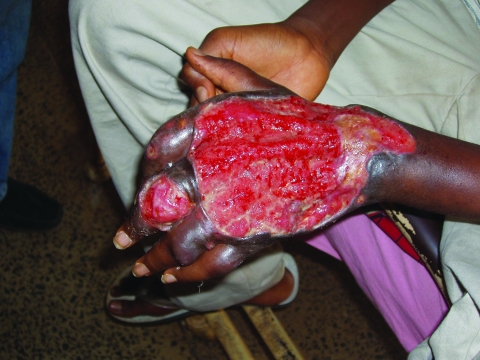
Often sensationally dubbed a “flesh-eating disease,” Buruli ulcer slowly destroys skin and soft tissue, beginning as a painless nodule or swelling before progressing to large, undermined ulcers. Unlike necrotizing fasciitis, which causes rapid, painful tissue death, Buruli ulcer creeps silently, often without fever or pain, making early detection difficult.
Buruli ulcer is not new to Nigeria. Historical medical records trace confirmed cases back to the 1960s in the Benue River Valley, with reports surfacing in Ibadan, Ogoja, and later across southern states. A WHO-supported survey in 2006 documented suspected cases in Anambra, Cross River, Ebonyi, Enugu, and Akwa Ibom. Yet, in the years since, official reporting dwindled, and the disease slipped from national focus.
The latest outbreak in Adamawa rekindles fears that Buruli ulcer has been silently spreading, undetected and underreported. The resurgence is particularly troubling in the Northeast, where fragile healthcare systems already struggle with insurgency, displacement, and limited resources.
According to the World Health Organization (WHO, January 12, 2023), Buruli ulcer has been reported in 33 countries across Africa, Asia, the Americas, and the Western Pacific. However, most cases occur in tropical and subtropical regions, including West Africa.
Only 14 of the affected countries report consistent data to WHO, highlighting significant gaps in surveillance. The Global Health Observatory tracks annual cases, but true figures are likely underreported due to weak health systems.
The exact mode of transmission remains unknown. Unlike tuberculosis or leprosy its close bacterial relatives Buruli ulcer does not spread from person to person.
Research in Victoria, Australia (Health Victoria, October 18, 2024) suggests environmental exposure is key. Mosquitoes and possums may play a role, but the pathway of infection is still unclear. What is certain is that living or working in endemic areas is the biggest risk factor, particularly in warm and humid months.
Signs and Symptoms
Buruli ulcer usually begins quietly:
A painless swelling (nodule), firm plaque, or diffuse swelling on limbs or face.
Within four weeks, these often break down into ulcers.
Bone involvement in advanced cases can lead to deformities.
Lesions are most common on the lower limbs (55%), followed by upper limbs (35%) and other parts of the body (10%).
WHO classifies cases into three categories:
Category I: Small lesions under 5 cm (32%)
Category II: Medium ulcers or plaques (5-15 cm) (35%)
Category III: Severe lesions larger than 15 cm, including bone and joint involvement (33%)
Without treatment, patients face long-term disability, social stigma, and even death.
Diagnosis Challenges
Buruli ulcer is often confused with diabetic ulcers, tropical skin infections, leishmaniasis, or cellulitis. In endemic areas, trained health workers can often diagnose it clinically, but confirmation requires laboratory testing.
The gold standard is PCR (IS2404 test), supported by microscopy, histopathology, and culture. WHO has strengthened African laboratory networks since 2019, but delays in results remain a barrier to timely treatment.
Treatment: Hope and Challenges
Current WHO guidelines recommend a combination of rifampicin and clarithromycin for 8 weeks. Surgery, wound care, and physiotherapy may also be needed for severe cases.
In Australia, a rifampicin-moxifloxacin combination is used with success, though not yet trial-tested globally.
Even with treatment, healing is slow often taking months, and sometimes over a year. Those with advanced disease require long-term rehabilitation.
Prevention and Control
No vaccine exists, though BCG provides limited protection. With transmission still unclear, prevention strategies are community-focused:
Reducing mosquito breeding sites
Using repellents and protective clothing
Washing skin after exposure to soil or water
Covering ulcers and safe disposal of dressings
Control efforts hinge on early detection and community health worker training. WHO has also developed a Skin NTDs App to help frontline health workers identify cases.
Nigeria’s Forgotten Battle
Buruli ulcer is not new to Nigeria. Historical records show:
1967: Four cases identified in the Benue River Valley, including Adamawa (Gray et al.).
1976: 24 cases reported around Ibadan (Oluwasanmi et al.).
1998: 2000: Confirmed cases in Cross River State.
2006: A WHO-assisted survey found 14 suspected cases across five southeastern states.
Despite these findings, Nigeria has no systematic reporting of BU. Health worker unfamiliarity and poor surveillance mean the disease has been largely forgotten until now.
The Adamawa Outbreak: A Warning Signal
The recent outbreak in Adamawa, with 28 infections and 8 deaths, is the largest officially reported in decades. Experts fear underreporting and delayed recognition could mask a much wider spread.
Public health officials now face a crucial question: Will Buruli ulcer become the next neglected epidemic in Nigeria’s North-East?
WHO cautions that while BU is not contagious between humans, clusters of cases often indicate strong environmental risk factors. If unchecked, it could worsen already fragile health burdens in the region.
Conclusion
Buruli ulcer may not spread like influenza or COVID-19, but its ability to cause lasting disability, poverty, and death makes it a serious threat. The Adamawa outbreak is a wake-up call for Nigeria to strengthen disease surveillance, train frontline health workers, and integrate Buruli ulcer into its neglected tropical disease programs.
Without urgent action, a disease once thought to have faded from Nigeria’s health map could resurface as a hidden epidemic in the country’s north-east.
References:
World Health Organization (January 12, 2023). Buruli ulcer – Fact Sheet.
Health Victoria, Department of Health (October 18, 2024). Buruli ulcer: guidance for health professionals.
National Library of Medicine. Buruli ulcer in Nigeria: historical and epidemiological records.
