




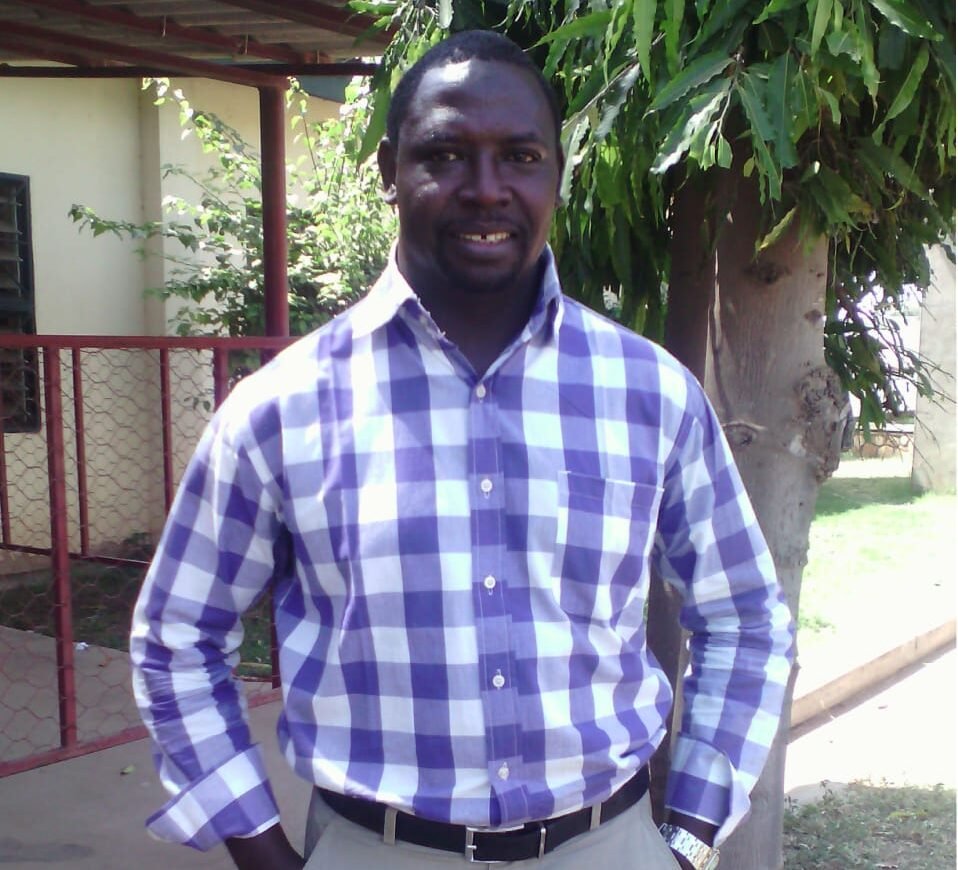
A peace and conflict scholar at Modibbo Adama University, Yola, Aliyu Sani Kafinga, has proposed a new framework for understanding why some conflicts contribute to social transformation while others reinforce violence, domination and exclusion.
Kafinga, of the university’s Center for Peace and Security Studies, presents what he calls the Positive-Negative Conflict Paradigm (PNCP) in a paper titled “The Positive-Negative Conflict Paradigm: Rethinking the Moral Dynamics of Peace and Transformation.” The framework examines conflict not simply as a problem to be eliminated, but as a dynamic process whose consequences can be constructive or destructive depending on how individuals, institutions and societies respond to it.
At the centre of Kafinga’s argument is the distinction between positive coherence and negative coherence.
Positive coherence, according to the scholar, occurs when relationships and systems reinforce human flourishing, dignity, reciprocity, repair and the capacity to correct harmful patterns. Negative coherence, by contrast, occurs when systems remain internally organised while sustaining domination, exclusion, violence, distortion or other forms of harm.
The distinction challenges the assumption that coherence or unity is necessarily beneficial.
A group, institution or political system can be highly organised and united while pursuing harmful objectives. For Kafinga, what matters is not simply whether a system is coherent, but the moral direction and consequences of that coherence.
Conflict as a potential force for transformation
Kafinga’s framework also challenges approaches to peacebuilding that equate peace with the absence of disagreement.
He argues that conflict can expose injustice, reveal grievances and create opportunities for transformation. The objective of peacebuilding, therefore, should not necessarily be to suppress or eliminate every form of conflict, but to enable disagreement, grievance and moral resistance to occur without developing into destructive cycles of dehumanisation and violence.
This position gives the framework particular relevance to societies experiencing political, ethnic, religious and social tensions, where attempts to impose silence can sometimes leave the underlying grievances unresolved.
Kafinga further proposes that conflict and coherence should be examined across different levels, from individual and psychological processes to social and broader systemic relationships. He identifies mechanisms such as feedback, circular causation and cross-scale interaction as important for understanding how patterns at one level can influence developments at another.
When harmful cohesion becomes adaptive
Another important element of the framework is what Kafinga describes as adaptive negative coherence.
He recognises that harmful or exclusionary forms of cohesion may sometimes emerge as responses to external threats, injustice or disruption. This means that peacebuilders cannot always understand destructive group behaviour simply as an internal failure. External pressures and historical conditions may also contribute to the development and persistence of such patterns.
The implication is that interventions aimed at peacebuilding must examine both internal dynamics and the wider environment in which conflict develops.
A moral and spiritual dimension
Kafinga extends his argument beyond conventional approaches to conflict transformation by incorporating a spiritual and metaphysical dimension through what he identifies as the Metaphysical Peace Transformation and Spiritual Synthesis Theory (MPT-SST).
Within this perspective, peace is associated with alignment with what he describes as “Divine Order”, while positive conflict can function as a corrective process capable of restoring balance and harmony. His discussion also introduces the idea of Moral Resonance Theory, through which peace is linked to the alignment of human intentions with a universal moral order.
The approach represents an attempt to connect peace studies with moral philosophy and spirituality rather than treating peace exclusively as a political or institutional condition.
An ambitious framework that still requires testing
While Kafinga’s framework offers an expansive way of thinking about conflict, its breadth also raises important questions.
One challenge is how concepts such as positive and negative coherence can be translated into measurable indicators that researchers can consistently apply across different cases. The framework makes a strong conceptual distinction between systems that promote flourishing and those that sustain harm, but further empirical research would be necessary to demonstrate how reliably the categories can be identified in complex real-world conflicts.
The spiritual dimension also presents an epistemological challenge. Concepts such as “Divine Order” and universal moral alignment may have different meanings across religious and philosophical traditions. A framework intended for application across diverse societies would therefore need to explain how such concepts can be assessed without privileging one particular theological interpretation.
Kafinga’s use of ideas drawn from different levels of analysis, including biological, physical, psychological and social systems, also makes the framework intellectually ambitious. However, analogies between natural systems and human societies require careful treatment because human beings possess moral agency, interpretation and political interests that cannot always be reduced to processes operating in physical or biological systems.
These questions do not necessarily invalidate the PNCP. Rather, they point to areas where further research could strengthen the framework and establish its usefulness beyond conceptual analysis.
Rethinking what peacebuilding means
Despite these limitations, Kafinga’s central proposition is significant: peace should not be understood simply as the absence of conflict.
Instead, he presents peace as the presence of positively oriented coherence across interacting systems. From this perspective, successful peacebuilding requires more than ending violence. It requires addressing the conditions that produce destructive patterns while preserving the possibility of legitimate disagreement, accountability and social transformation.
For societies facing persistent political and social tensions, the framework raises a broader question about what happens after violence is reduced: whether peacebuilding merely restores stability, or whether it creates systems capable of recognising grievances, correcting injustice and preventing destructive patterns from becoming entrenched.
Kafinga’s Positive-Negative Conflict Paradigm therefore presents itself as a call to move beyond the simple opposition between conflict and peace and instead examine the moral direction, quality and consequences of conflict and social coherence.
The framework remains a conceptual proposition requiring further empirical testing, but its emphasis on transforming harmful conflict rather than simply suppressing disagreement provides another perspective for scholars and practitioners examining the pathways from conflict to sustainable peace.
