




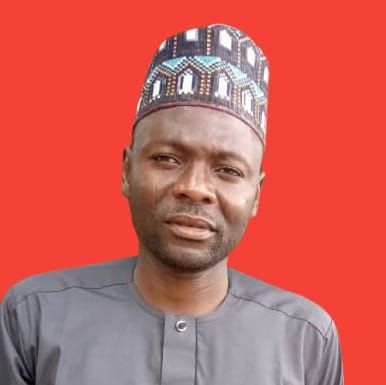
By Bagudu Mohammed
The recent announcement that Mathematics will no longer be a compulsory subject for students in the Arts and Humanities seeking admission into Nigerian universities and polytechnics has stirred both relief and controversy. For decades, the fear of Mathematics has haunted many students like an unending nightmare. The news: “FG removes Mathematics as admission requirement for art students” felt to some like the breaking of a long-standing curse. But beneath that relief lies a deeper question: can we truly afford to live, learn, and lead in a world without Mathematics?
Mathematics, for many, has always been that subject standing at the gate of every dream. I remember those anxious teenage days when I would flip through the Joint Admissions and Matriculation Board (JAMB) brochure, searching desperately for courses that didn’t require Mathematics. None existed. Every path seemed to lead back to numbers, equations, and logical reasoning. I feared Math like one fears a storm, yet, deep down, I knew I could never outrun it. Gradually, I learned to confront it, not out of love, but out of necessity. Even managing a 50% felt like a triumph because it meant survival, progress, and the chance to move forward.
Interestingly, it was my passion for other subjects that helped me overcome my fear of Math. I once dreamed of studying Law, which made me fall in love with English. I even carried a little pocket dictionary everywhere I went, reading it as if it were a novel. People laughed and told me, “Dictionaries are for reference, not for reading.” But for me, every word unlocked a world. I began to understand meaning, nuance, and expression. Later, when my interests shifted to Accounting and Computer Science, I realized that my early struggles with English, with Math were all part of a larger journey of self-discovery. They taught me discipline, curiosity, and perseverance qualities that transcend subjects.
Educational theorists like Jean Piaget remind us that learning is not the mere accumulation of facts but the development of cognitive structures ways of thinking that allow us to solve problems and adapt. Mathematics does precisely that. It trains the mind to reason, to analyze, and to make decisions a skill no profession can do without. Even the so-called “non-Math” courses, such as Sociology, Psychology, or English, still rely heavily on mathematical reasoning. Take calculus, statistics, or probability, the concepts once dreaded in secondary school but which now appear in the curriculum of nearly every discipline. Business Administration, for instance, teaches matrix algebra and data analysis; Psychology employs statistical tools to interpret behavior; even English departments use stylistic quantification and computational linguistics to analyze texts.
So, what happens when we make Mathematics optional? We risk narrowing the intellectual horizon of students. We strip them of a foundational tool that sharpens logic, discipline, and innovation. Research methods in every field from medicine to media are rooted in statistics, which is a branch of Mathematics. The late physicist and philosopher Alfred North Whitehead once said, “Civilization advances by extending the number of important operations we can perform without thinking about them.” Mathematics is the invisible machinery that makes such progress possible. Without it, the modern world from our smartphones to our social media algorithms would collapse into chaos.
Dr. Usman Madugu, in one of his Mathematics lectures, beautifully explained that permutations and combinations are not just abstract concepts; they mirror the way life itself operates. Every password we create, every flight route optimized, every marketing campaign designed, every medical experiment conducted, they all rely on permutations and combinations. Airlines use them to schedule flights and crews efficiently. Researchers apply them to determine the most effective treatment combinations. Investors depend on them to balance portfolios, and cybersecurity experts use them to safeguard our digital lives. These examples show that Mathematics is not confined to classrooms; it breathes in the real world, shaping our daily choices and collective destiny.
In today’s digital era, where coding, artificial intelligence, and data science define progress, Mathematics stands at the center of survival and relevance. Even political scientists, journalists, and artists must now interpret data, analyze trends, and adapt to computational tools. No course, no profession, no human endeavor stands alone anymore. Interdisciplinary knowledge is the new literacy, and Mathematics is its grammar.
So, while the government’s decision may seem to remove a barrier, it might also remove a bridge a bridge to critical thinking, problem-solving, and universal competence. We should not strive to escape Mathematics but to humanize it, to teach it better, to connect it with life. Because the truth remains timeless: no matter the field arts, science, or humanities Mathematics will always find its way back to us.
In the end, perhaps the slogan should not be “No Math for Arts Students” but rather “Math for Every Course and Every Person.” For in every rhythm, symmetry, and structure, whether in music, poetry, or architecture Mathematics quietly beats at the heart of creation.
