










[REVISED STORY]
By Tse Tse Tuk, Aminu Adamu
Originally Published: January 23, 2026 (Updated: February 20, 2026)
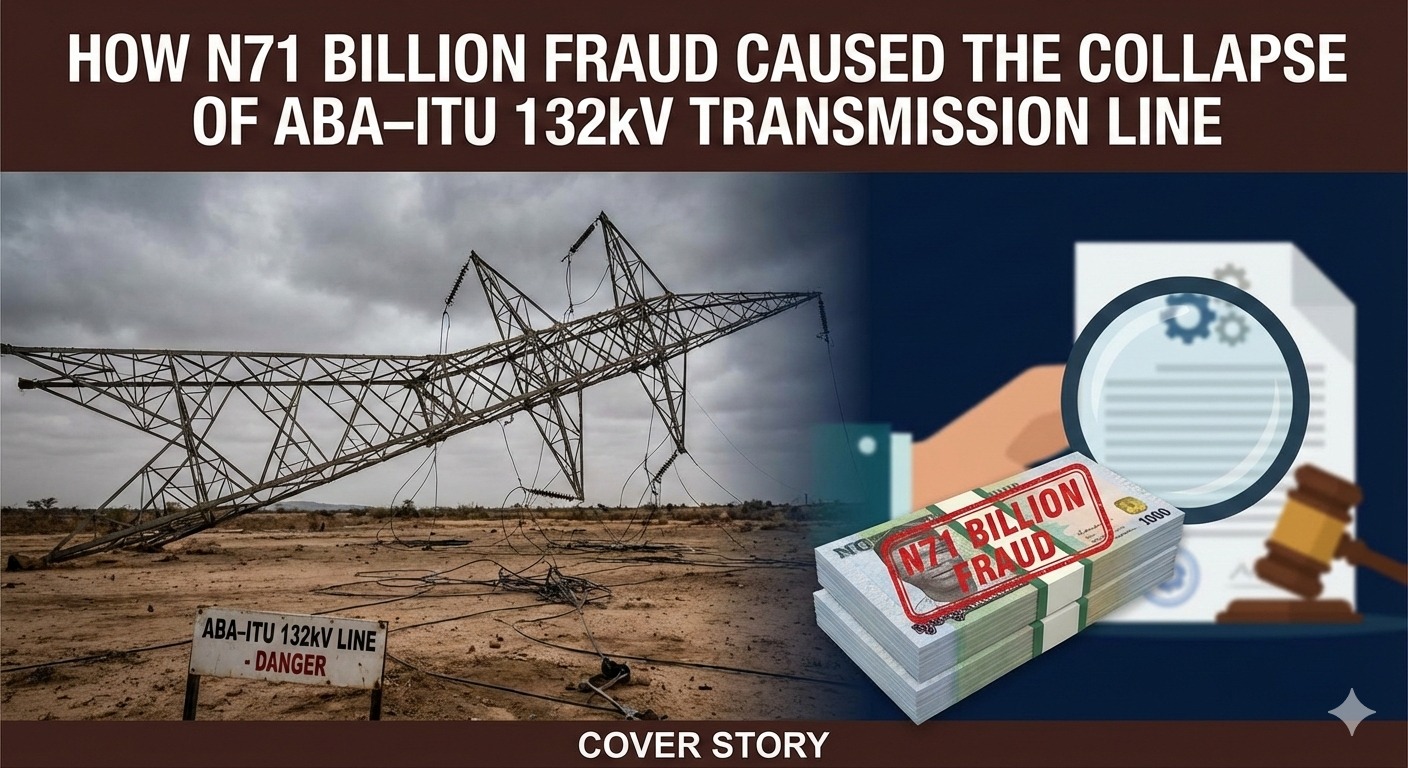
On Saturday, 13 September 2025, Nigeria’s national electricity grid suffered another disruption after a forced outage on the Aba–Itu 132kV Single Circuit transmission line cut bulk power supply to Akwa Ibom State and parts of the Port Harcourt Electricity Distribution Company (PHED) network.
The incident plunged Uyo, Eket, Itu and surrounding communities into darkness within minutes. Authorities described the event as a “system disturbance.” However, documents and petitions seen by The North Journals suggest the outage may be linked to alleged procurement irregularities dating back several years.
A Strategic Asset and a Foreseeable Failure
At the centre of the controversy is the procurement and proposed deployment of GAP conductors on the Aba–Itu transmission line, despite documented operational failures elsewhere and the availability of alternative technologies with established performance records.
The Aba–Itu 132kV transmission line is a critical infrastructure asset. Its failure on 13 September triggered widespread outages across major residential and industrial areas. While the Transmission Company of Nigeria (TCN) has acknowledged dozens of grid collapses in recent years, industry stakeholders argue that the Aba–Itu outage stands apart, alleging that it was the result of questionable procurement decisions.
Petition to BPP Raises Concerns
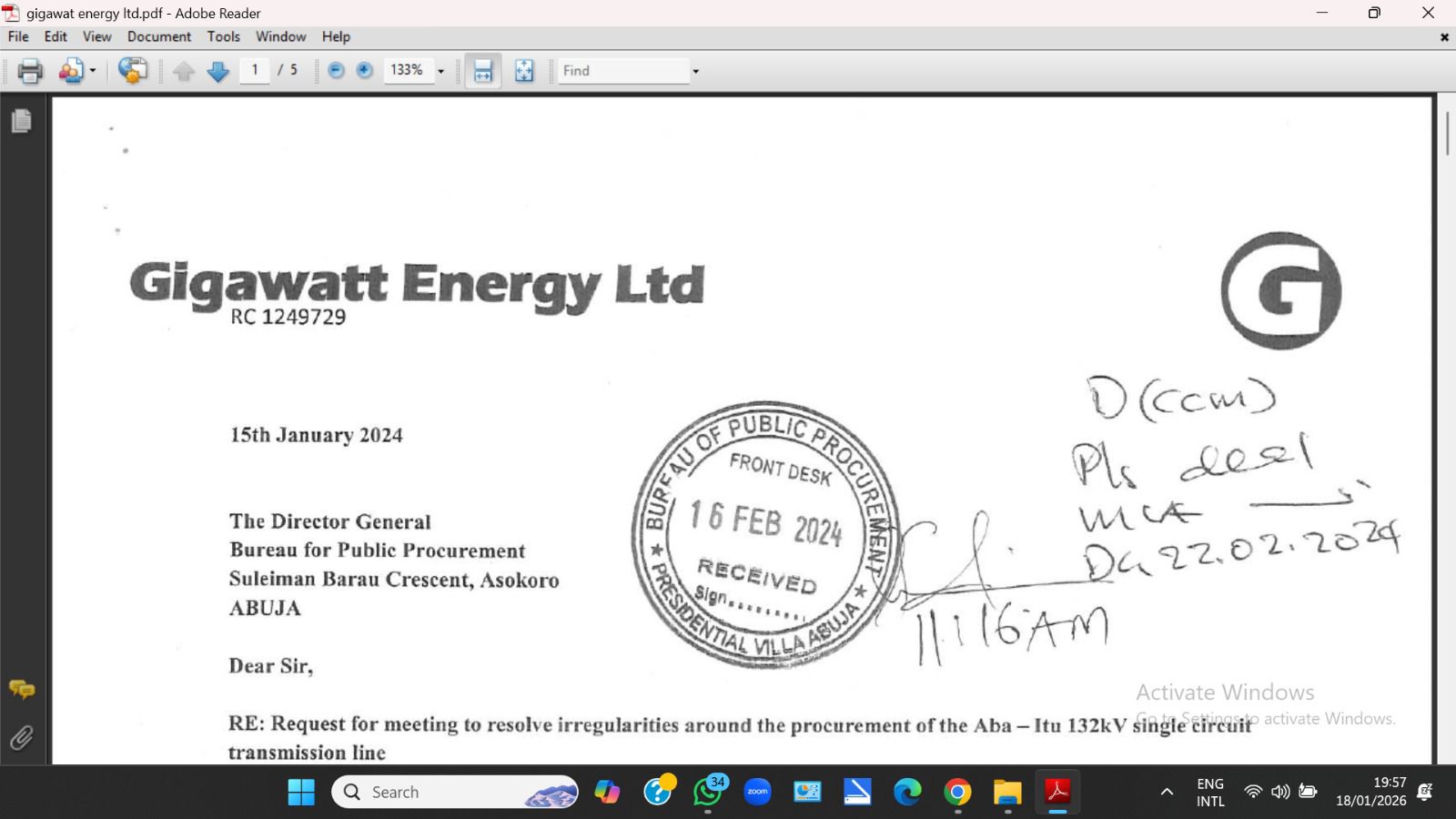

Gigawatt Energy Ltd, a Nigerian power-sector company, has petitioned the Bureau of Public Procurement (BPP), requesting an investigation into “observed irregularities” in the procurement process.
A copy of the petition seen by The North Journals indicates that GAP conductors—which were reportedly removed from service on the Papalanto–Ota and Kebbi lines due to safety risks—were allegedly approved for subsequent projects, including the Aba–Itu line.
Claims Regarding TS Conductor Technology
The petition by Gigawatt Energy also raises concerns regarding the potential introduction of TS Conductor technology into the national grid. The petitioner describes the technology as “untested” within the Nigerian network and argues that it lacks the extensive field performance history required for such critical infrastructure.
According to the petition, transmission assets require independent certification and years of successful field deployment—benchmarks that Gigawatt Energy claims TS Conductor has not yet met in the local context.
However, TS Conductor has strongly disputed these characterizations. In a formal communication to The North Journals, the U.S.-based company clarified that its technology is an Aluminum Encapsulated Carbon Core (AECC) advanced conductor—a technology fundamentally different from the GAP conductors mentioned in the procurement controversy.
TS Conductor further stated that it did not participate in the procurement process for the Aba–Itu project and that its technology was not installed on the line at the time of the September 13 failure. The company maintains that its products meet rigorous international standards and have an established global deployment history.
Allegations of Institutional Capture
As the statutory operator of Nigeria’s transmission grid, TCN is responsible for recommending materials that ensure safety and reliability. Gigawatt Energy alleged that the continued promotion of certain technologies raises concerns regarding possible institutional capture.
The petition accused a group of senior TCN officials of potentially engaging in regulatory circumvention or collusive procurement practices. According to the company, the Aba–Itu outage may be a manifestation of deeper systemic issues within the transmission sector.
Legal Implications and Cost Exposure
The allegations, if proven, could amount to violations of the Public Procurement Act (PPA) 2007, which requires transparency and mandates that only “fit-for-purpose” goods be procured. Industry estimates place Nigeria’s potential exposure—including procurement costs and system disruptions—at approximately ₦71 billion.
Calls for Regulatory Action
Gigawatt Energy has urged the BPP to investigate the allegations and ensure that all conductors, including GAP and TS technologies, undergo certified testing and recognized validation before further deployment.
The September 2025 blackout remains a warning sign. Until these procurement allegations are fully investigated, critics warn that grid instability may be exacerbated not only by ageing infrastructure but by decisions that disregard technical evidence.


