




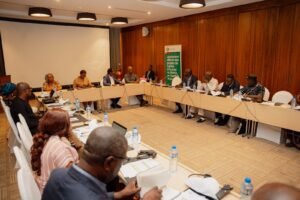







The Nationwide Aspirants Seminar Planning Committee (NASEPCO) of the African Democratic Congress (ADC) has called on Nigerian youths and women to actively seek political offices, stressing that meaningful democratic inclusion can only be achieved when they move beyond voting to contesting for leadership positions.
In a press statement issued on March 7, the committee said the long-held slogan that “youths are the leaders of tomorrow” has become increasingly frustrating for many young Nigerians, arguing that the time has come for youths and women to assume leadership roles in the country’s political system.
The statement, signed by the committee’s Publicity Secretary, Hon. Joseph Enan Magari, on behalf of Chairman CMR Abel Abaji, emphasized that the participation of young people and women in politics is essential for the growth, stability, and sustainability of Nigeria’s democracy.
According to the committee, the Federal Government has repeatedly stressed the need for broader inclusion in governance, with advocacy for at least 35 percent representation for youths and women in political and leadership positions nationwide.
It said Nigeria’s youthful demographic profile should naturally translate into stronger representation in political leadership, but noted that many young people remain largely confined to voting during elections rather than aspiring to elective or appointive offices.
The committee also expressed concern about the role young people often play in electoral violence, noting that youths are frequently used as political thugs or involved in electoral malpractice during elections.
“Who snatches electoral materials during elections? Youths. Who are the police officers that will catch them? Youths. Who are sent to either kill or get killed as soldiers? Youths,” the statement said, describing the situation as unfortunate and urging young Nigerians to reject manipulation by political elites.
It argued that the only way to break the cycle is for young people and women to actively participate in political parties, engage in policy debates, and contest for leadership positions.
NASEPCO further stressed that youth and women’s participation is not only about representation but also about shaping policies on issues that directly affect them, including education, employment, entrepreneurship, technology, and social development.
According to the committee, empowering young leaders can strengthen democratic institutions by encouraging transparency, accountability, and innovative governance approaches.
The statement also urged stakeholders — including government institutions, political parties, civil society groups, and community leaders — to create enabling environments that encourage young people and women to participate in politics.
Such support, it said, should include mentorship programmes, leadership training, and fair opportunities within political parties, as well as the removal of barriers that discourage youths and women from contesting elections.
The committee encouraged young Nigerians to take advantage of opportunities provided by the Not Too Young To Run Act, which lowered the age requirement for several political offices and opened the door for younger candidates to contest elections.
According to NASEPCO, achieving the 35 percent inclusion target requires commitment not only from government and political institutions but also from the youths themselves.
“Youths and women are not just leaders of tomorrow but leaders of today,” the committee said, urging them to become active decision-makers rather than spectators in the democratic process.
The statement also reflected on Nigeria’s political history, noting that several past leaders rose to prominence at relatively young ages, and argued that today’s generation must show similar political courage and engagement.
The African Democratic Congress (ADC), the committee said, remains committed to promoting 35 percent youth inclusion and 35 percent women’s representation within its political framework.
It therefore called on capable youths and women across the country to step forward and contest political positions, describing the move as necessary to reshape Nigeria’s political future.
“This is a clarion call to change the narrative,” the committee said. “Come out and let us make it happen.”


