





By Radia Issah
Tamale, Ghana
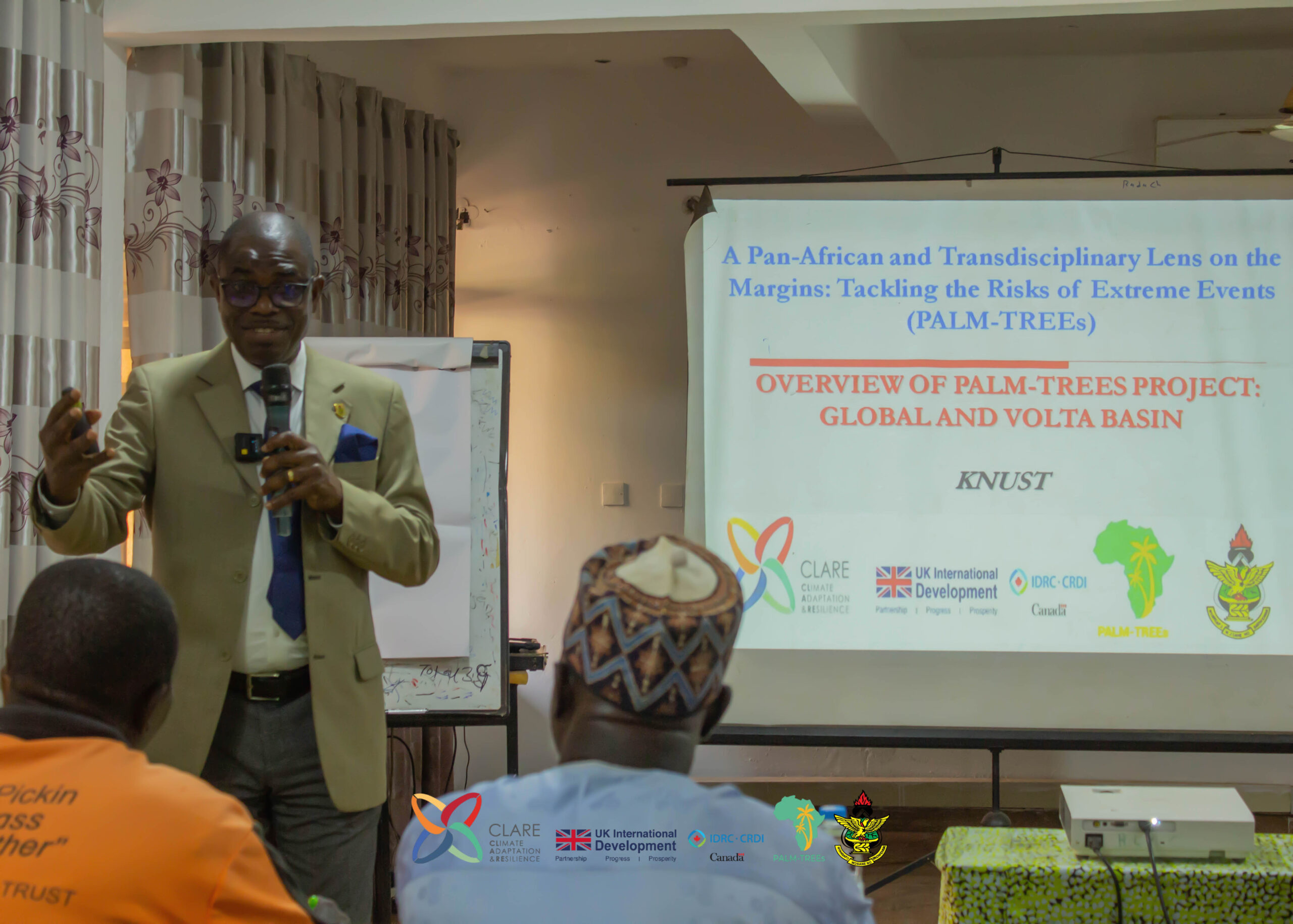
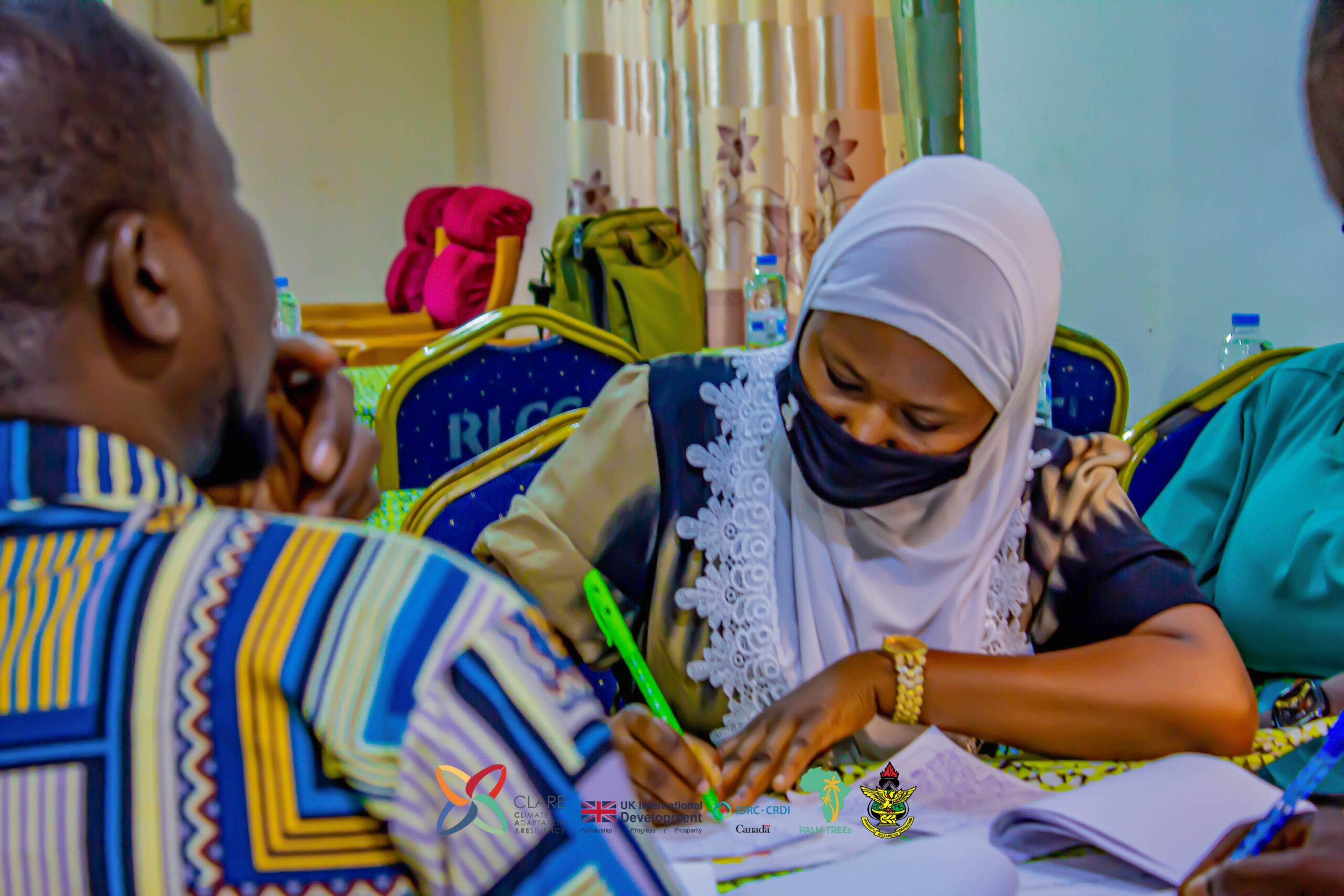
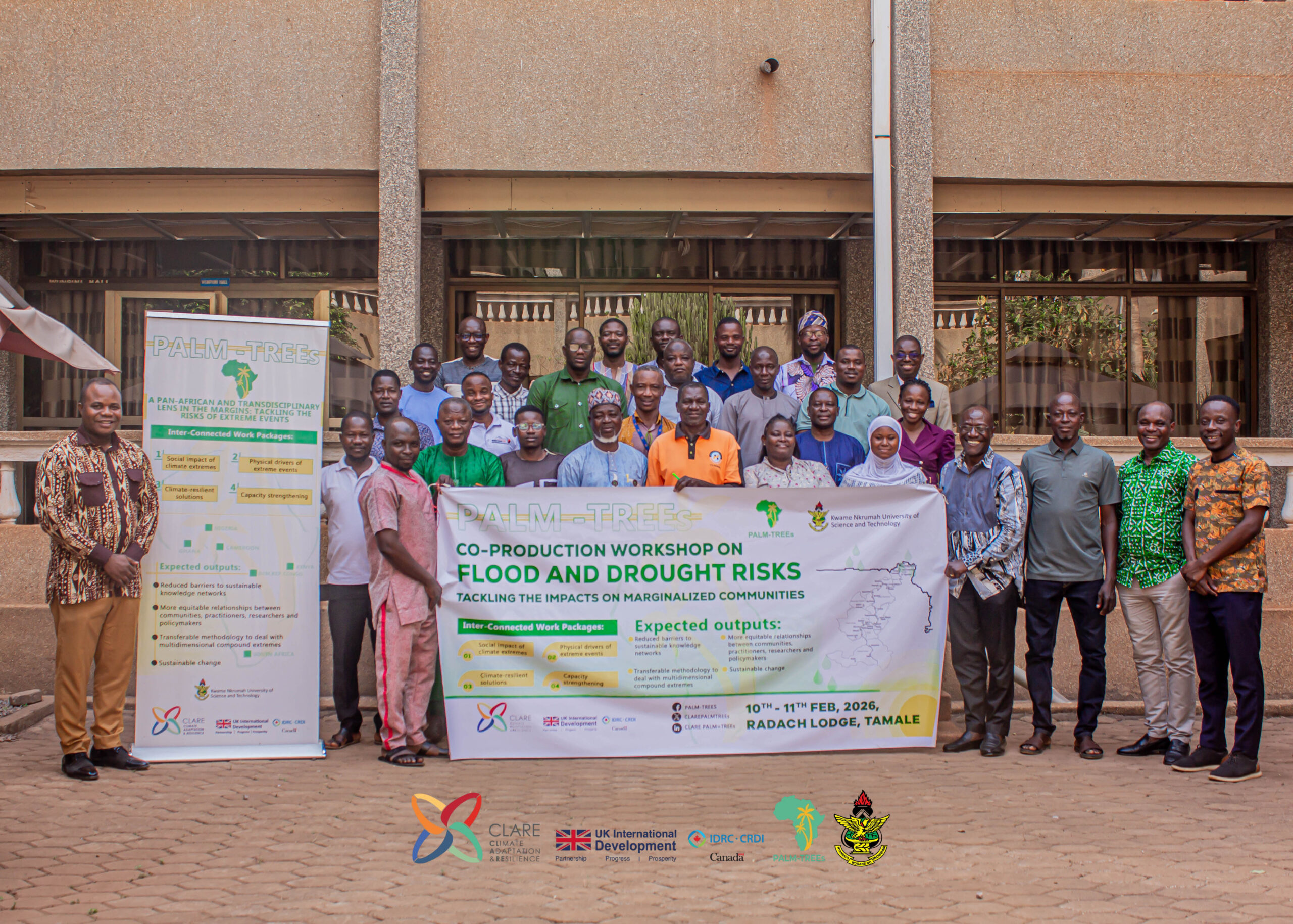
In a decisive move to confront the growing threat of climate extremes, researchers, civil society organisations, government officials, and farmers have convened in northern Ghana’s regional capital, Tamale, to chart practical solutions to recurring floods and droughts devastating vulnerable communities.
The gathering, which brought together about 38 stakeholders, formed part of the second phase of the Pan-African and Transdisciplinary Lens in the Margins: Tackling the Risks of Extreme Events (PALM-TREEs) project. The initiative focuses on developing inclusive strategies to address climate risks, particularly among marginalised populations disproportionately affected by environmental shocks.
Participants at the workshop emphasised a co-production approach merging scientific data with lived experiences to better understand and respond to climate threats. The project integrates demographic and health surveys with participatory tools such as community mapping, focus group discussions, and multilevel modelling. These are further strengthened by local weather observations and satellite data.
The urgency of the initiative is underscored by findings from the Intergovernmental Panel on Climate Change Sixth Assessment Report, which indicates that all inhabited regions globally are now experiencing extreme climate events. These include overlapping hazards such as floods, droughts, and heatwaves, often occurring in rapid succession and compounding their impacts.
Leading the research effort, Professor Thompson Annor of the Kwame Nkrumah University of Science and Technology (KNUST) explained that the project adopts a multi-method framework to develop risk narratives and improve climate modelling.
“This co-production workshop is designed to present findings from both the physical science perspective and the lived experiences of affected communities,” he said, noting that the ultimate goal is to strengthen resilience among populations most exposed to climate shocks.
Three doctoral researchers—Samuel Owusu Ansah, Joshua Asamoah, and Alfred Awuah—presented findings highlighting the severe and interconnected impacts of floods and droughts on livelihoods within the White Volta Basin.
Mr Asamoah’s research identified drought-prone hotspots across parts of northeastern Ghana, including Talensi, Bawku West, Binduri, and surrounding communities such as Santen, Nungu, and Pwalugu. According to him, these areas experience lower rainfall levels, resulting in prolonged dry spells that disrupt agricultural cycles and threaten food security.
Complementing this, Mr Ansah’s study revealed that communities farming along the White Volta Basin face recurrent annual flooding. He attributed these events to heavy rainfall and periodic water releases from upstream infrastructure, particularly the Bagre Dam. Communities such as Yarigu and Timonde in Bawku West were identified as among the hardest hit.
Taking a broader perspective, Mr Awuah’s research examined how the dual impacts of floods and droughts are undermining livelihoods in the region. With agriculture serving as the primary source of income for most households, climate-induced crop losses are pushing already vulnerable communities deeper into economic insecurity.
He stressed the urgent need to build resilience, noting that limited livelihood diversification leaves many households exposed to repeated climate shocks.
Stakeholders at the workshop also highlighted the importance of policy coordination and early warning systems. Dr. Joan Atulley Akandi of the University of Technology and Applied Science pointed out that the severity of climate impacts is closely tied to underlying social vulnerabilities.
“What resonates strongly is that floods, droughts, and their combined effects are intensified by the inability of communities to withstand these shocks,” she said.
Echoing the call for preparedness, Richard Abaare urged greater reliance on seasonal forecasts from the Ghana Meteorological Agency to anticipate and manage extreme weather events before they escalate into disasters.
As climate variability intensifies across West Africa, the Tamale workshop signals a growing recognition that effective solutions must bridge science, policy, and community knowledge—ensuring that those most affected are not only heard but actively involved in shaping their resilience.