






The United Nations University Institute of Natural Resources in Africa (UNU-INRA) has awarded grants to six young agritech innovators from Ghana, Senegal and Côte d’Ivoire under its Innovate for Clean Agricultural Technologies (INFoCAT) project.
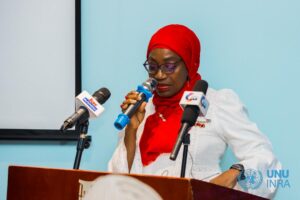
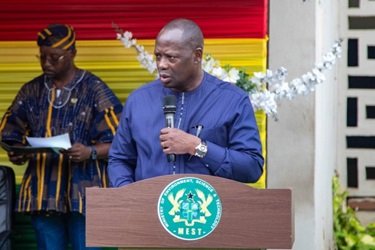
The grants were announced on January 27, 2026, during a policy roundtable attended by representatives of government ministries, academia, agriculture, renewable energy firms, development partners and the media.
The INFoCAT project focuses on promoting clean energy-powered agricultural technologies while advancing youth and gender inclusion in the agricultural sector. The initiative targets smallholder farming communities in West Africa, where limited access to affordable and reliable clean energy continues to constrain productivity, storage, processing and income generation.
According to UNU-INRA, agriculture remains central to poverty reduction and food security in low- and middle-income countries, but the sector faces persistent energy and technology gaps, particularly in rural areas.
The INFoCAT project was preceded by a baseline survey conducted in 2023 in selected farming communities in Ghana, Senegal and Côte d’Ivoire. Following the survey, an innovation challenge selected 20 young agritech innovators — 10 from Ghana, five from Senegal and five from Côte d’Ivoire — who received seed funding of about $7,400 each, alongside training and technical support from renewable energy, agritech and finance experts.
After further assessment, six innovators were selected as final awardees for scaling their clean agritech solutions.
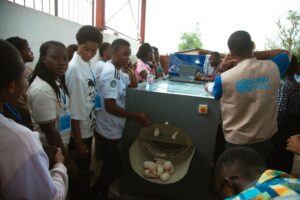
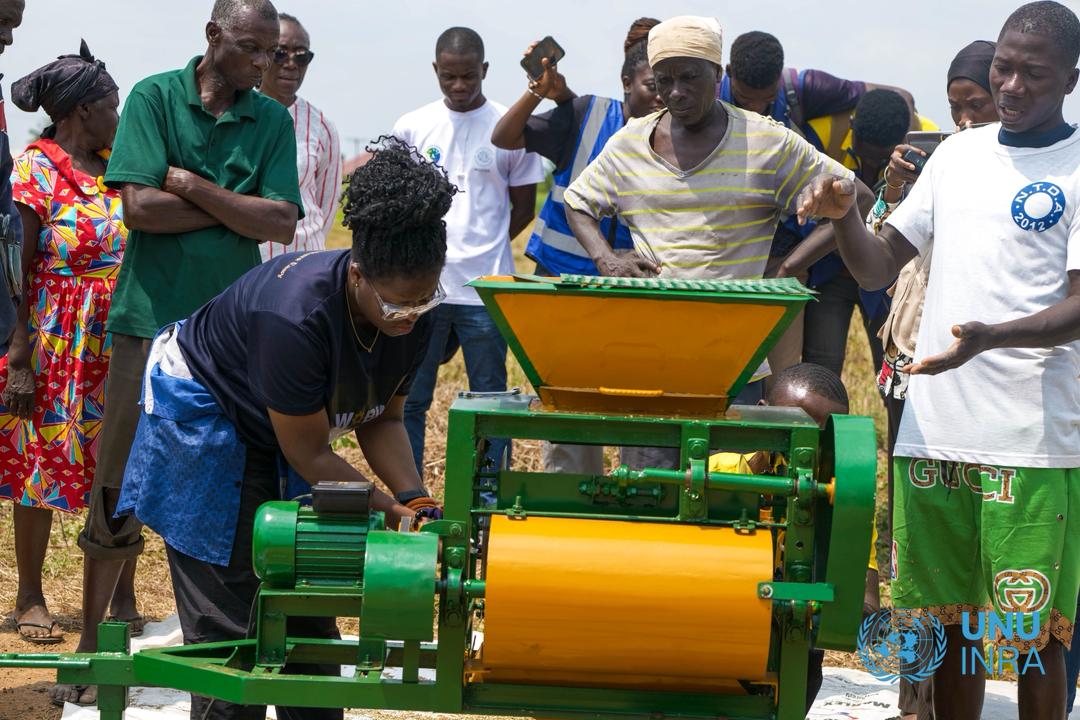
In Ghana, Wobil Technologies, founded by Erica A. Appiah and Charity Abena Azogmi, received a $25,000 grant for developing a grain winnower used in cleaning rice, maize, soybeans and other grains. Villiam Star Limited, led by William Mikado and Gifty Samani, received $12,000 for a cassava peeling and washing machine.
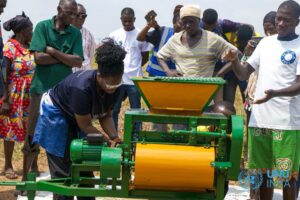
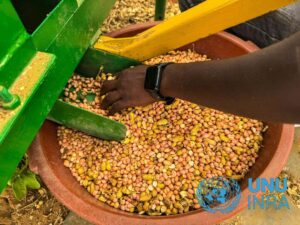
In Senegal, Moussa Ndoye received $25,000 for a peanut threshing and shelling innovation, while Amdy Moustapha Niass was awarded $12,000 for a mini renewable energy-powered plant.
In Côte d’Ivoire, Lognigue Emmanuel Yeo of Lynays Corporation received $25,000 for a solar-powered smart irrigation system designed to improve water management, while Achi David of AD Solar received $12,000 for solar-powered vegetable dryers.
Speaking at the event, the Principal Investigator of INFoCAT and Director of UNU-INRA, Fatima Denton, urged regional bodies such as the Economic Community of West African States (ECOWAS) and the African Union to adopt the INFoCAT pilot model for wider regional implementation.
She said the project demonstrated how targeted training and financing could help young innovators integrate clean energy into agriculture, improve productivity and reduce labour intensity for smallholder farmers, while supporting inclusive low-carbon development.
INFoCAT is funded by the International Development Research Center (IDRC) under the Clean Energy for Development: A Call for Action initiative. The project is implemented by UNU-INRA in partnership with Enda Energie in Senegal and the UNU-INRA Operating Unit in Côte d’Ivoire.