




By Aminu Adamu
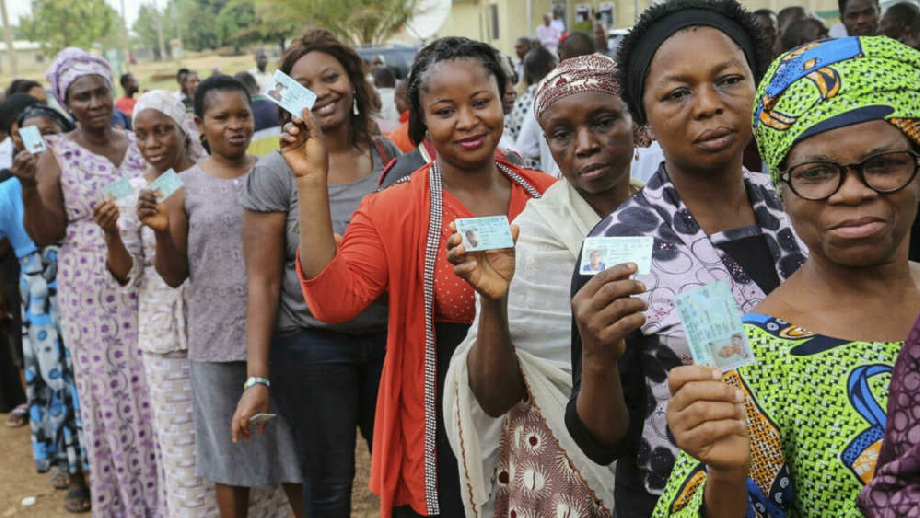
A new electorate sentiment report has revealed a striking contradiction in Nigeria’s political climate ahead of the 2027 general elections: while voter enthusiasm appears strong, support for the current administration remains low.
The study, titled “The 2027 Electorate Sentiment Report: Analyzing Voter Resilience and the Mandate for Transition in Nigeria,” was authored by Ibrahim Babangida Lawal and released by the Digital Data Clinic on March 1, 2026.
The findings, drawn from a two-stage digital survey of 381 respondents conducted in early 2026, point to what the report describes as a “Participation Paradox” — a 56-percentage-point gap between voter participation intent and support for continuity.
High Turnout Intent, Low Incumbent Support
According to the survey, 76 percent of previously active voters say they intend to participate in the 2027 elections. However, only 20 percent of respondents in the second survey stage expressed support for the continuation of the current administration.
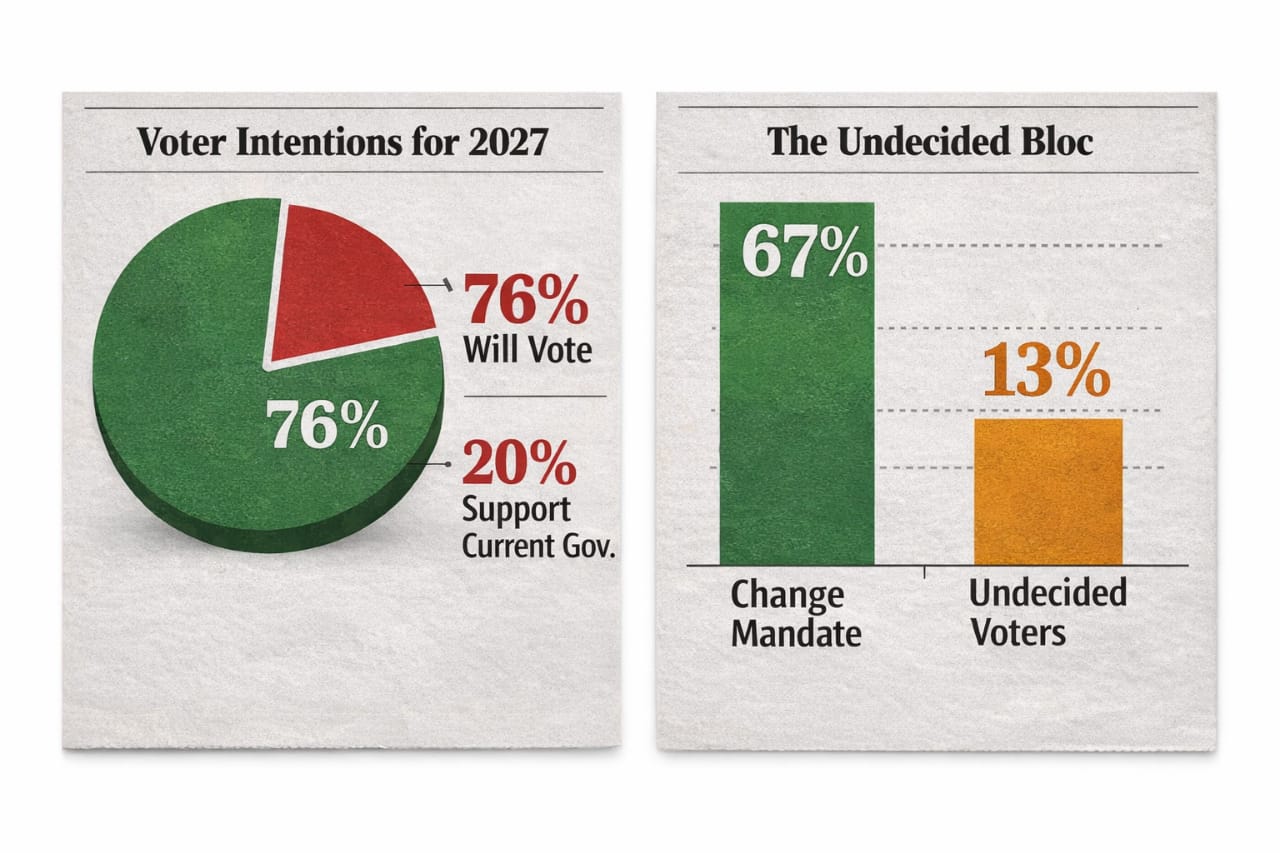
Instead, 67 percent indicated a preference for a change in government, while 13 percent remain undecided.
The report frames the 2027 election cycle as a de facto referendum on the sitting government, arguing that the surge in participation intent is not an endorsement of the status quo but rather a mobilization driven by dissatisfaction.
“The anticipated turnout is fueled more by accountability demands than by satisfaction,” the report notes, describing the electorate as “anticipatory” and “conditional” rather than disengaged.
The Undecided Bloc as Swing Constituency
Though numerically smaller, the 13 percent undecided segment is identified as a potentially decisive bloc in a competitive race. With a margin of error of ±6.22 percent for Stage 2 findings, analysts suggest that targeted civic engagement and political messaging could significantly influence this group.
The survey was conducted through purposive digital distribution across WhatsApp and Facebook groups, targeting respondents with confirmed prior voting history. While the methodology provides insight into Nigeria’s digitally active electorate, the report acknowledges limitations, including non-probability sampling and potential rural underrepresentation.
INEC Timetable Raises Stakes
The release of the 2027 election timetable by the Independent National Electoral Commission has intensified political discourse nationwide, placing voter confidence and institutional credibility at the center of the national conversation.
Against this backdrop, the report positions itself as an empirical baseline for tracking shifts in voter mood as economic, security and candidate dynamics evolve toward 2027.
Strategic Implications
For political parties, the report recommends abandoning continuity narratives and pivoting toward reform-focused platforms addressing economic recovery, security challenges and institutional restructuring.
Civil society organizations are urged to prioritize voter education, particularly among undecided voters, while leveraging digital channels similar to those used in the survey.
The current administration, the report suggests, faces a narrowing window to demonstrate measurable policy impact capable of reshaping public sentiment before late 2026.
Statistical Caution
The combined sample of 381 respondents carries an estimated margin of error of ±5.02 percent at a 95 percent confidence interval. Stage 2 findings, with a statistical power of 0.89, are considered more robust than Stage 1 results, which fall slightly below conventional reliability thresholds.
Researchers caution that the findings are directional rather than fully generalizable to Nigeria’s entire electorate due to the non-probability design and digital self-selection bias.
A Referendum Atmosphere?
With two years to the polls, the report paints a portrait of an engaged but restless electorate — one preparing to vote in large numbers, not out of routine civic obligation, but as a strategic tool for political change.
Whether this emerging “Change Mandate” translates into concrete electoral realignment will depend on how political actors respond to what appears to be a widening credibility gap between voter participation and incumbent endorsement.
For now, the data suggests that 2027 may be less about apathy and more about accountability.
