

Close Menu
The North JournalsThe North Journals

    Subscribe to Updates

    Get the latest creative news from FooBar about art, design and business.

    What's Hot

    19 in 20 Nigerian health facilities fall short of basic medical waste standard – WHO/UNICEF

    August 21, 2026

    Lagos roundtable to drive new investment in Africa’s forest economy

    August 19, 2026

    How Nigeria is using local data to change the fight against malaria

    August 13, 2026
    Facebook X (Twitter) Instagram YouTube
    • ABOUT US
    • WORK WITH US
    • CONTACT US
    Wednesday, August 26
    Facebook X (Twitter) Instagram
    Subscribe
    The North JournalsThe North Journals
    • Home
    • Newsbeat
      • Agriculture
      • Art/Life
      • Business
      • Economy
      • Education
      • Entertainment
      • Health
      • Judiciary
      • News
      • Technology
      • Travel
      • Foreign
    • Editorial
    • Opinion
      • Diaries
    • Travelogue
    • Journals
      • Engineering
      • History
      • Law
      • Medicine
      • Politics
      • Research
      • Science
      • Climate Change
      • Psychology
      • Sociology
    • Documentaries
    • Guest Post
    The North JournalsThe North Journals
    Home » 2027: 76% Say They’ll Vote, But Only 20% Back Continuity — New Survey Signals Strong Demand for Change
    News

    2027: 76% Say They’ll Vote, But Only 20% Back Continuity — New Survey Signals Strong Demand for Change

    Digital Data Clinic report describes a “Participation Paradox” as majority of engaged voters signal reform appetite ahead of 2027 elections.
    The North JournalsBy The North JournalsMarch 1, 2026No Comments4 Mins Read
    Facebook Twitter Pinterest LinkedIn Tumblr Email
    Share
    Facebook Twitter LinkedIn Pinterest Email

    By Aminu Adamu

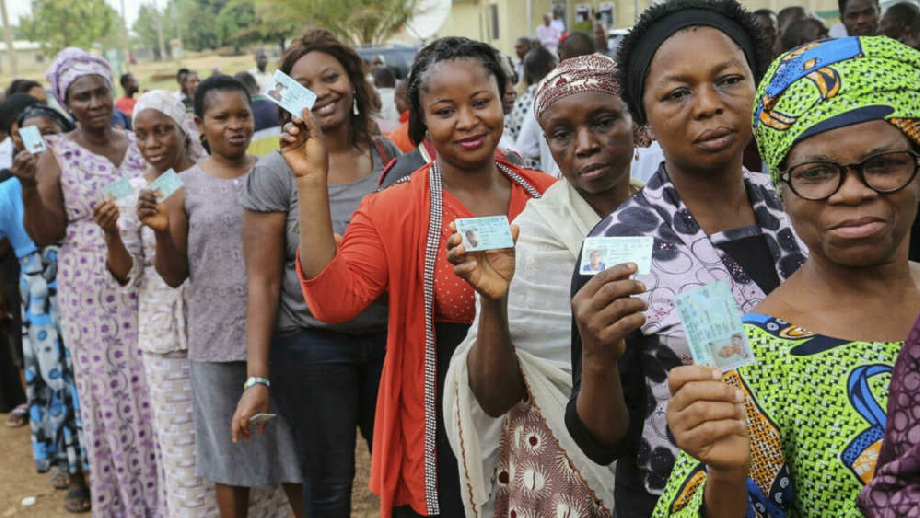
    A new electorate sentiment report has revealed a striking contradiction in Nigeria’s political climate ahead of the 2027 general elections: while voter enthusiasm appears strong, support for the current administration remains low.

    The study, titled “The 2027 Electorate Sentiment Report: Analyzing Voter Resilience and the Mandate for Transition in Nigeria,” was authored by Ibrahim Babangida Lawal and released by the Digital Data Clinic on March 1, 2026.

    The findings, drawn from a two-stage digital survey of 381 respondents conducted in early 2026, point to what the report describes as a “Participation Paradox” — a 56-percentage-point gap between voter participation intent and support for continuity.

    High Turnout Intent, Low Incumbent Support

    According to the survey, 76 percent of previously active voters say they intend to participate in the 2027 elections. However, only 20 percent of respondents in the second survey stage expressed support for the continuation of the current administration.
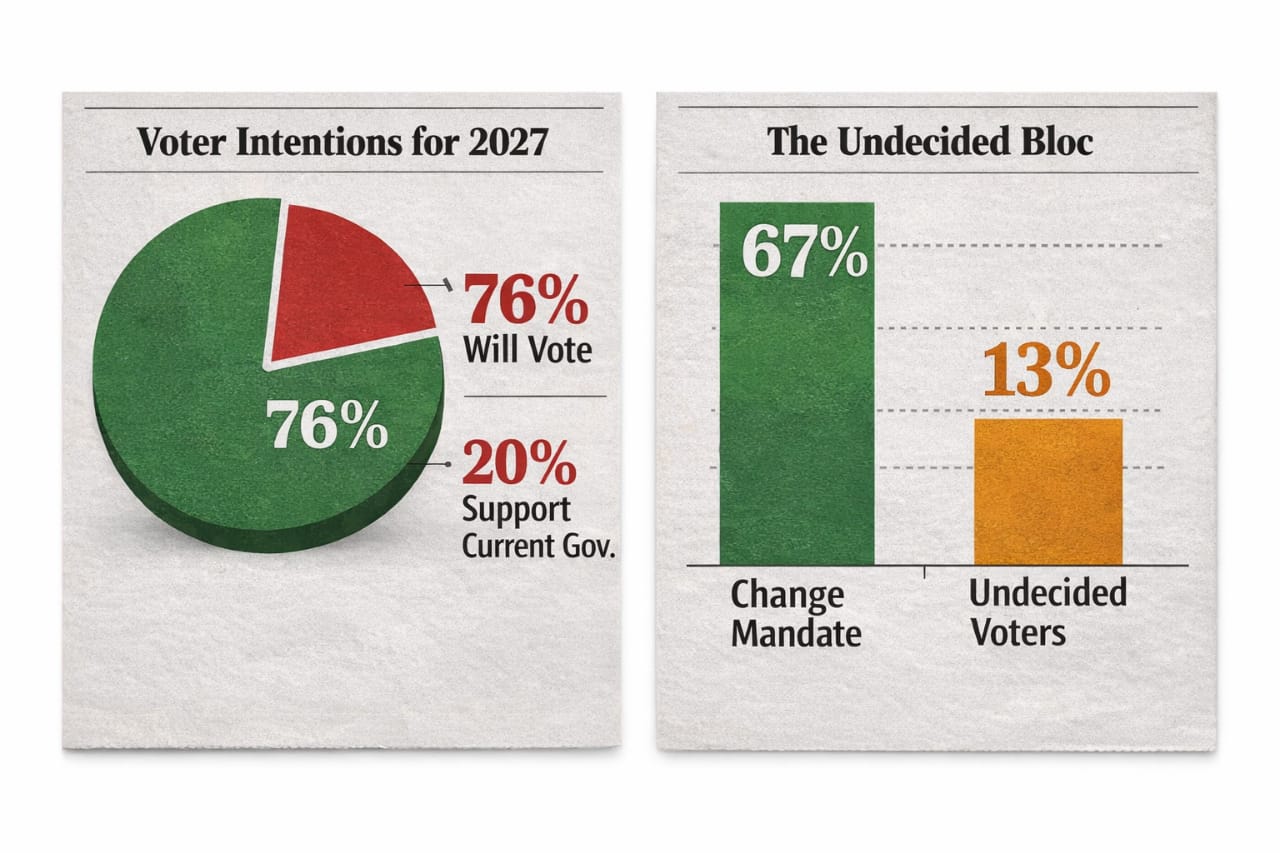
    Instead, 67 percent indicated a preference for a change in government, while 13 percent remain undecided.

    The report frames the 2027 election cycle as a de facto referendum on the sitting government, arguing that the surge in participation intent is not an endorsement of the status quo but rather a mobilization driven by dissatisfaction.

    “The anticipated turnout is fueled more by accountability demands than by satisfaction,” the report notes, describing the electorate as “anticipatory” and “conditional” rather than disengaged.

    The Undecided Bloc as Swing Constituency

    Though numerically smaller, the 13 percent undecided segment is identified as a potentially decisive bloc in a competitive race. With a margin of error of ±6.22 percent for Stage 2 findings, analysts suggest that targeted civic engagement and political messaging could significantly influence this group.

    See also  May Agbamuche-Mbu Assumes Role as Acting INEC Chairman

    The survey was conducted through purposive digital distribution across WhatsApp and Facebook groups, targeting respondents with confirmed prior voting history. While the methodology provides insight into Nigeria’s digitally active electorate, the report acknowledges limitations, including non-probability sampling and potential rural underrepresentation.

    INEC Timetable Raises Stakes

    The release of the 2027 election timetable by the Independent National Electoral Commission has intensified political discourse nationwide, placing voter confidence and institutional credibility at the center of the national conversation.

    Against this backdrop, the report positions itself as an empirical baseline for tracking shifts in voter mood as economic, security and candidate dynamics evolve toward 2027.

    Strategic Implications

    For political parties, the report recommends abandoning continuity narratives and pivoting toward reform-focused platforms addressing economic recovery, security challenges and institutional restructuring.

    Civil society organizations are urged to prioritize voter education, particularly among undecided voters, while leveraging digital channels similar to those used in the survey.

    The current administration, the report suggests, faces a narrowing window to demonstrate measurable policy impact capable of reshaping public sentiment before late 2026.

    Statistical Caution

    The combined sample of 381 respondents carries an estimated margin of error of ±5.02 percent at a 95 percent confidence interval. Stage 2 findings, with a statistical power of 0.89, are considered more robust than Stage 1 results, which fall slightly below conventional reliability thresholds.

    Researchers caution that the findings are directional rather than fully generalizable to Nigeria’s entire electorate due to the non-probability design and digital self-selection bias.

    A Referendum Atmosphere?

    With two years to the polls, the report paints a portrait of an engaged but restless electorate — one preparing to vote in large numbers, not out of routine civic obligation, but as a strategic tool for political change.

    See also  ADC Launches Nationwide Convergence to Mobilise Coalition Against Tinubu for 2027

    Whether this emerging “Change Mandate” translates into concrete electoral realignment will depend on how political actors respond to what appears to be a widening credibility gap between voter participation and incumbent endorsement.

    For now, the data suggests that 2027 may be less about apathy and more about accountability.


    Digital Data Clinic electoral reform government change mandate Ibrahim Babangida Lawal INEC Nigeria 2027 elections Nigerian politics participation paradox voter sentiment voter turnout
    Share. Facebook Twitter Pinterest LinkedIn Tumblr Email
    The North Journals

    Related Posts

    19 in 20 Nigerian health facilities fall short of basic medical waste standard – WHO/UNICEF

    August 21, 2026

    Lagos roundtable to drive new investment in Africa’s forest economy

    August 19, 2026

    How Nigeria is using local data to change the fight against malaria

    August 13, 2026

    Comments are closed.

    Our Picks
    Stay In Touch
    • Facebook
    • Twitter
    • Pinterest
    • Instagram
    • YouTube
    • Vimeo
    Don't Miss

    19 in 20 Nigerian health facilities fall short of basic medical waste standard – WHO/UNICEF

    Headlines August 21, 2026

    About 19 in every 20 health care facilities in Nigeria fall short of the basic…

    Lagos roundtable to drive new investment in Africa’s forest economy

    August 19, 2026

    How Nigeria is using local data to change the fight against malaria

    August 13, 2026

    Retired Ghanaian miner rejects calls for special treatment for Adamus Resources Limited

    August 13, 2026

    Subscribe to Updates

    Get the latest creative news from SmartMag about art & design.

    About Us
    About Us

    The North Journals is a hybrid publication that combines the power of investigative journalism with the depth of research-driven analysis. Rooted in Nigeria and inspired by Pan-African realities, we tell stories that matter — stories of people, communities, and issues often left out of mainstream narratives.
    Address: Abuja, Nigeria
    Email Us: info@thenorthjournals.com

    Our Picks
    New Comments
    • Theophilus Thomas on A School-Based Book Club Model Is Rebuilding Reading Habits Among Students in Zaria
    • Sani Tijjani Ibrahim on Book Review: Abandoned
    • Home
    • Travel
    • Politics
    • Business
    • Buy Now
    © 2026 The North Journals. Designed by AkinMore.

    Type above and press Enter to search. Press Esc to cancel.

    Ad Blocker Enabled!
    Ad Blocker Enabled!
    Our website is made possible by displaying online advertisements to our visitors. Please support us by disabling your Ad Blocker.