

Close Menu
The North JournalsThe North Journals

    Subscribe to Updates

    Get the latest creative news from FooBar about art, design and business.

    What's Hot

    2027: 76% Say They’ll Vote, But Only 20% Back Continuity — New Survey Signals Strong Demand for Change

    March 1, 2026

    At Arewa House, Kwaja Invokes Ahmadu Bello’s Legacy, Challenges Northern Leaders on Unity and Industrial Vision

    February 27, 2026

    Tomato Imports Signal Regional Complementarity, Not Local Shortage — CCCFS

    February 26, 2026
    Facebook X (Twitter) Instagram YouTube
    • ABOUT US
    • WORK WITH US
    • CONTACT US
    Sunday, March 1
    Facebook X (Twitter) Instagram
    Subscribe
    The North JournalsThe North Journals
    • Home
    • Newsbeat
      • Agriculture
      • Art/Life
      • Business
      • Economy
      • Education
      • Entertainment
      • Health
      • Judiciary
      • News
      • Technology
      • Travel
      • Foreign
    • Editorial
    • Opinion
      • Diaries
    • Travelogue
    • Journals
      • Engineering
      • History
      • Law
      • Medicine
      • Politics
      • Research
      • Science
      • Climate Change
      • Psychology
      • Sociology
    • Documentaries
    • Guest Post
    The North JournalsThe North Journals
    Home » Africa Prioritises Trade Diversification and Regional Integration in 2025
    Economy

    Africa Prioritises Trade Diversification and Regional Integration in 2025

    The North JournalsBy The North JournalsFebruary 2, 2025Updated:April 4, 2025No Comments3 Mins Read
    Facebook Twitter Pinterest LinkedIn Tumblr Email
    Share
    Facebook Twitter LinkedIn Pinterest Email

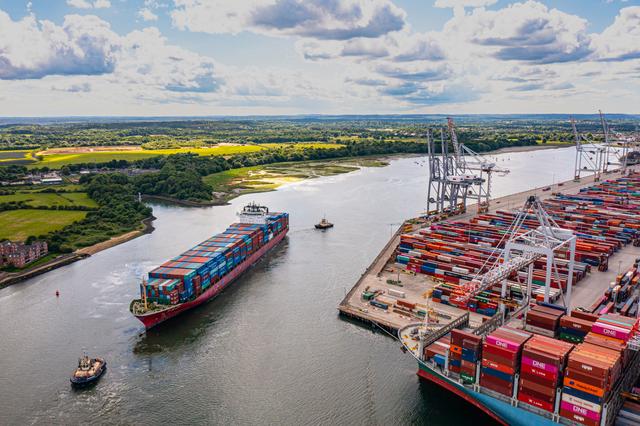
    Africa is intensifying its focus on trade diversification and regional integration to drive sustainable economic growth amid evolving global trade challenges. According to the latest Trade in Transition study, supported by DP World, African business leaders are adopting a dual approach of expanding global supply chains while advancing regional collaboration through the African Continental Free Trade Agreement (AfCFTA).

    The study, commissioned by Economist Impact and presented at the World Economic Forum in Davos, sheds light on Africa’s trade landscape in 2025, highlighting key trends, challenges, and opportunities for the continent’s economic future.

    While the AfCFTA seeks to create a single market across 54 African nations by reducing tariffs and boosting intra-African trade, only 31 of the 48 signatory countries have commenced trade under the agreement. Political instability (cited by 40% of executives) and slow implementation (32%) remain significant barriers to full adoption.

    Africa’s trade infrastructure continues to lag, but major projects are addressing key deficiencies. The Lobito Corridor railway, linking Angola, the Democratic Republic of the Congo, and Zambia, is set to enhance trade logistics. Rehabilitation of the Tanzania-Zambia railway will improve East Africa’s rail-sea transport network, easing cargo movement from Zambia’s mines to Tanzania’s coastal ports.

    Nearly 46% of surveyed executives are diversifying their supplier base globally to mitigate trade risks, compared to only 16% focusing on regionalisation. While China remains Africa’s largest trading partner, India, the United Arab Emirates, and Turkey are emerging as alternative economic partners. However, greater engagement with these nations will require more favourable trade agreements (cited by 35% of executives) and supportive government policies and incentives (25%).

    See also  Chinese Investors Eye $700m Agriculture and Renewable Energy Projects in Katsina

    To offset regional trade costs, 34% of surveyed executives are leveraging digital tools, with an emphasis on artificial intelligence (AI). However, Africa’s data deficit remains a significant obstacle to fully adopting AI-powered trade solutions, underscoring the need for increased investment in digital infrastructure.

    Despite climate change affecting African agriculture (which accounted for 13% of exports in 2023), sustainability is a lower priority for African executives in 2025. Only 27% of executives ranked sustainability as a primary concern, compared to 15% globally. The key impediments include financial constraints and pressing economic and geopolitical challenges. Solutions proposed in the study include access to green technologies (55% of executives) and government incentives for climate resilience (50%).

    Mohammed Akoojee, CEO & Managing Director of DP World Sub-Saharan Africa, stated:

    “Although trade challenges persist, Africa’s commitment to regional integration through the AfCFTA and its proactive global engagement present a viable strategy for sustainable growth. Africa’s supply-chain potential can be realised over the next decade with sustained investment in infrastructure, education, and capacity building.”

    John Ferguson, Global Lead, New Globalisation, Economist Impact, added:

    “In 2025 and beyond, global trade will be shaped by shifting geopolitics, climate change, and AI-driven automation. Businesses that remain agile and invest in technology will be better positioned to navigate these transformations.”

    Africa’s trade strategy in 2025 is centred on balancing regional integration with global partnerships. By addressing infrastructure gaps, advancing digital adoption, and securing strategic trade agreements, the continent is poised to become a stronger player in the global economy.

    AFCFTA Africa Business Economic Regional Trade WEF
    Share. Facebook Twitter Pinterest LinkedIn Tumblr Email
    The North Journals

    Related Posts

    Tomato Imports Signal Regional Complementarity, Not Local Shortage — CCCFS

    February 26, 2026

    How N71 Billion Procurement Fraud Allegedly Led to Aba–Itu 132kV Transmission Line Collapse

    January 23, 2026

    INVESTIGATION: Kaduna Lithium Mine Sparks War Between Nigeria and UK

    January 19, 2026

    Comments are closed.

    Our Picks
    Stay In Touch
    • Facebook
    • Twitter
    • Pinterest
    • Instagram
    • YouTube
    • Vimeo
    Don't Miss

    2027: 76% Say They’ll Vote, But Only 20% Back Continuity — New Survey Signals Strong Demand for Change

    News March 1, 2026

    By Aminu Adamu A new electorate sentiment report has revealed a striking contradiction in Nigeria’s…

    At Arewa House, Kwaja Invokes Ahmadu Bello’s Legacy, Challenges Northern Leaders on Unity and Industrial Vision

    February 27, 2026

    Tomato Imports Signal Regional Complementarity, Not Local Shortage — CCCFS

    February 26, 2026

    How a Multi-Million Naira School Became a Ghost Project

    February 24, 2026

    Subscribe to Updates

    Get the latest creative news from SmartMag about art & design.

    About Us
    About Us

    The North Journals is a hybrid publication that combines the power of investigative journalism with the depth of research-driven analysis. Rooted in Nigeria and inspired by Pan-African realities, we tell stories that matter — stories of people, communities, and issues often left out of mainstream narratives.
    Address: Abuja, Nigeria
    Email Us: info@thenorthjournals.com

    Our Picks
    New Comments
    • Theophilus Thomas on A School-Based Book Club Model Is Rebuilding Reading Habits Among Students in Zaria
    • Sani Tijjani Ibrahim on Book Review: Abandoned
    • Home
    • Travel
    • Politics
    • Business
    • Buy Now
    © 2026 The North Journals. Designed by AkinMore.

    Type above and press Enter to search. Press Esc to cancel.

    Ad Blocker Enabled!
    Ad Blocker Enabled!
    Our website is made possible by displaying online advertisements to our visitors. Please support us by disabling your Ad Blocker.