

Close Menu
The North JournalsThe North Journals

    Subscribe to Updates

    Get the latest creative news from FooBar about art, design and business.

    What's Hot

    2027: 76% Say They’ll Vote, But Only 20% Back Continuity — New Survey Signals Strong Demand for Change

    March 1, 2026

    At Arewa House, Kwaja Invokes Ahmadu Bello’s Legacy, Challenges Northern Leaders on Unity and Industrial Vision

    February 27, 2026

    Tomato Imports Signal Regional Complementarity, Not Local Shortage — CCCFS

    February 26, 2026
    Facebook X (Twitter) Instagram YouTube
    • ABOUT US
    • WORK WITH US
    • CONTACT US
    Tuesday, March 3
    Facebook X (Twitter) Instagram
    Subscribe
    The North JournalsThe North Journals
    • Home
    • Newsbeat
      • Agriculture
      • Art/Life
      • Business
      • Economy
      • Education
      • Entertainment
      • Health
      • Judiciary
      • News
      • Technology
      • Travel
      • Foreign
    • Editorial
    • Opinion
      • Diaries
    • Travelogue
    • Journals
      • Engineering
      • History
      • Law
      • Medicine
      • Politics
      • Research
      • Science
      • Climate Change
      • Psychology
      • Sociology
    • Documentaries
    • Guest Post
    The North JournalsThe North Journals
    Home » Aid Cuts Deepen Hunger Crisis as 55 Million Face Food Insecurity Across West and Central Africa
    Headlines

    Aid Cuts Deepen Hunger Crisis as 55 Million Face Food Insecurity Across West and Central Africa

    UN food agency warns funding shortfalls, conflict and displacement could push millions, including children, into emergency hunger levels in 2026
    The North JournalsBy The North JournalsJanuary 17, 2026No Comments4 Mins Read
    Facebook Twitter Pinterest LinkedIn Tumblr Email
    Share
    Facebook Twitter LinkedIn Pinterest Email

    By Aminu Adamu

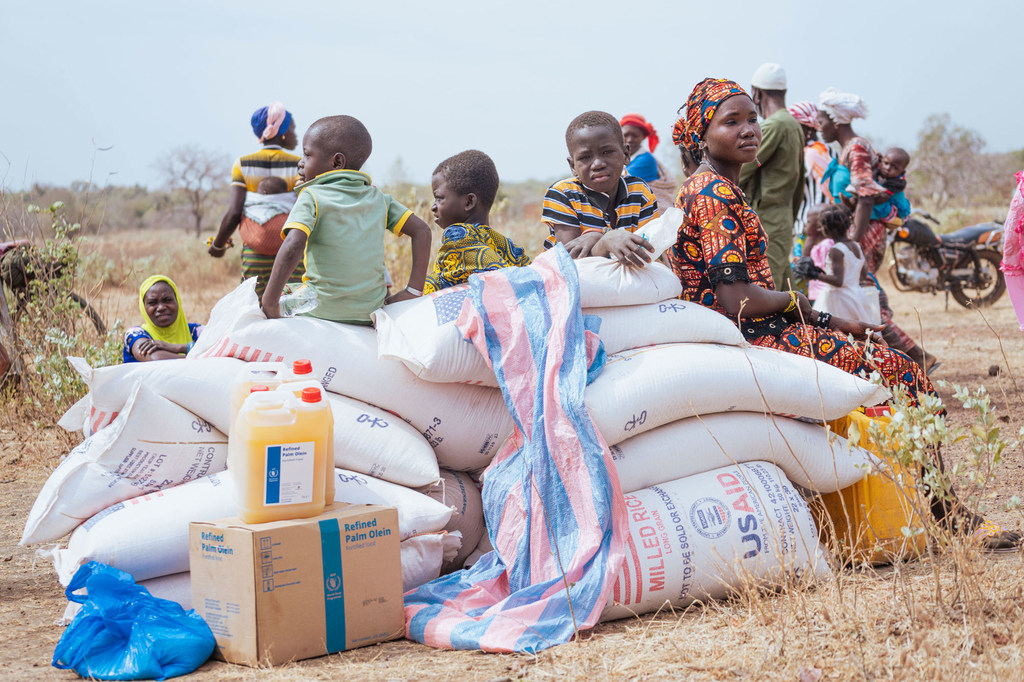
    West and Central Africa is heading into a worsening hunger emergency as sharp cuts in humanitarian funding collide with rising violence, mass displacement and economic strain, the United Nations World Food Programme (WFP) has warned.

    According to new projections, about 55 million people across the region are expected to face crisis levels of hunger or worse during the June–August 2026 lean season, while more than 13 million children are likely to suffer from malnutrition over the year.

    The figures, drawn from the latest Cadre Harmonisé food security analysis, the regional equivalent of the Integrated Food Security Phase Classification (IPC), indicate a dramatic deterioration. More than three million people are projected to fall into emergency food insecurity (Phase 4) in 2026, more than double the 1.5 million recorded in 2020.

    Four countries, Nigeria, Chad, Cameroon, and Niger, account for 77 per cent of the region’s food-insecure population. In a stark warning sign, 15,000 people in Nigeria’s Borno State are now at risk of catastrophic hunger (IPC Phase 5) for the first time in nearly a decade.

    “Vital humanitarian aid is a transformative and stabilizing force in volatile contexts,” said Sarah Longford, WFP’s Deputy Regional Director for West and Central Africa. “The reduced funding we saw in 2025 has deepened hunger and malnutrition across the region. As needs outpace funding, so too does the risk of young people falling into desperation.”

    Conflict, displacement and shrinking aid

    WFP said hunger across the region is being driven by a toxic mix of armed conflict, population displacement, economic shocks and climate stress, now compounded by reductions in humanitarian assistance that have eroded communities’ coping capacity.

    See also  Anthony Joshua Pays Emotional Tribute to Late Friends

    In Mali, cuts to food rations have had a measurable impact. Areas that received reduced assistance recorded a 64 per cent surge in acute hunger since 2023, while communities that continued to receive full rations saw a 34 per cent decline. Ongoing insecurity has also disrupted food supply routes to major cities, leaving an estimated 1.5 million vulnerable Malians facing crisis-level hunger.

    In Nigeria, funding shortfalls in 2025 forced WFP to scale back nutrition programmes, affecting over 300,000 children. Since then, malnutrition indicators in several northern states have worsened from “serious” to “critical,” according to humanitarian assessments.

    Millions at risk of losing assistance

    The outlook for the coming months is increasingly bleak. In Cameroon, WFP warned that more than half a million vulnerable people could be cut off from life-saving food assistance within weeks if fresh funding does not materialise.

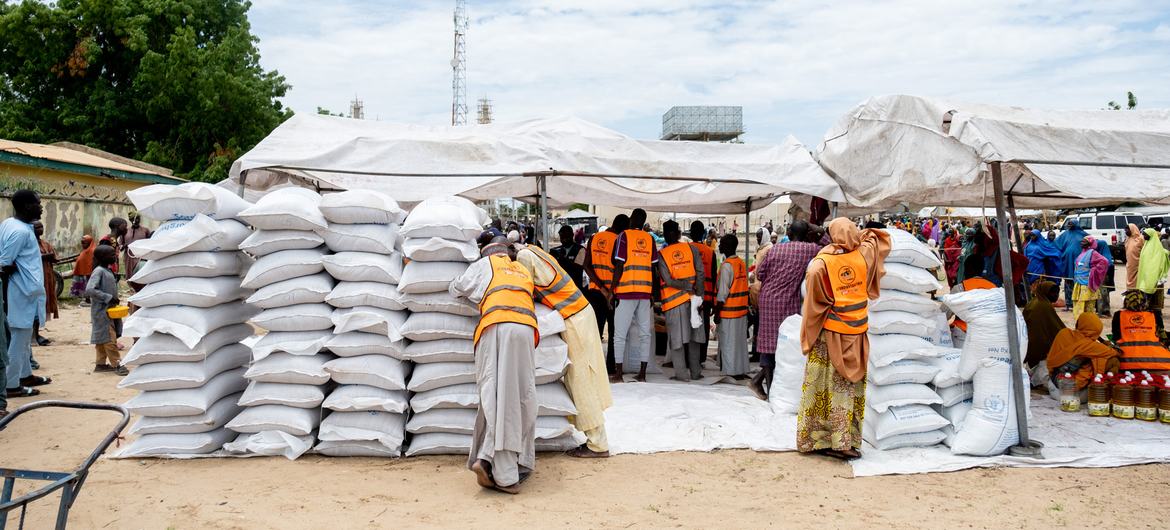
    In Nigeria, assistance levels have already dropped sharply. WFP expects to reach only 72,000 people in February, a steep fall from the 1.3 million people supported during the 2025 lean season, raising fears of escalating hunger and instability.
    Proof that investment works

    Despite the grim outlook, WFP stressed that adequate funding delivers clear, measurable results. Resilience and early-action programmes, particularly in the Sahel, have shown strong economic returns. Land restoration projects, for instance, generate up to $30 for every dollar invested.

    Since 2018, WFP and local communities have rehabilitated 300,000 hectares of farmland across five countries, benefiting more than four million people in over 3,400 villages. Other programmes, including school feeding, nutrition support, infrastructure development and seasonal assistance, have helped stabilise local economies and reduce long-term dependence on aid.

    See also  Ibom Air Bans Passenger After Mid-Air Assault on Crew

    “To break the cycle of hunger for future generations, we need a paradigm shift in 2026,” Longford said. “National governments and their partners must increase investment in preparedness, anticipatory action, and resilience-building to empower communities.”

    Urgent funding appeal

    To sustain life-saving operations across West and Central Africa, WFP said it urgently needs more than $453 million over the next six months. Without swift action, the agency warned, hunger risks becoming a powerful driver of further unrest, displacement, and conflict across an already fragile region.

    displacement food insecurity humanitarian aid hunger crisis malnutrition nigeria Sahel WFP
    Share. Facebook Twitter Pinterest LinkedIn Tumblr Email
    The North Journals

    Related Posts

    2027: 76% Say They’ll Vote, But Only 20% Back Continuity — New Survey Signals Strong Demand for Change

    March 1, 2026

    At Arewa House, Kwaja Invokes Ahmadu Bello’s Legacy, Challenges Northern Leaders on Unity and Industrial Vision

    February 27, 2026

    Tomato Imports Signal Regional Complementarity, Not Local Shortage — CCCFS

    February 26, 2026

    Comments are closed.

    Our Picks
    Stay In Touch
    • Facebook
    • Twitter
    • Pinterest
    • Instagram
    • YouTube
    • Vimeo
    Don't Miss

    2027: 76% Say They’ll Vote, But Only 20% Back Continuity — New Survey Signals Strong Demand for Change

    News March 1, 2026

    By Aminu Adamu A new electorate sentiment report has revealed a striking contradiction in Nigeria’s…

    At Arewa House, Kwaja Invokes Ahmadu Bello’s Legacy, Challenges Northern Leaders on Unity and Industrial Vision

    February 27, 2026

    Tomato Imports Signal Regional Complementarity, Not Local Shortage — CCCFS

    February 26, 2026

    How a Multi-Million Naira School Became a Ghost Project

    February 24, 2026

    Subscribe to Updates

    Get the latest creative news from SmartMag about art & design.

    About Us
    About Us

    The North Journals is a hybrid publication that combines the power of investigative journalism with the depth of research-driven analysis. Rooted in Nigeria and inspired by Pan-African realities, we tell stories that matter — stories of people, communities, and issues often left out of mainstream narratives.
    Address: Abuja, Nigeria
    Email Us: info@thenorthjournals.com

    Our Picks
    New Comments
    • Theophilus Thomas on A School-Based Book Club Model Is Rebuilding Reading Habits Among Students in Zaria
    • Sani Tijjani Ibrahim on Book Review: Abandoned
    • Home
    • Travel
    • Politics
    • Business
    • Buy Now
    © 2026 The North Journals. Designed by AkinMore.

    Type above and press Enter to search. Press Esc to cancel.

    Ad Blocker Enabled!
    Ad Blocker Enabled!
    Our website is made possible by displaying online advertisements to our visitors. Please support us by disabling your Ad Blocker.