




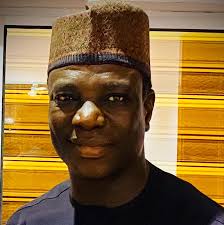
At the former residence of Sir Ahmadu Bello in Kaduna, the peace scholar questions the North’s direction 60 years after the Sardauna’s death.
At Arewa House, the historic residence of Sir Ahmadu Bello, Professor Chris Kwaja delivered a pointed reflection on leadership, unity and the stalled promise of Northern Nigeria’s development.
Addressing a distinguished audience, Kwaja said it was symbolic that discussions about the life and times of the Sardauna were taking place at a moment when Christians and Muslims were simultaneously observing Lent and Ramadan.
“It tells a unique story about the heart of a leader,” he said. “A leadership that assumed public office with an open mind, committed to uniting people, even long after leaving office.”
Kwaja argued that the continued reverence for Ahmadu Bello decades after his assassination was not accidental but rooted in the former premier’s inclusive style of governance and moral authority.
A 1958 Lesson in Unity
Drawing from history, Kwaja recalled a 1958 initiative by then Northern Nigeria’s Minister of Education, Aliyu Makama, who launched A Book of Prayers and Readings for Use by Christian and Muslim Students in Northern Nigeria.
He quoted Makama as describing Muslims and Christians as “people of the Book,” expressing hope that younger generations would learn that “the things which unite us are far more than the things that divide us.”
For Kwaja, that moment represented a Northern political culture that saw diversity not as a liability but as a foundation for collective progress.
He also referenced British ethnographer Anthony H. M. Kirk-Greene’s 1974 book, Mutum Kirki, which profiled Northern Nigeria’s moral philosophy of the “good man.” According to Kwaja, Ahmadu Bello embodied the traits Kirk-Greene catalogued: trust, compassion, patience, humility, justice, and wisdom.
“Sixty years after Sir Ahmadu Bello, can we benchmark our leaders against these values?” he asked.
Industrialisation and the ‘One North’ Agenda
Kwaja devoted significant attention to what he described as Ahmadu Bello’s most concrete legacy, a clear economic vision for Northern Nigeria built around industrialisation.
He cited the Northern Nigerian industrial triangle policy, anchored on groundnut production in Kano, cotton in Kaduna and tin mining in Jos. The framework, he said, reflected a deliberate strategy under a “One North” agenda to build regional prosperity through coordinated development.
But six decades later, Kwaja said the region has drifted.
“Where are we on industrialisation?” he asked. “We have leaders with no clear direction about a developmental strategy for the North.”
He criticised what he described as the politicisation of religion and the absence of tangible, unified projects by Northern governors since 1999. While communiqués and resolutions are frequently issued, he questioned whether there had been a single transformative regional initiative in girl-child education, Almajiri school reform or agricultural revitalisation pursued collectively and sustained.
The meetings of the Northern Governors Forum, he suggested, have not translated into measurable regional impact.
Insecurity and the Crisis of Vision
On insecurity, Kwaja said the region lacks a coherent Northern agenda for peacebuilding.
“Is there a Northern Nigeria agenda for security? Is there a Northern Nigeria agenda to build peace? There is none,” he said, arguing that statements without implementation cannot substitute for strategy.
He warned that some political actors now invoke Ahmadu Bello’s image during campaigns while failing to uphold the principles the late premier stood for.
“They need the name,” he said, “but not the responsibility.”
Kwaja also lamented the proliferation of sectarian divisions, noting that in the 1960s, Christians and Muslims coexisted without the institutional rivalry that now defines many religious spaces.
Referencing Abdul Rauf’s work on sectarianism and social disorder in Northern Nigeria, he argued that contemporary religious competition has shifted focus from moral values to mutual delegitimisation.
“The focus today is not about salvation,” he said. “Each sect dehumanises the other.”
In closing, Kwaja urged Northern leaders and citizens alike to return to the foundational questions Ahmadu Bello confronted: how to manage diversity, how to unify minorities and majorities under a shared vision, and how to confront criticism with humility and wisdom.
“The best way of keeping the legacies of Sir Ahmadu Bello alive,” he said, “is to go back to the drawing board.”
For Kwaja, remembrance must go beyond ceremony. It must translate into leadership that provides “clear direction for hope and development” in a region grappling with insecurity, economic stagnation and social fragmentation.
At Arewa House, the message was clear: legacy without action is nostalgia.
