

Close Menu
The North JournalsThe North Journals

    Subscribe to Updates

    Get the latest creative news from FooBar about art, design and business.

    What's Hot

    19 in 20 Nigerian health facilities fall short of basic medical waste standard – WHO/UNICEF

    August 21, 2026

    Lagos roundtable to drive new investment in Africa’s forest economy

    August 19, 2026

    How Nigeria is using local data to change the fight against malaria

    August 13, 2026
    Facebook X (Twitter) Instagram YouTube
    • ABOUT US
    • WORK WITH US
    • CONTACT US
    Friday, August 28
    Facebook X (Twitter) Instagram
    Subscribe
    The North JournalsThe North Journals
    • Home
    • Newsbeat
      • Agriculture
      • Art/Life
      • Business
      • Economy
      • Education
      • Entertainment
      • Health
      • Judiciary
      • News
      • Technology
      • Travel
      • Foreign
    • Editorial
    • Opinion
      • Diaries
    • Travelogue
    • Journals
      • Engineering
      • History
      • Law
      • Medicine
      • Politics
      • Research
      • Science
      • Climate Change
      • Psychology
      • Sociology
    • Documentaries
    • Guest Post
    The North JournalsThe North Journals
    Home » Farmers in North East Nigeria Struggle to Survive Amid Rising Hunger and Insecurity
    Agriculture

    Farmers in North East Nigeria Struggle to Survive Amid Rising Hunger and Insecurity

    Atoyebi AdenikeBy Atoyebi AdenikeJuly 21, 2025No Comments3 Mins Read
    Facebook Twitter Pinterest LinkedIn Tumblr Email
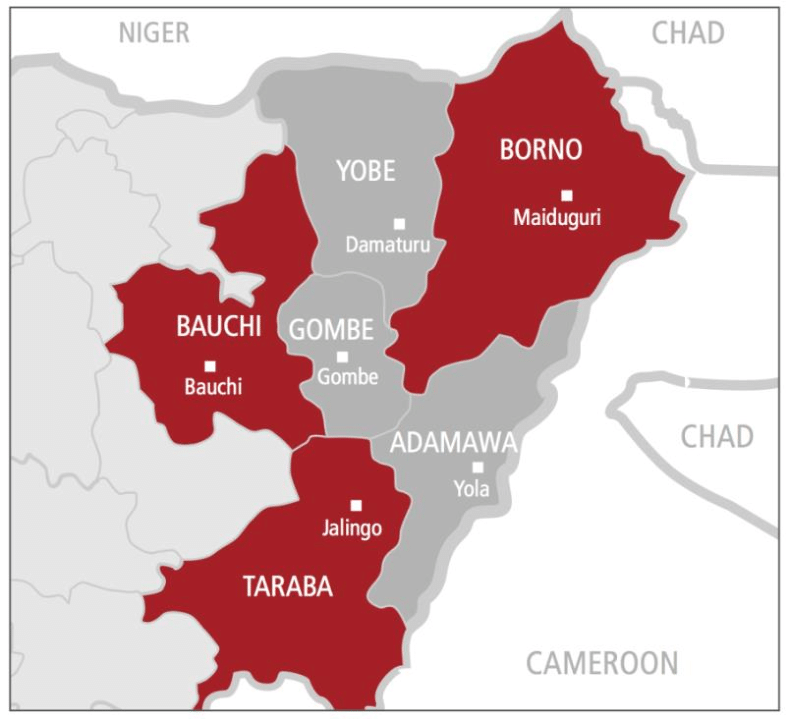
    ICRC warns that over 3.7 million people face food crisis as displaced communities risk their lives to farm
    ICRC warns that over 3.7 million people face food crisis as displaced communities risk their lives to farm
    Share
    Facebook Twitter LinkedIn Pinterest Email

    By Atoyebi Nike

    Farmers in conflict-hit communities across North East Nigeria are facing worsening hunger, loss of farmland, and displacement, as food insecurity tightens its grip on the region.

    In a statement issued on Monday, the International Committee of the Red Cross revealed that more than 3.7 million people in the region are food insecure. Many of them are small-scale farmers who can no longer safely access their lands due to ongoing violence and displacement.

    Modu Umar, a community leader in Dikwa, shared the growing desperation among residents. “Right now, we face severe food shortages. Some families are forced to walk long distances daily to gather firewood just to sell and buy food. Farming is the only solution to hunger,” he said.

    In Gajibo, 70-year-old farmer Churi Ibrahim described how insecurity has drastically curtailed movement in rural areas. “Some people trek three hours to reach their farms. By the time you get there, you’re exhausted. Sometimes, my large family does not even get one meal a day,” he said.

    Despite the threat of violence, many families continue to farm out of necessity. “Even when you’re afraid, you have to go,” said Bintu Konto, a mother of five. “If you miss the rainy season, there will be nothing to harvest.”

    As the lean season begins a period when food stocks deplete and market prices soar pressure on households is intensifying. “This is when families have to start buying food, but many cannot afford to,” said Diana Japaridze, Head of the ICRC office in Maiduguri. “As a result, they are forced to reduce their food intake.”

    See also  KACRAN Urges NEDC to Prioritise Livestock Development in 2026 Programmes

    The ICRC also noted that the growing food crisis is worsening malnutrition among children under five and pregnant or breastfeeding women. In response, the organization is supporting stabilization centres and running community education to improve child nutrition.

    To strengthen food production and recovery, the ICRC has launched an agricultural support programme across both rainy and dry seasons. More than 21,000 households have received climate-adapted seeds, labour-saving planting tools, and training on sustainable farming practices.

    The seed kits include staples like maize and rice as well as vegetables such as tomato and okra to enhance nutrition and food diversity. Nationally, the ICRC has partnered with the National Agricultural Seed Council to restore a vital water facility now powering NASC’s seed testing and greenhouse systems, boosting Nigeria’s agricultural infrastructure.

    Still, the lean season remains a painful time for families unable to grow enough food. “For us, it is not just farming, it is survival,” said Ibrahim. “If you cannot feed your children, every day becomes a struggle.”


    agricultural aid displacement food insecurity humanitarian response hunger crisis ICRC lean season malnutrition Nigerian farmers North East Nigeria
    Share. Facebook Twitter Pinterest LinkedIn Tumblr Email
    Atoyebi Adenike
    • Website

    Related Posts

    Lagos roundtable to drive new investment in Africa’s forest economy

    August 19, 2026

    Rare monkey’s disappearance signals wider biodiversity crisis in West Africa, scientist warns

    August 5, 2026

    Africa turns to science to fight climate health threats as new consortium launches in Ghana

    July 16, 2026

    Comments are closed.

    Our Picks
    Stay In Touch
    • Facebook
    • Twitter
    • Pinterest
    • Instagram
    • YouTube
    • Vimeo
    Don't Miss

    19 in 20 Nigerian health facilities fall short of basic medical waste standard – WHO/UNICEF

    Headlines August 21, 2026

    About 19 in every 20 health care facilities in Nigeria fall short of the basic…

    Lagos roundtable to drive new investment in Africa’s forest economy

    August 19, 2026

    How Nigeria is using local data to change the fight against malaria

    August 13, 2026

    Retired Ghanaian miner rejects calls for special treatment for Adamus Resources Limited

    August 13, 2026

    Subscribe to Updates

    Get the latest creative news from SmartMag about art & design.

    About Us
    About Us

    The North Journals is a hybrid publication that combines the power of investigative journalism with the depth of research-driven analysis. Rooted in Nigeria and inspired by Pan-African realities, we tell stories that matter — stories of people, communities, and issues often left out of mainstream narratives.
    Address: Abuja, Nigeria
    Email Us: info@thenorthjournals.com

    Our Picks
    New Comments
    • Theophilus Thomas on A School-Based Book Club Model Is Rebuilding Reading Habits Among Students in Zaria
    • Sani Tijjani Ibrahim on Book Review: Abandoned
    • Home
    • Travel
    • Politics
    • Business
    • Buy Now
    © 2026 The North Journals. Designed by AkinMore.

    Type above and press Enter to search. Press Esc to cancel.

    Ad Blocker Enabled!
    Ad Blocker Enabled!
    Our website is made possible by displaying online advertisements to our visitors. Please support us by disabling your Ad Blocker.