



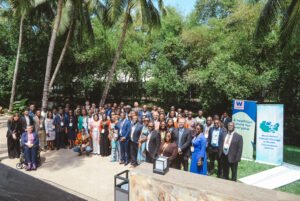
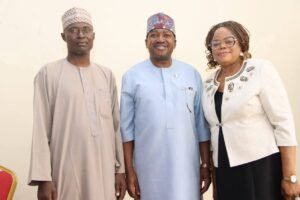






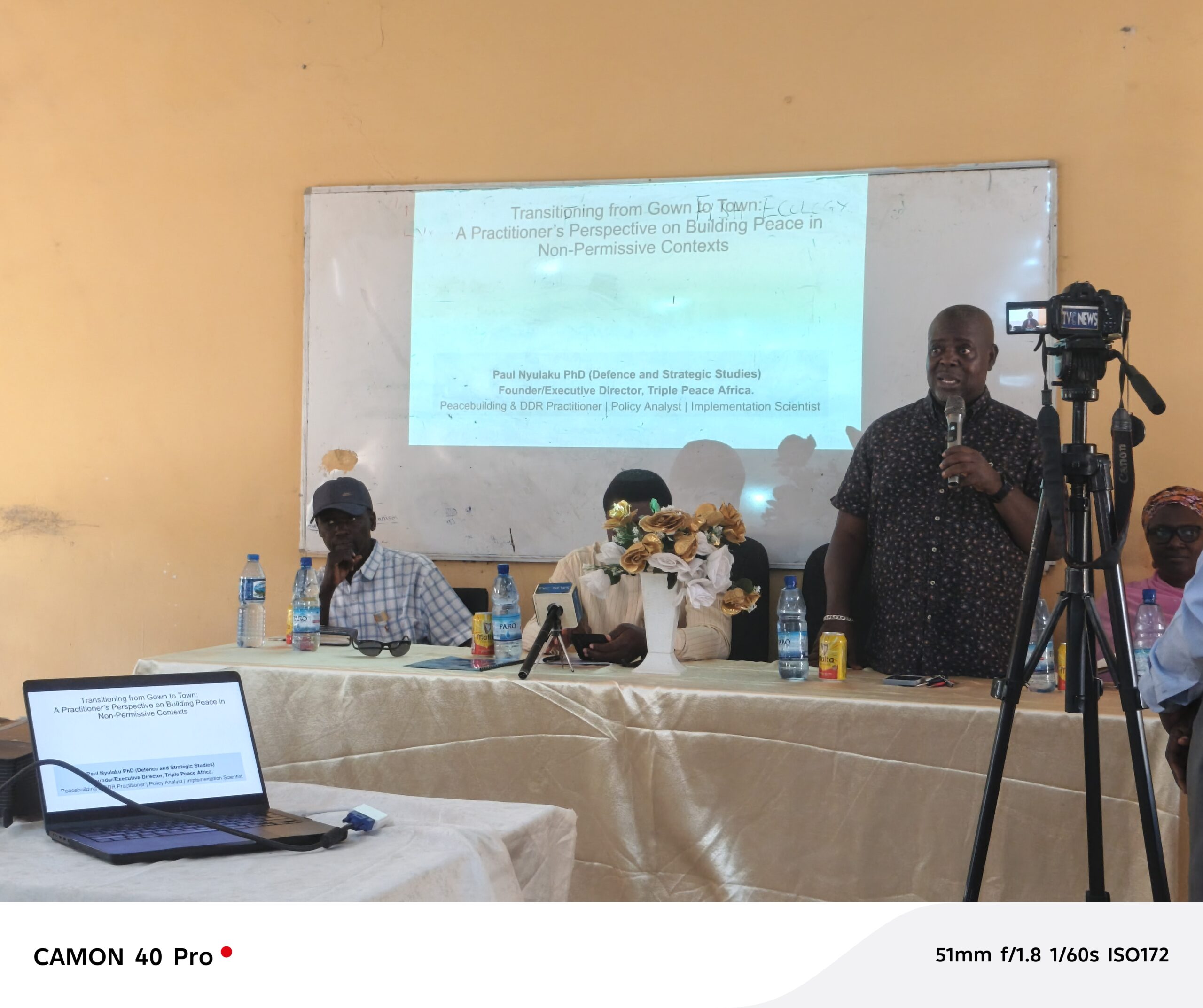
The Centre for Peace and Security Studies (CPSS) at Modibbo Adama University (MAU), Yola, has hosted a public lecture that challenged long-held assumptions about peacebuilding in Nigeria and other conflict-affected regions.
The lecture, titled “Transitioning from Gown to Town: A Practitioner’s Perspective on Building Peace in Non-Permissive Contexts,” was delivered by Paul Nyulaku, a peacebuilding and disarmament, demobilisation and reintegration (DDR) practitioner and Founder of Triple Peace Africa .
Mr Nyulaku argued that contemporary conflicts no longer follow the linear, post-war trajectory assumed by conventional peace theories. Instead, he said violence in many parts of Africa — particularly Nigeria — is fragmented, persistent and often criminalised, making traditional peace interventions less effective.
Drawing examples from North-East Nigeria, North-West Nigeria, the Lake Chad Basin and the Sahel, the speaker described these areas as non-permissive contexts, where state legitimacy is contested, multiple armed and security actors operate simultaneously, and communities experience violence as a daily reality rather than a post-conflict phase .
He criticised dominant peacebuilding assumptions that place DDR strictly after the end of conflict, warning that such approaches often ignore social realities on the ground. According to him, reintegration is primarily a political and social process, and programmes implemented without justice, community trust and legitimacy frequently provoke resistance.
“Peace is not delivered,” Mr Nyulaku said during the lecture. “It is negotiated and maintained.”
A key focus of the presentation was the importance of practice-driven knowledge — what he described as “town knowledge” — drawn from field experience rather than theory alone. He noted that trauma, stigma and fear shape how individuals disengage from violence and attempt to reintegrate into society, making community acceptance central to success .
The lecturer also introduced implementation science as an emerging approach to peacebuilding, calling for systematic testing of interventions in real-world conditions and a shift from donor-driven pilot projects to scalable, institution-led systems.
Positioning Nigeria as a global reference point, Mr Nyulaku described the country as a “living laboratory” where multiple conflict typologies coexist and innovative responses to violent extremism, community violence and reintegration are being tested.
He urged universities, particularly MAU Yola, to move beyond outcome-focused research and instead study processes, embed ethically with practitioners and treat communities as co-producers of knowledge. He also called for stronger university–practice partnerships capable of translating Nigerian experiences into globally relevant peacebuilding models .
The lecture ended with a question-and-answer session involving academics, students and practitioners, reinforcing CPSS’s role in advancing critical debate on peace and security issues in Nigeria.


