






By Aminu Adamu
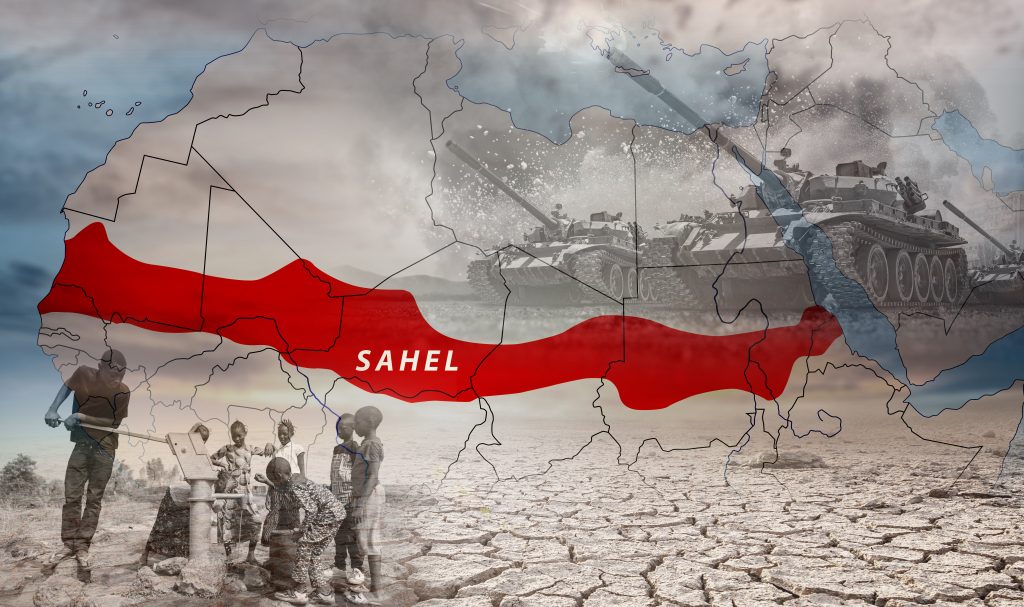
A new conflict assessment by the Armed Conflict Location & Event Data Project (ACLED) warns that the Sahel is entering a dangerous new phase as militant groups expand their operations beyond Mali, Burkina Faso, and Niger and apply coordinated strategies of “economic warfare” aimed at destabilising military governments and crippling national economies.
The Conflict Watchlist 2026 report, released on 11 December, shows that previously separate conflict zones in the Sahel and coastal West Africa are converging into one interconnected theatre of violence. This emerging belt of instability now stretches from Mali through Burkina Faso and Niger into Benin and western Nigeria, forming what analysts describe as a new frontline that will shape the regional security landscape in 2026.
ACLED Senior Analyst for West Africa, Héni Nsaibia, who authored the report, says militants have adopted deliberate tactics targeting infrastructure, trade networks and state revenue streams in order to pressure governments and expand control. According to the dataset, political violence has killed more than 10,000 people in Burkina Faso, Mali and Niger between 1 January and 28 November 2025, while militant kidnappings of foreign nationals in Mali and Niger reached record levels during the same period.
In Mali, Jama’at Nusrat al-Islam wal-Muslimin (JNIM) imposed a sweeping fuel and transport blockade on Kayes and Nioro du Sahel as part of coordinated offensives across Kayes, Sikasso, Koulikoro, Segou and Mopti. The embargo disrupted trade routes linking Bamako to surrounding regions, triggered nationwide fuel shortages, and contributed to surging prices. Violence in these regions reached their highest monthly levels since ACLED began recording data in 1997.

Burkina Faso experienced similar pressure. JNIM sustained attacks on the military and the Volunteers for the Defense of the Homeland (VDP), briefly seizing Djibo and Diapaga in May in rapid succession. In September, the group launched one of the deadliest attacks in the country’s recent history when it ambushed a military convoy near Koubel-Alpha in Soum province, killing about 90 soldiers. ACLED notes that these operations signal JNIM’s increased military capacity and its intent to undermine state authority by targeting key towns, transit corridors and provincial capitals.
Although Niger has not experienced violence on the same scale as its neighbours, it is becoming increasingly vulnerable. Militancy has moved beyond traditional hotspots into the southern Dosso and northern Agadez regions. The Islamic State Sahel Province (ISSP) intensified attacks on the Benin–Niger oil pipeline in Dosso and Tahoua and carried out its own form of economic disruption. The kidnapping of a United States citizen in Niamey on 21 October demonstrated that militant reach now extends into major urban centres.
Both JNIM and ISSP escalated kidnapping campaigns targeting foreign nationals and workers in 2025. JNIM focused on industrial sites, mining locations and major transit routes, while ISSP targeted Western nationals and foreign labourers, often outsourcing abductions to criminal networks. Most kidnappings occurred in Niger, with additional cases recorded in border areas of Burkina Faso and Algeria. ACLED reports that Mali recorded a record number of foreign kidnappings in 2025, with similar increases in Niger.
One of the most significant developments outlined in the report is the consolidation of a new conflict corridor in the Benin–Niger–Nigeria borderlands. Northern Benin experienced its deadliest year on record, with JNIM advancing further south from eastern Burkina Faso and killing more than 50 soldiers in Park W. By mid-2025, militants had extended operations into Borgou, along the Nigerian border. In late October, JNIM claimed its first attack inside Nigeria.
Meanwhile, ISSP deepened its foothold in southwestern Niger and continued operations in Sokoto and Kebbi states in Nigeria. The group attacked villages, security posts, and military patrols while sabotaging critical infrastructure close to the Niger–Benin and Niger–Nigeria borders. ACLED warns that both Sahelian groups are now entrenched in northwestern and western Nigeria, bringing them into direct proximity with Nigerian militant actors.
As Sahelian and Nigerian militant networks increasingly overlap, ACLED assesses that the region is moving toward a “single, interconnected conflict environment” stretching from Mali to western Nigeria. The report warns that 2026 is likely to become a key year of competition among jihadist groups including JNIM, ISSP, Ansaru, Mahmuda, Islamic State West Africa Province factions, and multiple bandit organisations operating in Nigeria’s northwest.
The report also highlights weakening state capacity across the central Sahel. Despite promises to restore security, military regimes in Mali, Burkina Faso and Niger are facing eroding authority and rising internal pressures. Militants now contest governance across vast rural territories, imposing taxes, regulating movement and determining access to livelihoods. Their influence is increasingly visible near major population centres, with ISSP operations extending into Ayorou, Tillaberi and even Niamey.
Local self-defense groups central to state counter-insurgency efforts are under strain. Dozo militias in Mali have been disarmed or forced into arrangements with JNIM, leaving entire communities reliant on militant actors for limited security. In Burkina Faso, the VDP has suffered heavy casualties and remains largely defensive, undermining the state’s ability to hold or reclaim territory.
The report notes that Russia’s Africa Corps, which replaced the Wagner Group, has had limited effect on stemming militant expansion. While Africa Corps shifted toward securing fuel convoys and key supply routes in southern Mali late in the year, ACLED concludes that its capacity remains insufficient to reverse broader militant gains.
With militant pressure intensifying, state forces overstretched, and political legitimacy declining, ACLED warns of a heightened risk of instability in 2026. If the Malian or Burkinabe regimes experience internal fractures or public unrest, the region could face a domino effect, further destabilising neighbouring states. The merging of Sahelian and coastal West African conflict zones, the entrenchment of militants in border regions, and the erosion of state authority across the central Sahel collectively signal what ACLED describes as a dangerous new phase of regional insecurity.